Modified Car Insurance: How to Cover a Lifted Truck or Built Car You Drive Every Day
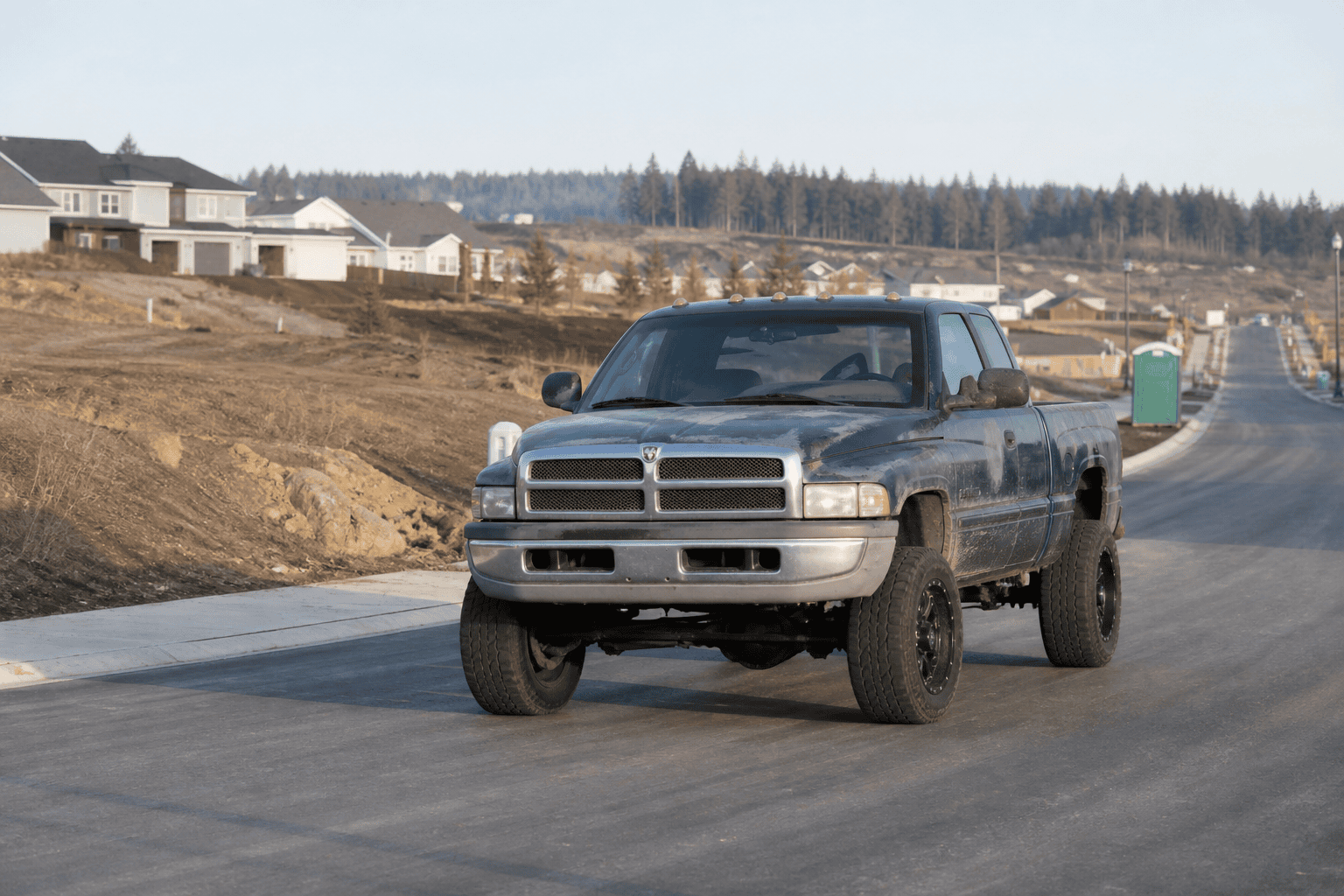
Picture a 2019 Silverado with a six inch lift, 35-inch tires on aftermarket wheels, and a steel front bumper. You paid for all of it over a couple of years. Someone runs a red light on your way to work, and the truck is a total loss. The settlement reflects what a stock 2019 Silverado with your mileage sells for in your area, because a stock truck is what the policy described. Most of the money you put into the build is missing from the check.
Modified car insurance exists to close that gap. For a vehicle you drive every day, it usually means a standard auto policy with the aftermarket work disclosed, documented, and covered by its own limit. The policy then describes the truck or car you actually own. This guide explains how that works for lifted trucks, lowered and custom cars, and engine and suspension builds. A limited-use collector that rarely leaves the garage is better served by agreed value coverage, which we cover in our classic car insurance agreed value guide. For the basics of the daily policy itself, start with our auto insurance page.
How a Standard Policy Values a Modified Car
Collision and comprehensive coverage pay to repair your vehicle or, in a total loss, to pay its actual cash value. Actual cash value is what a comparable used vehicle was selling for right before the loss: same year, make, model, trim, and mileage, adjusted for condition. The valuation starts from the VIN, and the VIN only knows how the vehicle left the factory. The invoice from your lift shop, the forged wheels, and the labor to install coilovers appear nowhere in that starting number.
Before joining the agency, our co-owner Jim Edington spent about a decade running collision repair shops. The pattern on modified vehicles was consistent. Repair estimates and total loss valuations are written against factory equipment. Aftermarket parts get added only when someone can show they were on the vehicle and the policy has room to pay for them.
The National Association of Insurance Commissioners makes the same point with a smaller example. If a stereo did not come with the car, the NAIC warns, you may need receipts to prove you had it in the first place. A lift kit, a set of wheels, or a swapped engine follows the same logic at a much higher price.
One note on vocabulary, since it trips people up. When a body shop or an adjuster says “aftermarket parts,” they often mean non-factory replacement parts used in a repair. A fender made by a third party is one example. In this guide we mean the upgrades you chose to add.
Custom Parts and Equipment Coverage: The Fix for Most Daily Drivers
Most carriers handle modifications through custom parts and equipment coverage, often shortened to CPE. It is an endorsement added to your existing auto policy, so you keep one policy and one bill. The endorsement rides on top of collision and comprehensive and generally shares their deductible. Covered equipment is anything permanently installed that the factory did not put there. That includes wheels and tires, lift and lowering kits, bumpers, winches, light bars, exhaust, audio, custom paint, wraps, and interior work.
Many policies include a small amount of this coverage automatically, and the amount is smaller than most owners assume. Progressive, for example, says on its own site that comprehensive and collision cover the first $1,000 of aftermarket parts. Its custom parts and equipment coverage can then pay up to $5,000. Other carriers set different numbers, and some specialty programs go considerably higher, but the takeaway holds across the market. A single set of wheels and tires can use up the built-in amount, and a serious build can outgrow a standard endorsement.
When you set the limit, add up what it would cost to replace every part today, including installation labor, and then round up. Parts prices and shop rates climb over time, so a receipt from three years ago understates what the same work costs now. A limit that turns out to be a little high costs you a few dollars of premium. A limit that turns out to be low costs you the shortfall when you file the claim.
This coverage depends on collision and comprehensive being on the policy. If you carry liability only on an older, paid-off truck, the endorsement has nothing to attach to. The build is then uninsured for damage and theft, no matter how well you documented it.
Tell Us About the Mods Before You Need a Claim
Carriers price and accept a vehicle based on how the application described it. A six inch lift, a turbo kit, or an engine swap changes how the vehicle performs and what it costs to fix. Sometimes it changes whether a given carrier wants the vehicle at all. Insurers call facts like these material, meaning they affect the decision to write the policy. Suppose the file says stock pickup and the adjuster’s photos show a lift and 35s. The claim slows down while the carrier sorts out what it actually insured. Outcomes vary by carrier and by state. A claim can be delayed, or the carrier may pay on the stock configuration only. A misrepresentation issue can also put the rest of the policy under a harder look.
Preventing all of that costs nothing. Tell your agent what is on the vehicle when you buy the policy, and again each time you add something significant. It also helps to keep a simple build file. Start with photos of each side, the engine bay, the undercarriage, and the interior. Add receipts for parts and labor. Then keep a running list of the wheels, suspension, power adders, lighting, bumpers, and interior work currently on the vehicle. Bring that file to the quote so the limit we set reflects the real build.
What Counts as a Modification?
The short answer is anything permanently installed that the factory did not put there. The details an underwriter cares about differ by type of build.
Lifted trucks and SUVs
Level kits, suspension and body lifts, oversized tires, aftermarket bumpers, winches, and light bars all belong on the policy. Give your agent the actual lift height and tire size, since some carriers set height limits for the vehicles they will accept. Usage matters too. A truck that tows every week, a truck that commutes, and a truck that mostly goes to Saturday meets are all rated differently. A trail-only machine that rides to the dunes on a trailer belongs on an off-road policy, along with ATVs and side by sides. Our Nevada off-road vehicle insurance guide covers that side. Electric bikes are their own category as well, which we explain in our e-bike insurance guide.
Lowered, bagged, and custom cars
Coilovers, air suspension, body kits, splitters, custom paint, and wraps are all covered equipment once they are listed. The losses that show up most often on these cars are practical ones: stolen wheels, a cracked splitter, a scraped oil pan, a vandalized wrap. Cosmetic work counts as much as mechanical work. A comprehensive claim for vandalism pays to restore factory paint unless the carrier knew about the wrap. List the wrap alongside the wheels. If the car sits too low for a standard tow truck and needs a flatbed, tell your agent that as well. It affects how roadside and towing coverage will work for you.
Engine swaps and power adders
Turbo and supercharger kits, tunes, headers, and full swaps change both the value of the car and a carrier’s appetite for it. Some standard carriers are comfortable with mild bolt-ons and will decline a full swap on a daily driver. The carrier that insured the car when it was stock may not want to stay on it after a motor change. This is where an independent agency helps. We can take the build to several carriers and find the ones that will accept it. Tell us the engine, the power adder, and whether the car still passes emissions in the state where it is registered.
Suspension and drivetrain
Control arms, trailing arms, lift blocks, airbags, and upgraded axles are easy to forget because nobody sees them. They are also expensive to replace after a curb strike or a collision. List the brand and the installed price for each. An invoice is much easier to work from than a memory of what the shop charged three years ago.
Daily Driver or Show Car? Why Agreed Value Rarely Fits a Commuter
Owners with real money in a build often ask about agreed value. Under that arrangement, you and the carrier settle on the vehicle’s worth up front, and the carrier pays that amount in a total loss. It is an excellent product, and it lives inside collector programs designed around limited use. Those programs typically expect restricted annual mileage, secure garage storage, and a separate vehicle for daily driving. A car that goes to work five days a week does not meet those terms. If the carrier later learns how the car was really used, the claim is at risk.
Stated value sounds similar and works very differently. On most stated value forms, the carrier pays the lesser of the stated amount or the actual cash value. You can pay premium on the higher number and still collect the lower one.
State plate programs draw the same line between collectors and commuters. Nevada’s Classic Vehicle plates are for vehicles at least 25 years old that have not been customized. The Nevada DMV also requires insurance specifically designated for classic or antique vehicles. It caps driving at 5,000 miles a year and bars use as general transportation. California, Arizona, and Utah run their own historic and vintage plate programs built around similar age and limited-use rules. A lifted daily driver on a regular plate fits none of them. It stays on a standard auto policy with the build covered by endorsement.
If you own a true collector or a weekend show car, insure it that way. Our classic car insurance page explains the program, and we have state guides for Nevada, California, Arizona, and Utah. Many enthusiasts own both kinds of vehicle. The clean setup is a collector policy on the show car and standard auto with custom parts coverage on the commuter.
Track Days, Trails, and Other Uses to Ask About
Personal auto policies are written for street use, and nearly all of them exclude damage that happens during racing or organized speed events. Many carriers extend that exclusion to any driving on a racetrack, which takes in high performance driving schools and open track days. If your built car sees track time, ask how your policy treats it. Separate track day coverage exists for those events. Off-pavement driving in a street-legal truck is handled differently from one carrier to the next. If your lifted truck spends weekends on trails, raise that during the quote as well.
How Common Claims Play Out
| The claim | Build never added to the policy | Build disclosed, with custom parts coverage |
|---|---|---|
| Crash damages factory sheet metal only | Collision pays for the repair, less your deductible | Same result |
| Same crash destroys aftermarket wheels and a lift | Parts typically paid only up to a small built-in amount, if the policy has one | Parts and labor paid up to your custom parts limit |
| Aftermarket wheels stolen overnight | Settlement typically based on factory wheels or the built-in amount | The wheels you owned are paid up to your limit |
| Wrap or custom paint vandalized | Factory paint is the default, and the wrap is unpaid or limited | The wrap is paid up to your limit |
| Swapped engine damaged in a collision | Carrier may value a factory engine, and an undisclosed swap can complicate the whole claim | The swap is on file and valued under the policy’s terms |
| Total loss on a lifted daily driver | Actual cash value of a comparable stock truck, less your deductible | Stock actual cash value plus your parts up to the limit, less your deductible |
Actual results depend on your carrier, your state, and the policy form. Treat the table as a general picture, and ask us how your own policy reads.
What Does Modified Car Insurance Cost?
Premium follows the vehicle, the value of the parts, annual mileage, and where you garage the vehicle. The driving records of everyone on the policy count as well. Custom parts and equipment coverage is usually a modest addition to the cost of the policy as a whole. Its price scales with the limit you choose. Performance modifications move the base rate more than cosmetic ones do, and they narrow the list of carriers willing to write the car. That is why a disclosed engine swap prices differently from the same car described as stock. It is also why comparison-site averages tell you very little about a specific build.
Keep the deductible in mind when you think about small losses. Because the endorsement generally shares the collision or comprehensive deductible, a parking lot scrape that only damages a splitter may fall below it. The coverage matters most in a theft or a total loss, when the full value of the build is at stake.
“I Only Added Wheels. Do I Really Need All This?”
It is a fair question, and wheels happen to be the best example of why the answer is yes. A quality set of aftermarket wheels and tires can cost several thousand dollars, and wheel theft is a routine comprehensive claim. Without the wheels on file, the carrier bases the settlement on the factory set, which may be worth a fraction of what the thief took. Getting them on the policy takes one phone call or email, along with a photo and a receipt. The same goes for a level kit, a bumper, or a wrap.
Questions to Ask Before You Buy
Walk through these with your agent before the next part goes on the vehicle.
- How much custom parts and equipment coverage is built into this policy, and how high can the limit go?
- Does my limit cover today’s replacement cost for every part, plus installation labor?
- Does the application list the lift height, tire size, engine work, wheels, and wrap?
- Are collision and comprehensive both on the policy?
- In a total loss, how is the settlement calculated, and how do my parts get added to it?
- Which photos and receipts should be on file right now?
- How does the policy treat track days and off-pavement driving?
Frequently Asked Questions
Is modified car insurance the same as classic car insurance?
No. Classic and collector programs are designed for limited-use vehicles and typically pay an agreed value. A modified vehicle you drive daily belongs on a standard auto policy with custom parts and equipment coverage. Our classic car insurance page covers the collector side.
Will my current policy pay for my lift kit?
It may pay for a small part of it. Many policies include a built-in amount for custom equipment, and that amount is usually far less than a lift, wheels, and tires cost. Adding custom parts and equipment coverage with a limit that reflects the full build is how the rest gets paid.
Do I have to tell my insurance company about modifications?
Yes. Modifications change the vehicle the carrier agreed to insure. An undisclosed lift or engine swap can delay a claim or reduce what it pays. Disclosing the work, with photos and receipts, takes a few minutes.
Can I get agreed value on a car I drive every day?
Rarely. Agreed value lives in collector programs that expect limited mileage, garage storage, and a separate daily driver. Some specialty carriers will consider a heavily modified vehicle with moderate use, and we can check those markets for you. Most commuters still belong on standard auto.
Does a lifted truck need a separate policy?
No. A lifted truck stays on the same personal auto policy as any other vehicle in the household. The lift, wheels, tires, and accessories are disclosed and covered through the custom parts endorsement.
Do modifications raise my rates?
Often, and how much depends on the work. Cosmetic changes such as wheels and wraps mostly affect the cost of the custom parts coverage itself. Performance changes such as forced induction or an engine swap can raise the base rate and limit which carriers will offer a quote.
What if I also own a show car?
Insure each vehicle for how you use it. The show car goes on a collector policy with agreed value, and the commuter goes on standard auto with the build covered. Our agreed value guide explains how the collector side works.
Get the Build You Drive on the Policy
Western Pacific Insurance is an independent agency based in Henderson and licensed in Nevada, California, Arizona, and Utah. We work with a broad lineup of carriers, so we can match a modified daily driver to a company that accepts the build. We can also set a custom parts limit that reflects what you have into it. Request a quote and tell us what you have bolted on, or start with the coverage basics on our auto insurance page.
We also have local guides for Henderson, Phoenix, San Diego, and Lehi drivers.


