
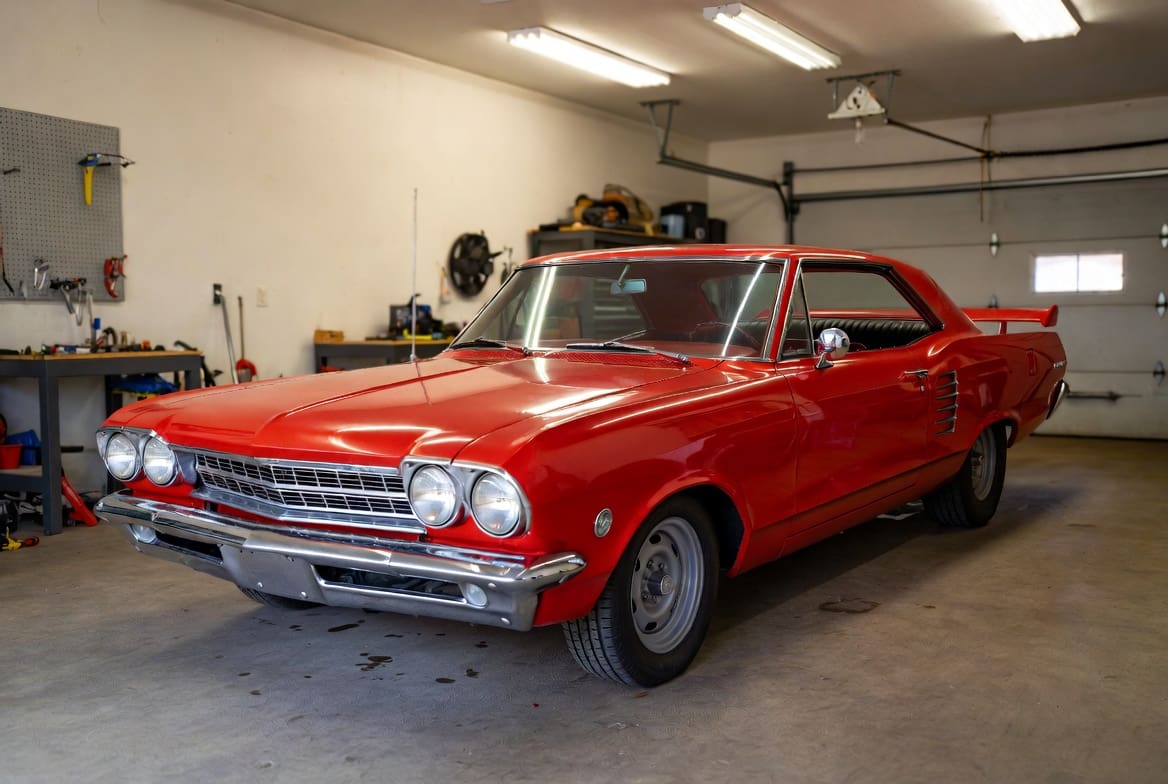
Classic Car Insurance: Agreed Value vs Stated Value vs Actual Cash Value
Classic car insurance is not the same as standard auto insurance. The way your car is valued on the policy determines what you get paid after a total loss. If you own a collector car, a hot rod, a restomod, or any vehicle that appreciates instead of depreciates, the valuation method on your policy is the most important detail you need to understand.
The Problem with Standard Auto Policies
Most people put their classic car on the same policy as their daily driver. The premium is low. Everything looks fine. Then an accident happens and the carrier values the car the same way it values a ten-year-old sedan. Standard auto policies use actual cash value, which means the car is worth whatever the market says at the moment of the loss, with depreciation applied. For a regular car, that works. For a restored muscle car worth far more than book value, that framework creates a gap that can cost thousands.
The carrier runs your VIN through a valuation tool built for modern production vehicles. It does not account for a frame-off restoration, sourced original parts, or the collector market. You get a check based on what the algorithm says a used car is worth. The carrier may not account for your restoration investment the way you expect.
What Actual Cash Value Means for Classics
Actual cash value is the default on standard auto policies. It is the replacement cost of the vehicle minus depreciation. That calculation works for vehicles that lose value over time. Classic cars do the opposite. A car that someone bought for a few thousand dollars and spent tens of thousands restoring does not fit a depreciation model. The finished car appreciates. But the standard policy does not see that.
Stated Value: A Ceiling, Not a Guarantee
Stated value sounds like a fix. You tell the carrier what you think the car is worth. That number goes on the policy. The carrier bases your premium on it. Most people assume that number is what they would receive in a total loss. On many stated value policies, that is not how it works.
Many stated value policies pay the lesser of the stated value or the actual cash value. If you state the car at fifty thousand dollars but the carrier calculates actual cash value at thirty-two thousand, you get thirty-two thousand. The stated value is a ceiling on what the carrier will pay. It is not a floor. You pay a premium based on the higher number but may receive a payout based on the lower one.
Stated value can make sense in narrow situations. If you want to insure a car for less than its full value to manage premiums, it gives you that flexibility. For most classic car owners, though, stated value creates a false sense of security.
Agreed Value: The Collector Car Standard
Agreed value is what most collector car owners need. You and the insurance company determine the value of the car together before the carrier issues the policy. You provide documentation – an appraisal, photographs, restoration receipts, and other evidence that supports the value. The carrier reviews it. The two of you agree on a number. You establish that number in advance.
If the car is totaled in a covered loss, the carrier pays the agreed value. No depreciation. The carrier does not fall back to actual cash value. There is no post-accident argument about what the car was worth. The payout is the number you agreed on, minus any deductible.
Most major specialty carriers build their collector-car policies around agreed value. It is the standard approach for classic cars, not an upgrade or add-on. If a carrier is offering you stated value or actual cash value on a collector vehicle, that is worth a conversation with your agent.
Keep the Agreed Value Current
You set the agreed value at the beginning of the policy. It stays there unless you update it. If the collector car market moves, or if you make significant upgrades, you need to go back to your carrier and update the number. An appraisal from five years ago does not reflect what a car is worth today. Some policies include an inflation guard that adjusts the value automatically. Not all of them do. Ask your agent.
Why Specialty Carriers Are Different
Classic car insurance from a specialty carrier is a different product than a standard auto policy. Valuation works differently. Underwriting works differently. Claims work differently. Specialty carriers understand that classic car owners drive less, store their vehicles carefully, and maintain them well. That lower risk profile often means lower premiums than what a standard carrier would charge for the same vehicle.
Specialty carriers do have requirements. You usually need to store the car in an enclosed garage. You generally need a separate daily driver. There may be mileage expectations. Some carriers allow occasional errands. Others limit usage to car shows, club events, and pleasure drives. Read the policy before you bind coverage.
At claim time, a specialty carrier is generally set up to handle collector-vehicle claims in a way a standard auto carrier is not. Standard adjusters may push aftermarket parts and low valuations. Specialty carriers understand the parts, the shops, and the repair process that collector cars require.
What to Ask Your Agent
Pull out your declarations page. Find the section that describes how your vehicle would be valued in a total loss. If it says actual cash value, your classic may be getting valued under a framework built for ordinary cars. Stated value means you should check whether the carrier can fall back to actual cash value at claim time. If it says agreed value, check when the value was last updated.
Ask about usage restrictions. Check whether the policy includes spare parts coverage. Ask about flatbed towing – you do not want your classic on a wheel-lift. Find out about coverage during restoration if the car is in progress. These are details that standard auto policies do not address.
An independent agent with access to specialty carriers can shop this across multiple markets. We have access to American Modern, and through our carrier network we can quote specialty vehicle coverage and find the right fit for your car, your budget, and how you use it. Classic car insurance is not one-size-fits-all. What one carrier offers at a given value and usage level may look very different from another.
Ready to review your classic car coverage? Get a quote from Western Pacific Insurance and let us take a look at what you have. We write coverage in Nevada, Arizona, Utah, and California.
If the car is a driven build rather than a preserved collector, the valuation math changes, so read our modified car insurance guide.


