
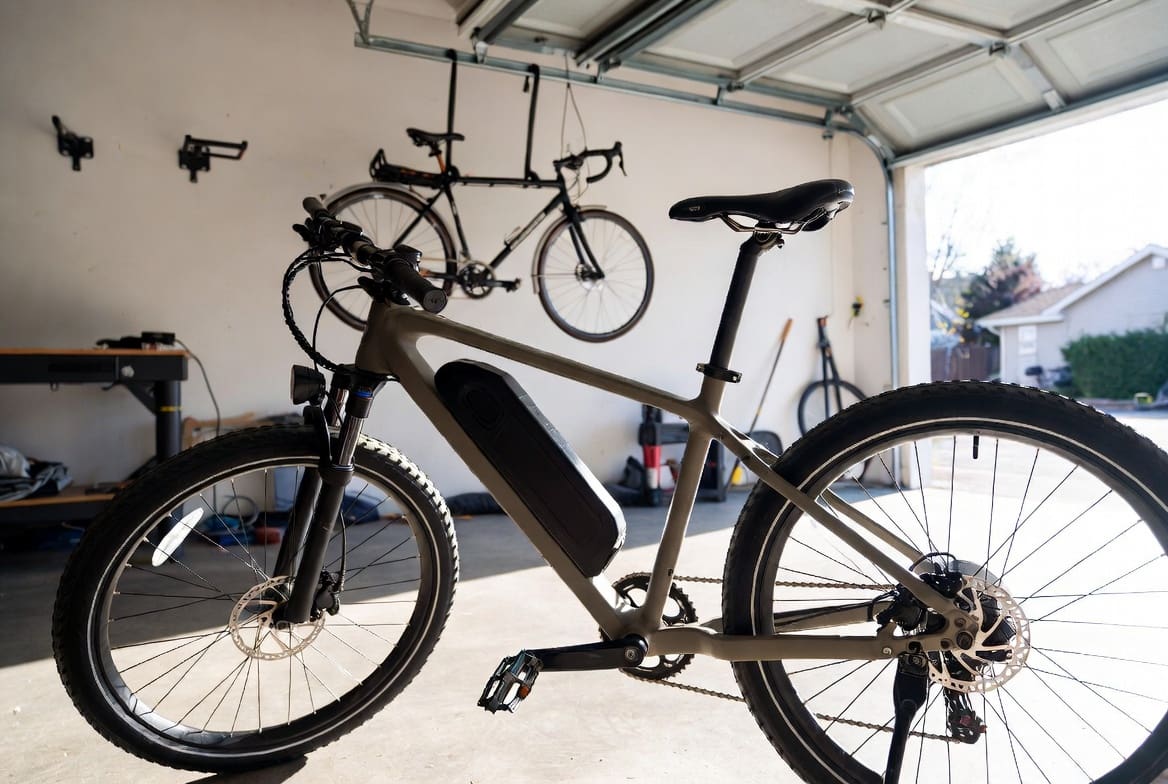
E-Bike and Electric Scooter Insurance: What Your Policies Actually Cover
E-bike insurance is the question almost nobody asks until after a crash or a theft. Nevada, Arizona, Utah, and California treat a compliant Class 1, 2, or 3 e-bike like a bicycle. You need no license, no registration, and no insurance to ride. Your homeowners and auto policies are a different story. Many home forms exclude motorized vehicles, and auto will not list an e-bike. Below we show where the gaps are, what happens if the bike is modified past 750 watts, and how to close them.
What counts as an e-bike?
Most states, including Nevada, Arizona, Utah, and California, use a version of the same three-class system. Class 1 is pedal-assist with no throttle, and the motor cuts out at 20 mph. Class 2 adds a throttle, still capped at 20 mph. A Class 3 machine is pedal-assist up to 28 mph. All three limit the motor to 750 watts.
A compliant e-bike carries a class sticker from the manufacturer. That label is your starting point, not a legal verdict. If the bike has been modified, the sticker no longer answers the question. Stay inside the limits and the law treats your e-bike like a bicycle. Exceed them and you may own something else entirely. More on that below.
Does homeowners insurance cover an e-bike?
A regular bicycle is easy. Your personal liability coverage responds if you hurt someone, and your personal property coverage responds if the bike is stolen. Add a motor and it stops being simple.
A typical homeowners policy excludes motorized vehicles from liability coverage. The carve-outs look like riding lawnmowers and wheelchairs, not e-bikes. Some carrier forms or endorsements make room for certain low-speed e-bikes. The newest standard forms define anything self-propelled as a motor vehicle, which closes the door harder. Older and carrier-specific forms can be genuinely unclear.
Here is why the answer matters. Picture a Class 3 e-bike at 25 mph on a neighborhood path. A pedestrian steps out, and the result is a broken hip, surgery, and months of recovery. Medical bills like that can run six figures. If your policy covers the e-bike, your liability limits and your carrier’s defense attorneys stand between that lawsuit and your savings. If it excludes the e-bike, you stand there alone.
Does your auto policy cover an e-bike?
No. Your auto policy covers the vehicles listed on it. An e-bike is not a registered vehicle and never gets added like a second car. For damage you cause while riding, your auto policy is a dead end.
There is one place it shows up. If a car hits you while you ride, your uninsured and underinsured motorist coverage can protect you the same way it can when you are walking. The driver who hits you is one question. The pedestrian you hit is another. Two policies, two answers, and most riders have never asked either one.
What about electric scooters and rentals?
Owned stand-up scooters sit in the same gray zone as e-bikes. The answer lives in your policy language. Rentals add a wrinkle. When you tap the app and accept the terms, you generally accept most of the responsibility for what happens on the ride. The rental company’s insurance is primarily built to protect the rental company. The NAIC’s guidance on rental scooters is blunt: assume the scooter company’s insurance does not cover you in an accident.
What if the e-bike is overpowered or modified?
Some popular electric bikes blow right past the class limits. More than 750 watts, faster than 28 mph, sometimes no working pedals at all. Legally, that is not an e-bike. Depending on the state and how the machine is built, it may be treated as a moped, a motorcycle, or another class of motor vehicle. That can bring registration, licensing, and insurance requirements the rider has not met.
The insurance side gets worse. Whatever gray area exists for a true Class 1 or Class 2 e-bike disappears for a machine the state considers a motorcycle. Homeowners policies are not built to cover motorcycles. Parents run into this one the hard way. Know what the machine legally is, and insure it as what it is, not as what the sales page called it.
What about theft, damage, and battery fires?
A quality e-bike runs from a couple thousand dollars to $8,000 or more. Whether your homeowners policy covers theft depends on the same policy language. Some policies treat an e-bike like any other personal property. Some apply the motorized-vehicle exclusion to property coverage too.
Even when theft is covered, run the deductible math. A $2,500 deductible means a stolen $2,000 e-bike never reaches your coverage. That is not a reason to carry a low deductible. Insurance exists for losses you cannot absorb. It means an expensive bike is an insurance question, and a cheap one is a budgeting question.
Lithium battery fires from indoor charging are a real concern, especially with bargain aftermarket batteries. Fire is a core covered peril, so resulting damage to your home is generally the kind of loss the policy exists for. Prevent the claim anyway. Charge with the manufacturer’s equipment, never unattended overnight, and be cautious with cheap replacement batteries.
What does standalone e-bike insurance cover?
Specialty markets exist for exactly this. A standalone e-bike policy typically offers liability for the damage you cause, theft and physical damage coverage for the bike, and options like medical payments and roadside assistance. Some carriers can also endorse coverage onto a homeowners policy. One caution: do not assume an umbrella policy fills the gap. Many umbrellas follow the same motorized-vehicle exclusions as the policies beneath them.
Is e-bike insurance required?
No state we serve requires insurance for a compliant Class 1, 2, or 3 e-bike. Required and needed are different questions. The liability exposure of a 28 mph machine around pedestrians is real whether or not a statute mentions it. Riders who carry coverage do it for the same reason homeowners carry liability: one bad five-second event can cost more than decades of premium.
How much does e-bike insurance cost?
Standalone coverage is inexpensive relative to the exposure. Progressive advertises e-bike liability coverage starting around $75 per year. Markel lists policies starting as low as $100 per year, with price driven by the bike’s value, coverage selections, and deductible. If you instead schedule the bike on a homeowners policy where the carrier allows it, CNBC Select pegs the typical cost at roughly 1% to 2% of the bike’s value per year. Your numbers will vary by carrier, state, and machine.
Frequently asked questions
Does renters insurance cover an e-bike?
Renters policies use motorized-vehicle language similar to homeowners forms, so coverage varies the same way. Ask about your specific bike before assuming theft or liability is covered.
Is a Class 2 e-bike covered differently than a Class 3?
Sometimes. Some forms and endorsements key on speed or wattage. The class and specs of your exact machine are the first things your agent needs to answer the question.
Does insurance cover a stolen e-bike battery?
Where the bike’s theft is covered, the battery generally follows as part of the bike. Standalone batteries and aftermarket packs can be a separate question, so document what you own.
Do I need insurance for a rental scooter?
No law requires it, but do not assume the rental company protects you. Your own policies may or may not respond. Read your homeowners language before you make rentals a habit.
What happens if my teenager crashes an overpowered e-bike?
If the machine legally counts as a moped or motorcycle, homeowners coverage likely will not respond, and the liability can come back to the household. Insure the machine as what it legally is.
Find out before anyone rides
If there is an e-bike or scooter in your garage, find out what your policy actually says now. It is one phone call, and it is far cheaper than learning the answer after a claim. We can read the language on your current policy, tell you where your e-bike stands, and shop a specialty market if there is a gap. Request a quote here, and we will take a look. Western Pacific Insurance serves Nevada, Arizona, Utah, and California.


