
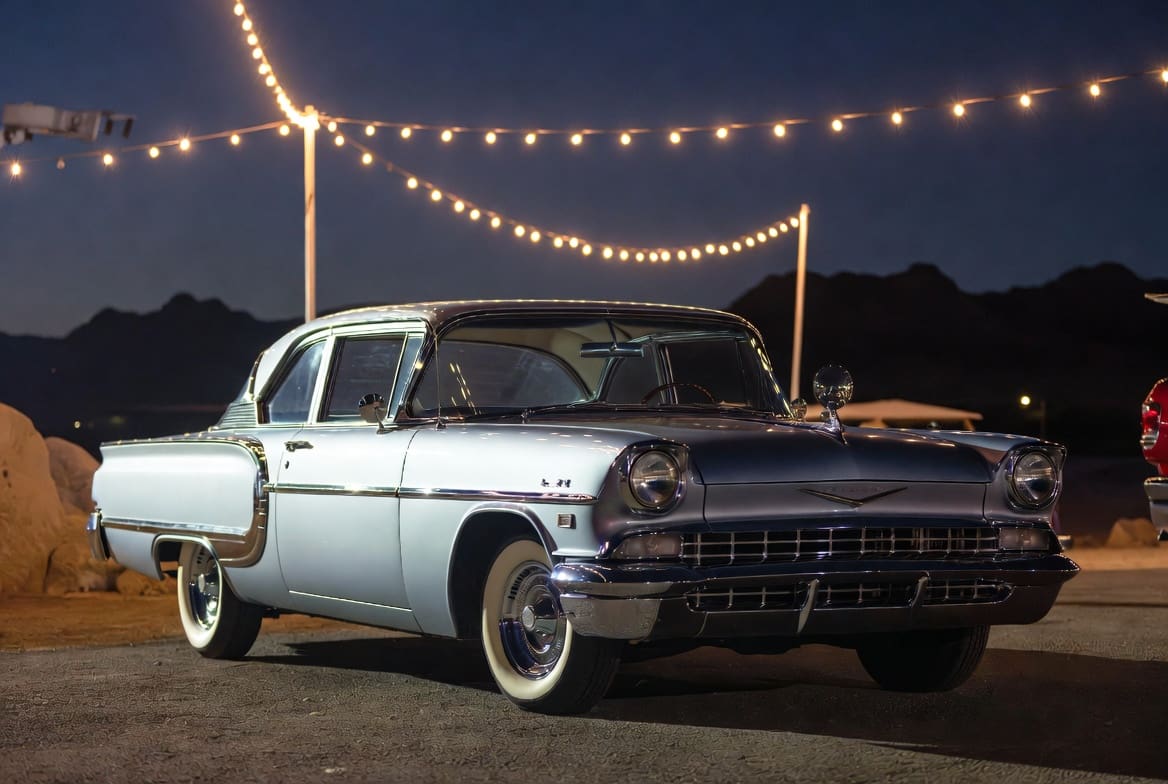
Classic Car Insurance in Nevada: Why Agreed Value Matters for Your Collector Vehicle
Nevada classic car insurance exists because standard auto policies do not properly value collector vehicles. The Las Vegas Valley has a strong car culture. Hot August Nights draws thousands to Reno every summer. Local car shows and cruise nights run year-round across Henderson, Summerlin, and the surrounding area. If you own a classic in Nevada, the valuation method on your policy determines whether you are protected or exposed.
How Standard Policies Miss the Mark
A standard auto policy uses actual cash value. The carrier calculates what your car is worth on the open market with depreciation applied. For a daily driver, that is fine. For a restored classic that has appreciated in value, the carrier’s valuation tool was not built to capture what the car is actually worth. The carrier may not capture the restoration, the sourced parts, or the collector market premium.
Nevada requires that vehicles with classic vehicle plates carry insurance specifically designated for classic or antique vehicles. The DMV requires proof of that specialty coverage on the declarations page at registration and renewal. Standard auto insurance does not satisfy this requirement. This is the state’s way of recognizing that classic cars are a different category of vehicle.
Stated Value Is Not What Most People Think
Stated value lets you declare a value for the car. The carrier bases your premium on that number. Many owners believe that is what they will receive in a total loss. On many policies, the carrier pays whichever is lower – the stated value or the actual cash value. The stated amount is a ceiling on the payout, not a guarantee.
For a Nevada collector who has invested heavily in a restoration, this mismatch between premium and potential payout is a real problem. You are paying for one number and potentially receiving another.
Agreed Value Is the Right Approach
With agreed value, you and the carrier set the car’s value before the carrier issues the policy. You document it with appraisals, photos, and receipts. You establish that number in advance. If the car is totaled in a covered loss, the carrier pays the agreed amount minus the deductible. No depreciation calculation. No argument after the fact.
Most specialty carriers use agreed value as their standard approach. Hagerty, Grundy, and American Modern all structure their collector-car programs this way. If your current policy does not use agreed value, it is worth exploring options.
Nevada-Specific Details
Nevada’s classic vehicle plate program limits usage to 5,000 miles per year. The car cannot be used for general transportation or any commercial purpose. It can be driven to club activities, exhibitions, tours, parades, and for maintenance. The odometer must be operational, and the owner certifies mileage at each renewal.
These restrictions align with what specialty carriers expect. Most collector-car policies require enclosed garage storage, a separate daily driver, and limited usage. Nevada’s plate program and specialty insurance requirements run in parallel.
The desert climate creates specific risks. UV exposure deteriorates paint, interiors, and rubber components over time. Enclosed, climate-controlled storage is valuable both for preserving the car and for satisfying carrier requirements. The dry air does reduce rust risk, which is one advantage Nevada collectors have over owners in humid states.
Review Your Coverage
Check your declarations page. Find the valuation method. If it says actual cash value, your classic may be underinsured. Stated value deserves a closer look – verify whether the carrier can fall back to ACV. For agreed value, make sure the number is current and reflects any work you have done on the car.
Ask about flatbed towing, spare parts coverage, and restoration coverage. An independent agent can compare specialty markets and find the right fit for your vehicle and how you use it.
Want to review your classic car coverage in Nevada? Get a quote or learn more about our Nevada coverage.
Plate rules aside, a Las Vegas car that gets driven every week is a different underwriting story, which we cover in our modified car insurance guide.


