
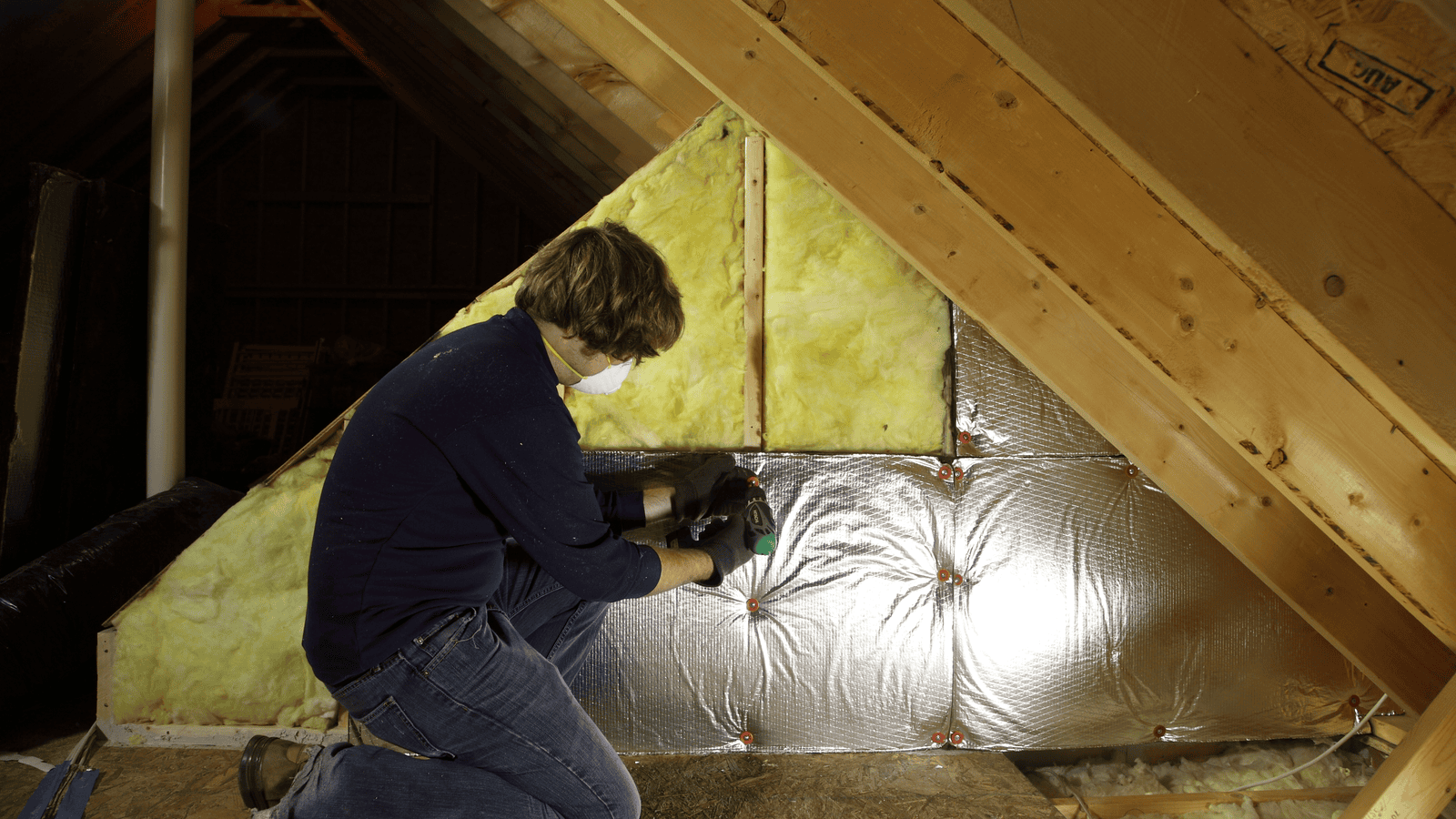
Henderson insulation work runs on a summer clock. Attic top-offs in Green Valley start at first light because nobody wants to be under a roof deck at noon in July. New builds in Inspirada and Anthem need wall cavities foamed or batted before the drywall crew shows up. That schedule does not move for you. If you run an insulation crew here, your insurance has to keep pace. The work mixes retrofit attics, production tract jobs, and the occasional commercial spray foam package.
This guide covers what a Henderson insulation contractor insurance program should include, how Nevada classifies the work, and where local crews tend to leave gaps.
What Your Henderson Insulation Contractor Insurance Should Cover
Start with the same five pieces every trade contractor needs. General liability pays when your work damages someone else’s property or injures a person who is not on your payroll. Workers compensation takes care of your own crew, and Nevada requires it as soon as you hire your first employee. Commercial auto covers the trucks and trailers moving between Green Valley, Anthem, and the industrial parks along the 215. An inland marine policy follows your blowers, foam rigs, and hoses from job to job. An installation floater protects the material itself, from the time you pick up a foam kit until the owner accepts the finished work.
Two things about Henderson push on that basic package. Production builders here hand out multi-lot insulation contracts, and those contracts can get large fast. Nevada attaches a monetary limit to every contractor license, and that limit caps the size of any single job you can take. If your bids are growing, your license limit and your liability limits both need to grow with them.
The second issue is scope creep in the good sense. A crew that started with attic top-offs picks up a spray foam job on a commercial shell. Now the policy was rated for one kind of work while the crew is doing another. Tell your agent when the work changes so the classification changes with it.
Our insulation contractor insurance guide goes deeper on completed operations, spray foam pollution exclusions, and the your-work exclusion that catches a lot of installers off guard. For the trucks, see our business auto insurance page.
Nevada Licenses Insulation Under C-3c
Nevada puts building insulation under the carpentry license. The State Contractors Board issues Classification C-3 for carpentry, maintenance and minor repairs, and NAC 624 lists Insulation and Weather Stripping as subclassification C-3c. That subclassification covers installing material used to insulate buildings, along with weather stripping and caulking. A contractor with a full C-3 license can do everything a C-3c license allows.
Do not confuse C-3c with C-1c, which covers insulation of pipes and ducts. That is mechanical insulation, and it belongs to a different kind of contractor with a different kind of policy. Framing has its own carpentry subclassification, and we cover it on Henderson framing contractor insurance. Hang and tape crews live on Henderson drywall contractor insurance, and the builder who hires all of you is covered on Henderson general contractor insurance.
The board sets your contractor bond based on your monetary limit and your financial statements. Unlike Utah, Nevada does not require you to prove general liability coverage to get or renew a license. Nobody at the state level checks whether you carry it, so the builders you work for do that job instead. A Henderson or Clark County permit is not a substitute for the license itself.
Heat Is the Local Risk Nobody Writes Down
Every insulation crew in the valley already knows the attic hatch becomes an oven by mid-morning. Fewer crews think about what that heat does to a foam kit in a closed trailer off Stephanie Street. Two-part foam has a storage temperature range, and a summer afternoon in an enclosed trailer can push past it. If a kit is ruined, that is a property loss, and you want the inland marine policy to respond to it.
That policy only helps if the equipment schedule is accurate. List your blowers, foam rigs, generators, and hoses at what it would cost to replace them today, not what you paid for them years ago. Prices move, and an old schedule leaves you paying the difference.
Commercial auto will not replace a blower stolen out of a truck bed overnight. That gear needs to sit on the inland marine schedule or on a property policy.
If you stage material overnight at a tract in Anthem or Inspirada, tell your agent. Material sitting on someone else’s lot before it goes into the wall is exactly what an installation floater exists for. Your own yard or warehouse is a separate question, and commercial property insurance handles that building and everything stored inside it.
Batt, Blown, and Spray Foam on One Invoice
Henderson jobs rarely stay in one lane. A single house in Green Valley might get batt in the walls and blown fiberglass in the attic. Spray foam shows up at the rim joist once the builder’s energy package tightens. All of that sits inside a C-3c or full C-3 scope, and your carrier just needs to know the mix so the rating is right. Spray foam carries different underwriting questions than batt, especially around pollution and overspray. A policy written for a batt-only crew can leave a foam job exposed.
Keep your invoices honest about what the crew actually did. If you also hang and tape drywall across the street, that is a separate class and a separate conversation. When the classification on your policy matches the work the inspector sees, claims get paid and audits go smoothly.
Certificates Get You on the Builder’s List
Production builders in Anthem and Green Valley prequalify their insulation subs before the first cavity opens. Their checklist almost always asks for additional insured status and a waiver of subrogation. Both of those have to be endorsed onto the policy itself. A certificate that lists them without the matching endorsement is a piece of paper, not coverage, and the builder’s risk manager will know the difference.
Pricing also depends on the book you actually run. A residential attic crew and a multi-site spray foam operation are two different risks. Give your agent the real picture of your bids so the big work is not underinsured. If anything, round your limits up. Nobody regrets carrying more liability coverage than a claim ends up needing.
Get a Henderson Quote
Western Pacific Insurance is headquartered in Henderson, and we insure insulation contractors across the valley. As an independent agency, we shop your operation across a broad lineup of carriers and match the classification to the jobs you take. Start with a Nevada quote request, or visit our Nevada insurance page to see everything we write in the state.


