
Phoenix Booth Renter Insurance: What Valley Chair and Suite Renters Need
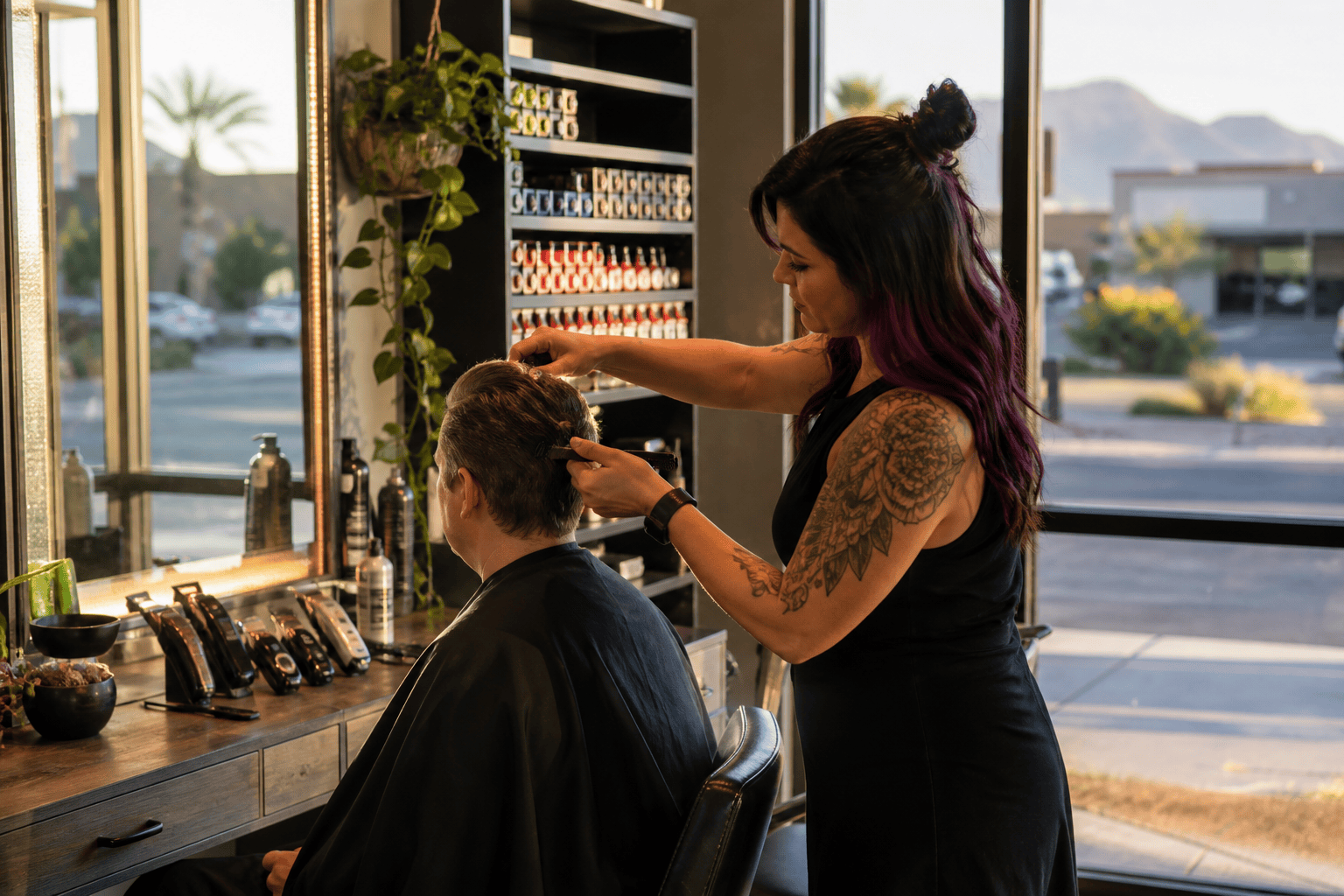
If you rent a chair in Mesa or a locked suite in Gilbert, you run your own business inside someone else’s building. You keep the clients, you set the prices, and you answer for the work. Phoenix booth renter insurance is the coverage that follows you instead of the salon that hosts you. Arizona adds a wrinkle that most national guides miss, because the state treats a salon suite very differently from a chair on a shared floor. This page explains that difference and what it means for your policy. If you own the salon rather than rent inside it, start with our Arizona hair salon insurance guide instead.
In Arizona, a Suite Is Its Own Licensed Establishment
The Arizona Barbering and Cosmetology Board licenses people, and it also licenses places. Your personal license lets you do the work, while the establishment license covers the location where the work happens. When you rent a chair on a shared floor, you work under the host salon’s establishment license. A suite is different. The board states that anyone renting a room or suite must hold an establishment license of their own. Its FAQ page adds a second step when you move suites within the same building. You file a Suite Change Application within 10 business days.
That rule matters for insurance more than it first appears. On paper, a suite renter in Chandler or Scottsdale owns a very small salon. You hold the establishment license, you control the room, and nobody shares responsibility for what happens behind your door. A chair renter on Camelback shares the shampoo bowls, the waiting area, and the front entrance with a host. Both of you need liability coverage in your own name, but the suite renter usually needs a wider policy. Neither license comes with a policy attached. A license is permission to work, and it will not pay a claim or hire a defense attorney.
What Phoenix Booth Renter Insurance Should Include
Start with two coverages in your own name. General liability responds when someone is hurt or their property is damaged around your station. Think of a client who slips on a wet floor, or a jacket ruined by a color bowl. Professional liability responds when the service itself is the problem, including a bleach burn, a keratin reaction, or a razor cut. Many programs built for beauty professionals package the two together, and you want both on the same form.
Your tools deserve their own line as well. Shears, clippers, irons, and color inventory add up quickly, and the host salon’s property coverage was never written to include them. Ask whether the tools coverage follows your kit off the premises. That kit probably rides in your car more often than you think.
Suite renters should go one step further. If you bought the chair, the cabinetry, the mirrors, or the couch in your room, that is business property and it needs a limit. A small business owners policy often fits a suite better than a bare liability form, since it combines property and liability in one package. Tell us what you own in the room, and we will build the quote around it.
Why “Additional Insured” Is Not Your Policy
Salon owners often tell renters they are already covered, and they usually mean it sincerely. Their policy exists, but it was written for their business and their employees. Being named as an additional insured on the salon’s form does not give you professional liability for your own services. It also does nothing for your tools or your furniture. When a client is hurt in your chair, the claim follows the person who did the work, and the salon may be named alongside you. That is exactly why most leases ask you for a certificate. Our booth renter insurance guide explains the additional insured trap in more detail.
Read the Lease Before You Quote
Your lease or booth agreement is the most useful document you can bring to a quote. Most of them name a minimum liability limit and ask for the salon or building owner as an additional insured. Many also want proof of coverage before you get a key. Suite buildings across the East Valley often read like small commercial leases, and some add a waiver of subrogation or a notice of cancellation requirement.
Treat the limit in the lease as a floor rather than a target. The lease protects the landlord, and a serious chemical burn claim will not stop at the number the landlord picked. Ask us to price the next tier up so you can see the real difference before you decide.
If you work a second chair, tell us about that too. Some Valley stylists rent in Tempe during the week and take a Saturday chair in Old Town Scottsdale. Each location has its own lease and its own certificate request, and your policy needs to list both.
Monsoon Season, Retail, and Other Valley Details
Arizona’s monsoon season runs from June 15 through September 30, and it changes the floor you work on. A storm can soak the entry of a Queen Creek strip center in minutes, and wet tile travels quickly toward your station. In a shared salon, the entry is usually the host’s responsibility until someone falls next to your chair. In a suite, more of that floor is yours. Either way, a slip is a general liability claim, which is one more reason to carry your own.
Retail is the other detail renters forget. If you sell shampoo, styling products, or extensions from your station, those sales belong on the application. A product that leaves with your client creates a different kind of claim than a service does. The same goes for your service list, since a booth that only cuts and styles is priced differently from one that bleaches and relaxes. An accurate application is what makes the policy work when you need it.
Frequently Asked Questions
Does Arizona require booth renters to carry insurance?
We have not found a board rule that requires one, and neither license comes with a policy. In practice your lease sets the requirement, because most salons and suite buildings want a certificate before you start. The better reason to buy coverage is the claim itself.
Do I need an establishment license for a salon suite in Arizona?
Yes. The board requires an establishment license for anyone renting a room or suite, plus a Suite Change Application if you move within the building. Moving to a different address means applying for a new license. That status is a good reason to insure your suite the way a small salon owner would.
Is chair rental different from booth rental for insurance?
No. Chair, booth, and station all describe the same arrangement, and barbers need the same coverages that stylists do. What changes the quote is the work you perform, the products you sell, and whether you control a suite or share a floor.
Get a Phoenix Quote
Western Pacific Insurance is an independent agency licensed in Arizona, and carriers insure booth and suite renters across the Valley. We place coverage with multiple carriers, and we check that your certificate matches the wording in your lease before it reaches the landlord. Start with an Arizona quote request and send the insurance page of your lease along with it. You can also see everything we write in the state on our Arizona insurance page. For the owner’s side of this relationship, our salon insurance coverage guide explains why salons ask every renter for a certificate.


