
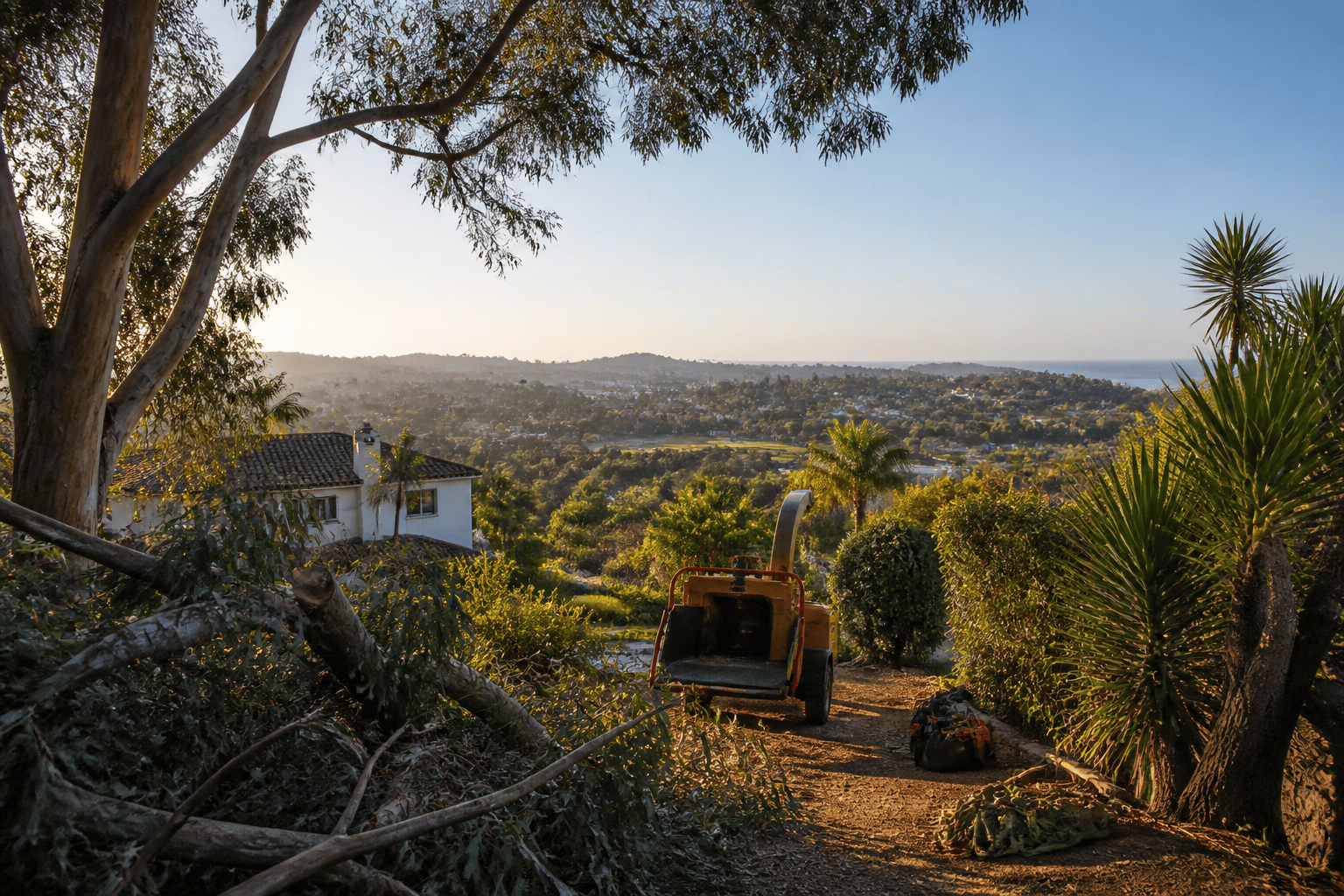
A removal in Clairemont or Mission Valley usually starts the same way. The homeowner or property manager wants a certificate of insurance in hand before anyone climbs, and they want it to say tree work, not lawn care. That distinction matters more in San Diego than most crews expect, because canyon lots, coastal wind, and tight residential drop zones put your policy to the test on ordinary jobs. This guide walks through what San Diego tree service insurance should cover, how California’s C-49 Tree and Palm license ties into it, and what to have ready when you ask for a quote.
What San Diego Tree Service Insurance Should Cover
Four policies do most of the work for a tree crew, and each one answers a different question.
- General liability pays when your work damages someone else’s property or injures a bystander. A limb that lands on the neighbor’s roof, a stump grinder that throws debris into a parked car, or a section that drops onto a fence all land here. This is the policy your certificate holders care about most.
- Workers’ compensation covers your climbers and ground crew when they get hurt. Tree work is one of the highest-injury trades in construction, and California treats it that way at the licensing level. More on that below.
- Commercial auto follows your chipper trucks, dump trucks, and trailers on the road between jobs. Your personal auto policy will not step in for a chip truck that rear-ends someone on the 805.
- Inland marine (often sold as a contractor’s equipment floater) covers the gear itself: chippers, stump grinders, saws, rigging, and climbing equipment, whether it is on the truck, on the job, or in the yard overnight.
Crews that carry more than a few vehicles or take on larger commercial and HOA contracts should also look at a commercial umbrella. It sits over your liability and auto limits and gives you room when a claim outgrows the primary policy. There is no downside to carrying more liability than a contract asks for; the risk only runs in the other direction.
The tree service insurance guide covers each of these policies in more depth, including a claim table and notes for all four states we serve. If your business is mostly mowing, irrigation, and planting with occasional trimming, the better fit is San Diego landscaping contractor insurance.
California’s C-49 Tree and Palm License and Your Policy
The Contractors State License Board defines the C-49 Tree and Palm classification as planting, maintaining, and removing trees and palms, including pruning, stump grinding, and guying. Incidental pruning by a gardener or nurseryperson falls outside the license requirement, which is exactly why some crews end up rated as landscapers when they are really doing removals.
The C-49 is fairly new. CSLB stopped issuing the old C-61/D-49 Tree Service limited specialty at the end of 2023 and began accepting C-49 applications on January 1, 2024, with a trade exam that the D-49 never required. Contractors who already held a D-49 can keep working under it, but CSLB has said the C-49 is the standard going forward. You can read the details in the CSLB tree and palm bulletin.
One more California rule matters for every tree crew. Under Senate Bill 216, tree service was one of the first classifications required to carry workers’ compensation regardless of whether the contractor has employees, starting in 2023. If you hold a C-49 or a legacy D-49, plan on a real workers’ comp policy on file with CSLB rather than an exemption. Your agent can send the certificate to CSLB for you.
Here is the part that trips people up. Your license class and your insurance class are two different things, and your policy is rated on the work you actually do. Getting the class wrong on the application does not automatically void your coverage, but it does create rating and audit problems, and it can leave you with exclusions you did not know you had. Some carriers cap climbing height, exclude crane work, or limit how much of your revenue can come from removals versus trimming. Tell us up front whether your San Diego invoices are mostly maintenance pruning or full removals, and how high your crews climb, so the policy matches the job before the certificate goes out.
Canyon Lots, Coastal Wind, and Palms
San Diego’s terrain shapes the risk on almost every job. Residential removals in Clairemont, Mission Valley, and the older neighborhoods around the canyons often put the tree a few feet from the neighbor’s roof, a row of parked cars, and a fence line. Canyon lots add slope, limited truck access, and drop zones that leave no margin for a bad rig. Those are general liability exposures, and they are the reason property managers want to see a certificate before the first cut.
Palms are their own category. Fan palm skinning and frond removal put climbers at height with sharp, heavy debris coming down, and dead fronds have a way of ending up on windshields. Eucalyptus and other large canopy trees in the county’s older neighborhoods raise the stakes on rigging and on the equipment doing the work.
Storm cleanup after a coastal wind event belongs on the same policy file, as long as your auto and equipment schedules reflect the trucks and gear you are actually running during those weeks. If you bring on extra help for a cleanup push, tell your agent so the payroll estimate on your workers’ comp policy stays honest.
A few habits protect you on every job. Photograph the drop zone and any existing damage before you start. Call 811 and have utilities marked before you grind a stump. Stay clear of overhead power lines unless your crew is qualified for line-clearance work. Keep signed work orders that describe the scope, because scope disputes are the most common seed of a liability claim.
What Property Managers and HOAs Ask For
Commercial and HOA jobs in San Diego usually come with certificate requirements written into the contract. Expect requests for additional insured status, a waiver of subrogation on your general liability and workers’ comp, and primary and noncontributory wording. Those are endorsements added to your policy, not lines typed onto a certificate, so it helps to know before you bid whether your policy can provide them. If you use subcontractors for crane work or hauling, collect their certificates too. Uninsured subs show up on your audit as your payroll.
What to Have Ready for a San Diego Quote
Quotes for tree crews move faster when the picture is complete. Gather your CSLB license number and classification, a rough split of payroll between climbers and ground crew, a list of vehicles and trailers, and an equipment schedule with serial numbers for chippers, grinders, and larger saws. Note the typical height of your work, whether you use cranes or bucket trucks, how much of your revenue comes from removals, and whether you subcontract any of it. If you have prior insurance, your loss runs help too.
Get a San Diego Tree Service Insurance Quote
Western Pacific Insurance insures California tree and palm crews and matches the policy to the C-49 work you actually take on, from maintenance pruning to full canyon removals. Start with a California quote request, or learn more about how we serve contractors across the state on our California insurance page.


