
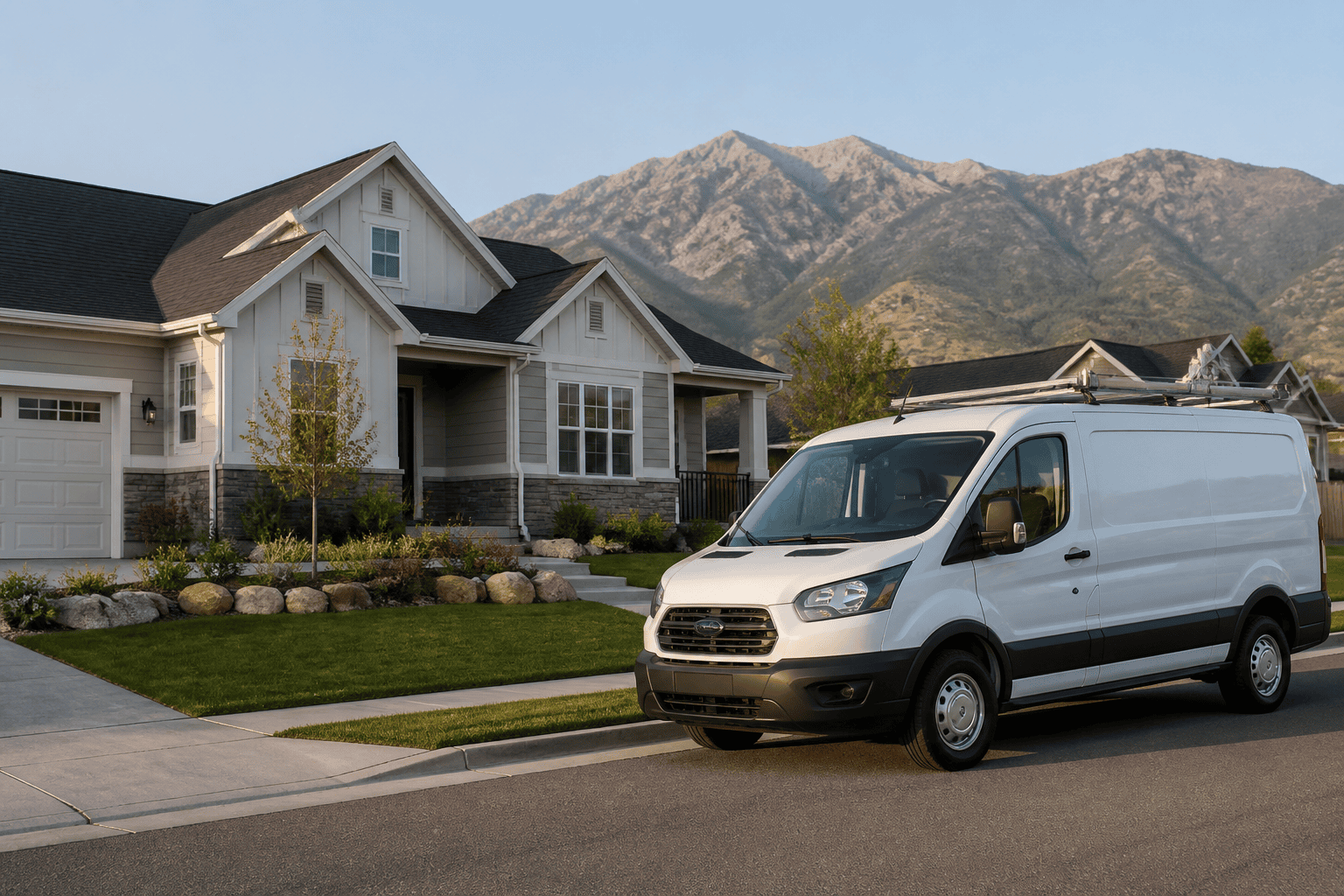
If you run a pest control route in Lehi, your customers already trust you with the hard part. You are the one crawling the attic in Traverse Mountain in January, treating a pre-drywall slab near Thanksgiving Point, and answering the panicked call from a Silicon Slopes office manager who found droppings in the break room. Pest control insurance in Lehi has to protect that work the way you actually do it: a licensed applicator, a van full of product, and a schedule that never quite fits between I-15 exits. This guide walks through the policies that matter, how Utah licensing affects them, and the coverage gaps that catch Utah County operators off guard.
How UDAF Licensing Shapes Pest Control Insurance in Lehi
In Utah, applying pesticides for hire runs through the Utah Department of Agriculture and Food, not the contractor board. Every technician who physically applies product needs a commercial pesticide applicator license, and the company itself needs a commercial pesticide business license backed by a qualifying party. The rule text lives in Utah Administrative Code R68-7. That is a separate system from the Division of Professional Licensing cards that general contractors and roofers carry, so the general liability floor you may have read about for Utah construction trades does not automatically apply to a pesticide business. Confirm any insurance filing requirement directly with UDAF rather than assuming it matches another license.
Why does licensing matter to your insurance? Because underwriters rate you by what your license lets you do. A structural pest category, a rodent and vertebrate category, and a turf and ornamental category each describe a different job with a different claim history. When the categories on your UDAF credentials and the classifications on your policy line up, claims get paid without an argument. When they do not, you have a rating problem at best and a coverage dispute at worst. Bring your license printout to your agent, not just your invoice.
The certificate question nobody warns you about
Even without a state-mandated liability floor, the market sets one for you. Property managers along Pioneer Crossing, HOAs on Traverse Mountain, and builders working Thanksgiving Point routinely ask for around $1 million per occurrence and $2 million aggregate before they will put you on the vendor list. Some larger commercial accounts ask for more. Treat those numbers as a starting point, not a ceiling. There is no risk in carrying more liability than a contract requires. There is real risk in carrying less and losing the account, or the claim, over it.
Pest Control Insurance Lehi Operators Actually Need
Every pest control program is a stack, and each layer answers a different question. Here is what belongs in a Lehi operator’s file and what each piece does. Our pest control insurance guide covers the broader claim picture if you want to go deeper on any one of these.
General liability
This is the foundation. General liability responds when your work injures someone or damages property that is not yours. A technician knocks a flat-screen off a wall in a Lehi rental, a customer’s dog gets into bait, a tenant slips on an overspray puddle in a stairwell. The policy needs to be written for pest control classifications, and you need to know whether it treats pesticide application as ordinary work or carves it out. That distinction leads directly to the next layer.
Pesticide and herbicide pollution coverage
Most standard general liability forms contain a pollution exclusion, and pesticides are chemicals. Some carriers add a pesticide or herbicide applicator endorsement that gives that exclusion back in a limited way. Others require a separate contractors pollution liability policy. The difference matters when a customer claims their kids got sick after a treatment, when product drifts onto a neighbor’s vegetable garden, or when a spilled jug of concentrate soaks into a garage floor. Ask your agent to show you the exact wording before you bind. A quote that is cheaper because it silently leaves this out is not cheaper.
Commercial auto
Your van is your office, your warehouse, and your biggest single liability exposure. It carries product, rides the I-15 frontage between Thanksgiving Point and Traverse Mountain several times a day, and gets parked in customer driveways. A personal auto policy generally excludes business use and will not respond the way you need. Business auto insurance covers the vehicle, the liability when a technician rear-ends someone at a Pioneer Crossing light, and can include hired and non-owned coverage for the days an employee runs a service call in their own truck.
Workers compensation
Pest control is physical, chemical, and often done in crawl spaces and attics. Heat exhaustion in a Lehi attic in July, a ladder fall during a wasp job, a respiratory reaction to product, and repetitive strain from carrying sprayers all land on workers compensation. Utah requires it once you have employees, and the Utah Labor Commission handles the rules and any exemption paperwork for owners without staff. Confirm your specific situation with them or with us before you assume you are exempt. Commercial accounts will also ask for proof of it on your certificate.
Inland marine for tools and equipment
Backpack sprayers, power rigs, bait stations, heat treatment units, fogging equipment, and moisture meters travel with you, and property insurance for a building does not follow them into the van. Inland marine (often called an equipment floater) covers your tools wherever they are, including the theft of a $12,000 bed bug heater out of a truck parked overnight near a Silicon Slopes campus.
Commercial property
If you store concentrate, run a small office, or keep inventory at a shop, the building contents and the stock itself need commercial property insurance. Chemical storage is a property question underwriters care about: how much, in what containers, with what fire protection. Tell them the truth about it. A fire that starts in a storage room full of product is exactly the loss they want to price correctly. Many smaller operators bundle property and general liability into a business owners policy, but pest control eligibility varies by carrier, so it needs a quote rather than an assumption.
Umbrella liability
A commercial umbrella sits above your general liability, auto, and employers liability and adds limits when a claim runs past what those policies carry. For a pest control company, the scenarios that reach umbrella territory are a serious vehicle accident with the service van or a chemical exposure claim involving multiple people. Umbrellas are typically inexpensive relative to the limit they add, and they solve the contract that asks for more than your primary policy carries. Confirm that yours follows your pollution coverage, because many do not.
Completed Operations, Inspections, and the Claims That Show Up Later
Pest control has a long tail. The job is finished, the invoice is paid, and the claim arrives months later. Completed operations coverage, usually built into general liability, responds to injury or damage that happens after you leave. A rodent bait station placed incorrectly, a treatment that a child gets into weeks after the visit, or a moisture problem behind a wall that your service did not address: these are completed operations claims, and you want the coverage in force when the claim is made, not just when the work was done. That is one reason to avoid lapses when switching carriers.
Inspection work carries a separate exposure. If you issue wood-destroying organism inspection reports for real estate transactions in Utah County, or write up a clearance letter a buyer relies on, you are giving a professional opinion. A missed infestation that costs a new homeowner thousands in repairs is not property damage you caused. It is an error in your judgment, and general liability policies often exclude professional services. Depending on how much inspection work you do, that exposure may need a professional liability or errors and omissions endorsement. Talk it through before the first report goes out with your name on it.
Structural Pest Work Is Not Lawn Spray
Carriers draw a hard line here, and so should your application. Structural pest control means treating buildings and the people and property in them: ants, spiders, rodents, bed bugs, wasps, termites, and the seasonal box elder bug invasion that Utah County homeowners know well. Turf and ornamental work means fertilizing, weed control, and tree and shrub spraying on the landscape outside. The chemicals differ, the certifications differ, and the claim patterns differ. A company that mows, fertilizes, and sprays weeds is a landscaper with a pesticide category, and that book belongs on Lehi landscaping contractor insurance. The broader picture for lawn operators is on our landscaping contractor insurance page. If you do both, say so. Underwriters can rate a mixed operation correctly, but only when you describe it accurately.
Lehi Accounts, Lehi Seasons, and What They Change
Winter rodent season
Utah County winters push mice and voles into heated structures, and the calls spike from November through February. More attic and crawl space work means more fall and exposure risk for technicians, more bait in homes with kids and pets, and more exclusion work that involves ladders, sealants, and sometimes minor construction. Make sure your workers compensation payroll estimate reflects the winter hiring surge, and ask whether exclusion work is included in your liability classification.
Summer heat and product in the van
Product stored in a closed van in a Lehi parking lot in July can exceed label storage temperatures. Beyond the efficacy problem, heat contributes to container failure and spills. That is both a pollution exposure and an inland marine exposure, and it is worth a conversation about how you store and transport concentrate during peak season. Bed bug heat treatment jobs, which also peak in summer, add fire and property damage exposure that some carriers restrict or exclude. Disclose the service if you offer it.
New construction pre-treatments
Builders at Thanksgiving Point and on Traverse Mountain still schedule pre-construction and pre-occupancy treatments. These accounts come with paperwork: certificates of insurance, additional insured endorsements naming the builder, waiver of subrogation language, and sometimes primary and non-contributory wording. Read what the contract requires before you sign it, and have your agent confirm the policy can actually deliver those endorsements. A certificate that promises something the policy does not contain protects no one.
Commercial and multifamily service contracts
Office parks near Silicon Slopes, restaurants along Pioneer Crossing, and apartment communities across Lehi buy monthly service on annual contracts. These accounts drive most of the certificate requests you will see, and their property managers often want a specific limit on the certificate before the first visit. If you are growing into this segment, plan your limits around what the biggest account you want will require, not what your smallest residential customer needs.
Wildlife and exclusion work
Raccoons, skunks, bats, and birds are a different category of work, and live-animal handling may require credentials beyond your pesticide license. It also introduces animal bite, fall, and roofing damage exposure. Do not assume every wildlife call sits inside your existing classification. Ask before you take the job, not after the claim.
Three Lehi Claims and the Policies That Answered Them
These are the kinds of losses pest control operators in Utah County see, described in general terms to show which layer of the program does the work.
The bait station and the neighbor’s dog. A technician places rodent bait around the exterior of a Traverse Mountain home. A neighbor’s dog gets into a station and needs emergency veterinary care. The neighbor’s claim is bodily injury to property (a pet counts as property) caused by your operations. General liability handles it, provided the pollution exclusion does not sweep in the bait. This is exactly where the pesticide endorsement earns its premium.
The van on the frontage road. A service van merging onto the I-15 frontage near Thanksgiving Point rear-ends a sedan. Two people are treated at the hospital, the sedan is totaled, and the van’s rear cabinet full of product breaks open. Commercial auto pays the injury and vehicle claims. Inland marine covers the damaged sprayer. The spill on the roadway is a pollution question, and the answer depends entirely on whether you bought that coverage.
The clearance letter. Your company issues an inspection report on a Lehi home before closing. Six months later the buyer finds active carpenter ant damage in a wall the report did not flag. The buyer sues for repair costs. Nothing you did damaged the wall. The claim is about the accuracy of your report, which is a professional liability exposure. If your program only has general liability, this one may not be covered.
Frequently Asked Questions About Pest Control Insurance in Lehi
Does Utah require pest control companies to carry insurance?
Utah requires UDAF licensing to apply pesticides for hire and requires workers compensation once you have employees. Whether a specific liability limit is a licensing condition should be confirmed with UDAF directly, since requirements can change. In practice, nearly every commercial customer requires proof of general liability before they hire you, and lenders and landlords often require property coverage.
Does general liability cover pesticide damage?
Not automatically. Most general liability forms contain a pollution exclusion. Coverage for pesticide and herbicide application comes either from an endorsement that adds it back or from a separate contractors pollution liability policy. Ask your agent to point to the language in your policy.
Can I use my personal auto insurance for my service van?
Personal auto policies generally exclude vehicles used for business, and a van wrapped with your logo and full of product is not a gray area. Commercial auto is the right policy, and it is what commercial accounts expect to see on your certificate.
What limits do Lehi property managers usually ask for?
Around $1 million per occurrence and $2 million aggregate is common, and some accounts ask for more. Carry at least what your best accounts require. Higher limits protect the business and open doors; lower limits close them.
I only do lawn and tree spraying. Is this the right article?
Turf and ornamental work is rated as landscaping, not structural pest control. Start with our Lehi landscaping contractor insurance guide. If you do both, we can quote the mixed operation, but each side needs to be described accurately.
Do I need workers compensation if it is just me?
Utah’s requirement is tied to having employees, and the Utah Labor Commission handles the exemption process for eligible owners. Even when you qualify, many commercial accounts will still ask for proof of coverage on your certificate, so a sole operator sometimes buys it anyway to win the work.
Get a Lehi Pest Control Insurance Quote
Western Pacific Insurance is licensed in Utah and works with pest control companies across Lehi, Utah County, and the Wasatch Front. As an independent agency, we shop your program across multiple carriers, match the categories on your UDAF license to the classifications on the policy, and read the pollution and certificate language before you bind, not after a claim. Start with a Utah quote request or call our Utah team at (801) 955-3755. You can also visit our Utah insurance page to see everything we write in the state.


