
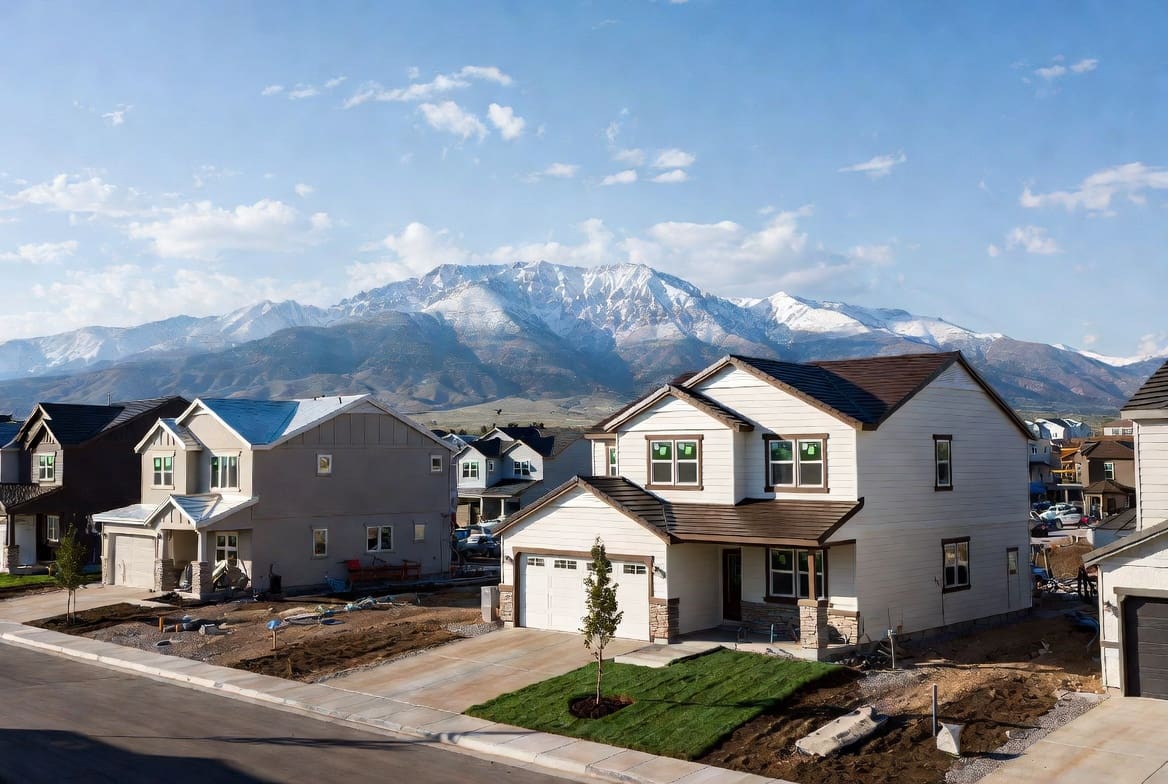
Lehi is building homes faster than almost anywhere in Utah. Census Bureau estimates reported by KSL showed Lehi leading the state in growth, adding nearly 5,900 residents in a single year. That made it Utah’s eighth-largest city, with more than 90,000 people. New neighborhoods keep climbing Traverse Mountain and filling in along the I-15 corridor. Here’s the insurance problem hiding in all that new construction. Owners of new homes assume the purchase price tells them what a rebuild would cost. It doesn’t. This guide explains how extended and guaranteed replacement cost coverage work for Lehi homeowners, and why fast-growth markets need the buffer most.
The new-build myth in Silicon Slopes
A builder selling 200 homes in one development buys lumber, trusses, and labor at volume prices. You, rebuilding one custom home on a finished lot after a fire, get retail prices. Rebuilding a single home almost always costs more per square foot than the builder’s original construction. So even a two-year-old Lehi home can be underinsured if the dwelling limit was set at the builder’s price.
Growth compounds the problem. Lehi’s construction workforce is already fully booked building new subdivisions for Silicon Slopes families. Imagine a wind event or a bench wildfire damaging a whole neighborhood. Those same crews would be the ones bidding your rebuild, and demand would set the price. Utah’s larger households also mean bigger homes with finished basements, and basement finish is a rebuild cost that generic estimates routinely miss.
What Utah requires, and what your lender requires
Utah law doesn’t require homeowners insurance. Your mortgage lender does, and the lender’s only real concern is covering the loan balance. A limit that keeps the bank happy can still leave you paying out of pocket on a full rebuild. That’s especially true in a market where construction costs move quickly. Setting the right limit, and buffering it, is on you.
Building your coverage in Lehi
Our checklist for Lehi homeowners has three steps. First, get a replacement cost estimate that includes your actual finishes. Finished basements, three-car garages, and sloped mountain-view lots all belong in the number. Second, add an extended replacement cost endorsement. In a market growing this fast we usually recommend pricing the 50% buffer, because labor scarcity is the norm here, not the exception. Third, if you’re in a higher-end Traverse Mountain or Holbrook Farms home, ask which carriers will write guaranteed replacement cost in Utah County. We’re an independent agency, so we can quote several and show you the spread. For the full breakdown of how the three coverage levels compare, read our guide to extended vs. guaranteed replacement cost.
My Lehi home is brand new. Do I really need an extended buffer?
Yes, arguably more than the owner of an older home. Your limit was probably set from the builder’s volume pricing. A one-off rebuild at retail rates in a tight labor market can run well past it. The buffer is cheap insurance against exactly that gap.
Does my policy cover a finished basement I completed after moving in?
Only if your dwelling limit was updated to include it. Extended replacement cost endorsements also typically require you to report significant improvements. If you finished a basement and never told your carrier, call us. That’s a five-minute fix now and a five-figure problem at claim time.
Ready to check your numbers? Start a Utah homeowners quote, or visit our Utah insurance page. We serve Lehi and all of Utah County, and a replacement cost review takes about ten minutes.


