
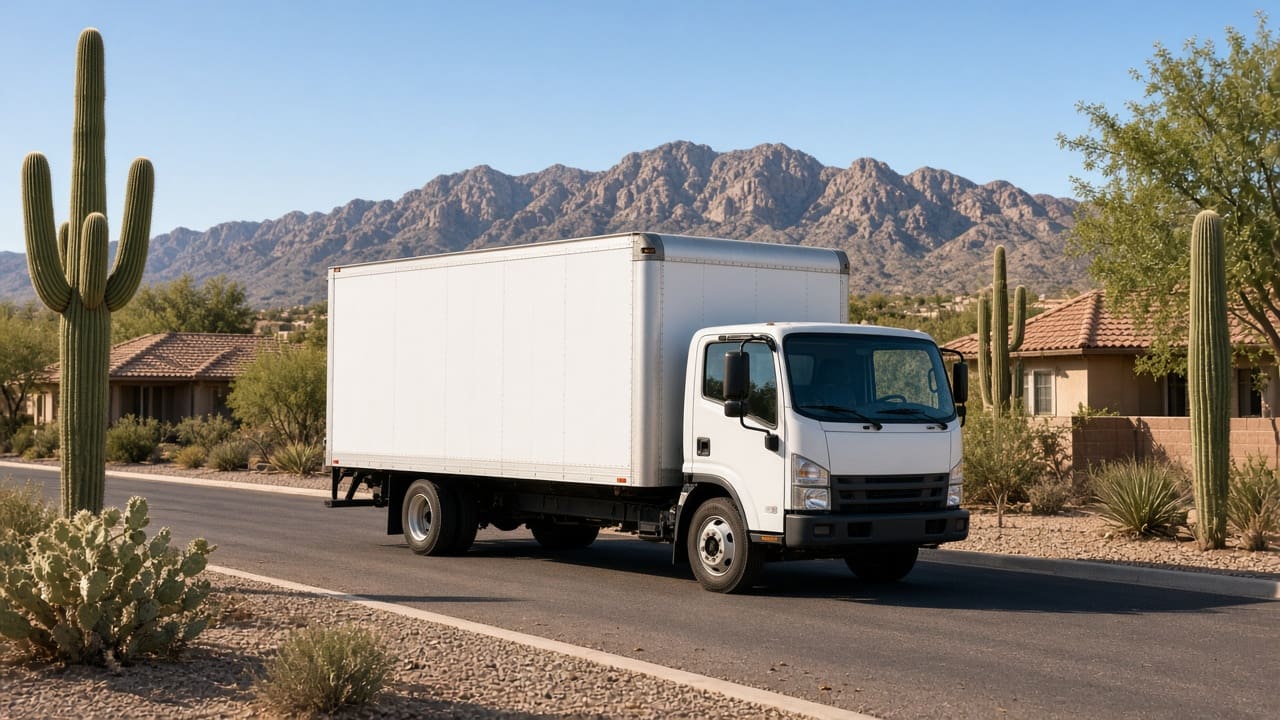
A Phoenix junk removal crew might start the morning at an Arcadia garage, spend the afternoon clearing office furniture through a downtown loading dock, and finish by hauling the load to an authorized disposal facility in a box truck. Along that route the crew is responsible for a ramp, a dolly, a truck, and someone else’s property the whole time. A hot driveway, a narrow gate, or a monsoon downpour can turn a routine pickup into a real loss fast. Junk removal insurance should be built around that route, not just the word “hauling” on an application.
General liability is the foundation. Commercial auto follows the truck and trailer, and workers compensation follows your employees. Inland marine covers the mobile equipment, and hired and non-owned auto can matter when a rented vehicle or an employee’s own car gets used for company business. Paint, batteries, refrigerants, leaking appliances, and unknown liquids call for a separate pollution and waste review, since most standard policies weren’t built with those materials in mind. For the broader framework behind all of this, see our junk removal insurance guide.
What a Phoenix Hauler Needs to Describe
Start by telling your agent exactly what you clear: homes, apartments, offices, retail spaces, estates, or construction sites. List what you accept and what you refuse. A crew that sticks to furniture and bagged household refuse presents a very different underwriting picture than one that also takes appliances, tires, paint, batteries, or commercial debris. Your agent also needs to know whether employees carry loads down stairs, whether appliances get disconnected before pickup, whether the truck is loaded by hand, and whether you’re running a trailer or a compactor.
General liability responds to third-party bodily injury or property damage, subject to your policy’s terms. Think of a passerby who trips over a strap in an Arcadia driveway, a shelf that clips a wall in a North Phoenix apartment, or a load that shifts and dents a neighbor’s car. Customer property in your crew’s care, custody, or control can be treated differently under the policy, and the your-work, contractual, cargo, and pollution provisions all matter here. Have your carrier walk you through those before your first commercial cleanout, not after.
Workers compensation covers an employee hurt while lifting, sorting, or loading. A helper can strain a shoulder moving a desk, cut a hand on a broken appliance, or fall stepping down from the truck. Arizona workers compensation generally becomes a central requirement once you have employees, subject to the state’s rules, so keep your employee count and payroll description current as a solo operation grows into a two-person crew.
Commercial auto covers the truck, van, or box truck and any scheduled trailer, whether it’s backing into a tight East Valley driveway, merging onto a busy road, or parked near pedestrians while the crew secures a load. Hired and non-owned auto can help fill the gap when a rented truck or an employee’s personal vehicle is doing company work, subject to the form. Inland marine or scheduled equipment coverage protects the dollies, ramps, straps, tarps, tools, and compact equipment that make the operation run, as long as the policy is written to include that property.
Phoenix Claim Patterns
| Loss scene | Where the review begins |
|---|---|
| A resident slips on a ramp or loose item during an Arcadia pickup | General liability |
| A refrigerator damages tile or a door jamb on the way out of a home | Customer-premises and property-in-care analysis |
| The truck clips a gate while backing out of a North Phoenix property | Commercial auto |
| A trailer, dolly, or compactor gets stolen after a late route | Inland marine or scheduled equipment |
| An unknown liquid leaks from a load near a facility or roadway | Liability, disposal contract, and pollution wording |
These are starting points for a coverage review, not promises of how a claim resolves. Photograph the property before you load anything and keep a record of what the customer actually authorized for removal. A disposal facility receipt helps document where a load ended up, but it won’t override a policy exclusion or make an unauthorized material acceptable after the fact.
Pollution and Phoenix Disposal Questions
Arizona heat has a way of turning an unknown liquid into an odor, a spill, or a customer complaint before the truck even reaches the yard. Batteries, paint, solvents, fuel, refrigerant-bearing appliances, fluorescent lamps, pesticides, and medical waste all deserve their own refusal or escalation process. Check the receiving facility’s acceptance rules along with any city, county, or state requirements tied to the material and the route you’re running.
Standard liability forms often exclude pollution outright. Some carriers offer a limited waste or pollution endorsement, while other operations need a dedicated contractors pollution policy or a specialized waste program instead. Ask directly whether your policy addresses accidental release, cleanup costs, damage to a neighboring property, and completed operations after the truck leaves the site. No policy is going to cover intentional dumping, regulatory fines, asbestos, lead, or every hazardous load that shows up on a job, so build your acceptance list with that reality in mind.
Arizona Licensing Starting Point
Arizona’s Registrar of Contractors licenses construction contracting, but a business that only collects, loads, hauls, and disposes of unwanted property may not need an ROC license for that work alone. The picture changes as soon as the company adds repair, alteration, improvement, or any construction scope. A contract to remove loose debris isn’t automatically a construction license, and borrowing a contractor classification just because it sounds close to hauling can create more confusion than it solves.
Arizona applies dollar and permit thresholds within its contractor licensing rules, and the current numbers and exact facts should be confirmed directly with the ROC before you bid a job. Phoenix operations may also need local business registration, tax registration, commercial vehicle compliance, and the right disposal permissions for the materials involved. If a job sits anywhere near construction work, request a current scope determination from the ROC rather than relying on a generic summary online. Workers compensation, driver records, and vehicle schedules still matter to your insurance program regardless of how the ROC licensing question lands.
Certificates for Property Managers and Offices
A commercial customer will often ask for a certificate before letting your crew into the building. That request can include additional insured wording, primary and noncontributory language, a waiver of subrogation, completed operations coverage, or higher auto limits, and every one of those terms has to come from an actual endorsement on your policy. A certificate summarizes coverage that already exists; it can’t create coverage for customer property, a restricted material, or a service you never disclosed on your application.
Commercial Cleanouts and Certificate Requests
A property manager might want an apartment cleared before the next tenant moves in. An office manager might schedule furniture removal through a loading dock. A builder might ask for loose debris removal once another contractor wraps up its scope. Each of these brings its own certificate request, access rules, and customer-premises exposure, so review the actual scope before assuming a standard certificate covers what’s being asked.
Additional insured status, primary and noncontributory language, waiver of subrogation, completed operations, and higher auto limits are all endorsement questions, and the certificate only reflects what’s already in force. Keep the signed contract, job photos, disposal receipt, and any refusal notes together in the job file, since that documentation is what backs you up if a certificate request or a claim ever gets questioned later.
Build the Phoenix Application From the Route
Give your agent the full picture: vehicles, drivers, trailer values, equipment, overnight parking, employee payroll, operating radius, the commercial share of your work, and the materials you accept. Explain whether crews work inside occupied buildings, use stairs or elevators, disconnect appliances, or hold material overnight before disposal. A carrier can underwrite the actual risk far more accurately when the application follows the truck from the first driveway to the receiving facility, rather than describing the business in general terms.
Revisit the program whenever the Phoenix operation adds a box truck, trailer, helper, compactor, apartment contract, or a new material stream. A description that fit a one-truck garage-pickup business won’t necessarily fit a multi-crew commercial turnover operation, so update your carrier before the work changes rather than after a claim reveals the application is out of date.
Bring the customer contract, certificate request, truck schedule, employee information, equipment list, accepted materials, disposal route, and prior claims history to the quote conversation. Western Pacific Insurance places coverage for junk removal contractors across Arizona, Nevada, California, and Utah. Call 702-932-3105 or start a review through our insurance quote form. The more accurately your Phoenix operation is described up front, the more useful the carrier’s response will be.


