
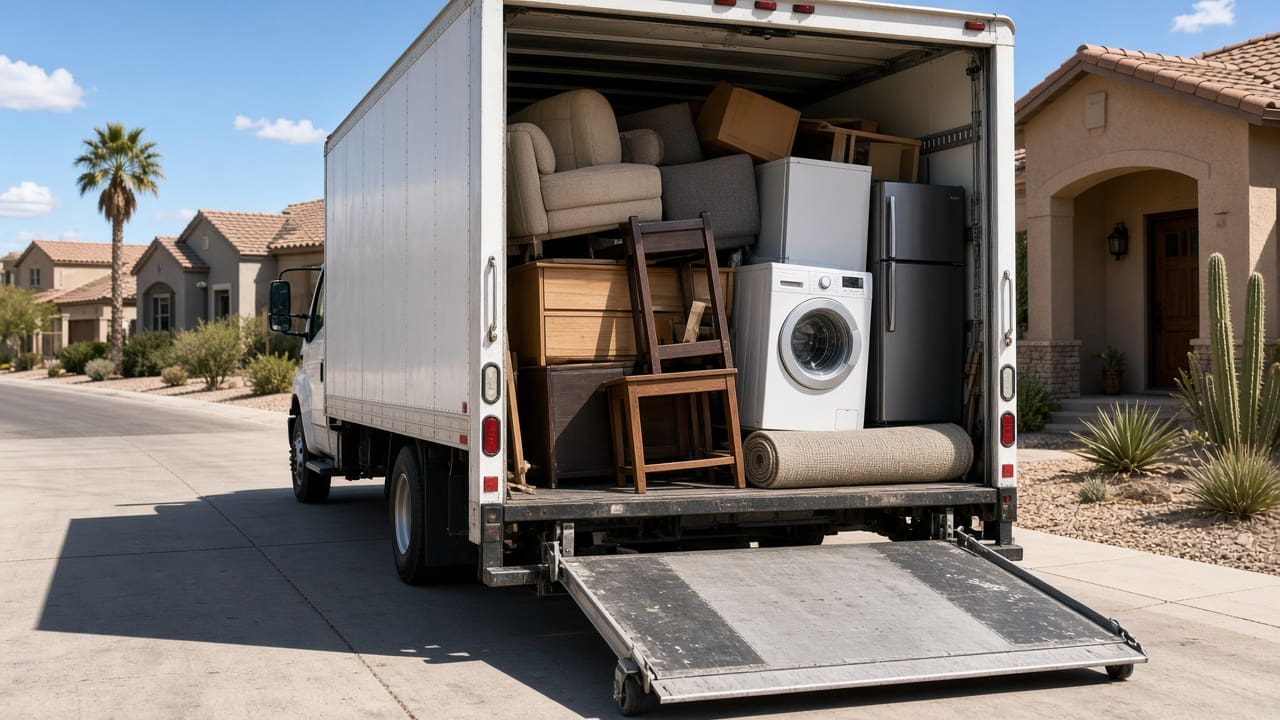
Junk Removal Insurance: Coverage for Hauling and Cleanout Crews
Junk removal looks simple from the curb: you show up, load the truck, haul it away. Inside the property, your crew is carrying a couch through a narrow stairwell, backing a dolly through a doorway, and disconnecting an old refrigerator while the customer watches every move. That is where junk removal insurance actually starts: not with the drive to the dump, but with everything that happens between the front door and the tailgate.
Most operators need general liability for third-party injury and property damage, workers compensation once employees are on the crew, commercial auto for the truck and trailer, and inland marine for the dollies, ramps, and equipment that ride along with you. If your crew ever takes paint, batteries, old appliances, or anything else with a whiff of “regulated material,” the pollution and waste conversation deserves its own line item rather than an assumption that general liability has it covered.
Western Pacific Insurance is based in Henderson, Nevada, and places coverage for haulers throughout Nevada, Arizona, California, and Utah. This guide walks through the coverage stack, the claims your crew is most likely to run into, and the licensing questions that shift depending on where the job is and where the load ends up.
Who Needs Junk Removal Insurance?
This guide is built for the business whose revenue comes from cleanouts and hauling — garage cleanouts, estate work, apartment turnovers, office furniture removal, mattress and appliance pickup, recurring commercial contracts, donation runs, and loose debris the customer has already bagged and staged. You might be running a pickup truck and a two-person crew, or a fleet of box trucks with roll-off containers and a dispatch schedule. Either way, your agent needs the real picture.
Tell your agent what you accept and what you turn away. A couch, a table, and bagged household refuse are a very different exposure than paint, solvents, fuel, pesticides, medical waste, batteries, refrigerant-bearing appliances, asbestos-containing material, or an unmarked drum someone found in the garage. Disposal facilities have their own acceptance rules, and carriers look at your business differently once you’re handling commercial construction debris, running roll-off containers, or taking custody of valuable property before it’s disposed of.
Use the same description everywhere — the application, the quote request, your customer contract, your certificate requests, and your own disposal procedure. If you’re adding repair, installation, structural tear-out, earthwork, or vehicle recovery to the menu, stop and have the program reviewed before that new work gets buried inside a hauling description that no longer matches what you’re actually doing.
What Coverage Does a Junk-Removal Contractor Need?
General liability is your foundation layer. It can respond when your operation injures someone outside the company or damages property that belongs to someone else, subject to the policy wording — a resident trips over a ramp in the driveway, a crew member drops a shelf against a wall, a load shifts and clips a parked car, or a customer says a refrigerator leak damaged the floor after your crew unhooked it. Those are exactly the scenarios that make property managers and homeowners ask for a certificate before the first item leaves the building.
That said, general liability isn’t a blanket promise covering every item your crew touches. Property in your crew’s care, custody, or control; the specific part of the property being worked on; contract language; and pollution exclusions can all change the answer. Some carriers offer endorsements built for customer premises or property in transit — ask where that line gets drawn before you take on a big apartment turnover or an estate cleanout.
Workers compensation covers your employees when they strain a back lifting a couch, cut a hand on a broken appliance edge, fall off a truck bed, or get pinned between a cart and a doorway. Nevada, Arizona, California, and Utah each set their own rules for owner exceptions and who counts as an employee, so report your actual payroll, headcount, temporary labor, and subcontractor use as it stands today. A description built around a one-person operation stops being accurate the moment you bring on a helper.
Commercial auto covers business use of your truck, van, box truck, or scheduled trailer, including backing, parking, loading near traffic, and the drive to the disposal site. A personal auto policy generally isn’t built to carry a revenue-producing vehicle. Hired and non-owned auto can matter when you rent a truck or an employee runs a supply errand in their own car, subject to the policy and that vehicle’s underlying insurance — it won’t automatically cover physical damage to the rented vehicle itself.
Inland marine, or contractors equipment coverage, follows your mobile gear — dollies, ramps, hand trucks, compactors, straps, tarps, and tools that live in a truck, trailer, yard, or job site. General liability won’t replace stolen equipment. Let your agent know where the gear sits overnight, whether it stays in a trailer, and which pieces are valuable enough to schedule separately.
Motor truck cargo or a bailee-style form can matter once you’re taking on responsibility for property that’s still in transit, though waste hauling isn’t automatically treated like household-goods moving. Ask whether the form you’re being offered addresses the customer’s property, your legal responsibility for it, your disposal process, and the point where a load officially becomes waste. A certificate can’t answer those questions for you.
Pollution or waste endorsements deserve their own conversation. Standard liability forms often carry broad pollution exclusions, and while a limited endorsement may cover certain accidental releases or cleanup allegations, another carrier might require a dedicated contractors pollution or waste policy instead. Don’t assume any endorsement extends to hazardous-waste transport, asbestos, lead, mold, regulatory fines, intentional dumping, or every material a customer might ask your crew to take.
Common Claims and the Policy That Starts the Conversation
Think of this table as a practical map, not a coverage promise — the facts, exclusions, limits, and endorsements on your actual policy control how a claim plays out.
| Job-site loss | Likely first policy conversation |
|---|---|
| A resident trips over a ramp, strap, or loose debris during loading | General liability, subject to the facts |
| A sofa scrapes a stair rail, door jamb, wall, or hardwood floor | Customer-premises and care, custody, or control analysis under the liability program |
| A helper strains a back or cuts a hand while lifting a refrigerator | Workers compensation where the state requirement applies |
| A box truck backs into a gate, parked car, mailbox, or retaining wall | Commercial auto |
| A dolly, ramp, trailer, or compact machine disappears overnight | Inland marine or scheduled equipment |
| Liquid leaks from a load and reaches a driveway, neighbor, or storm drain | Liability and a possible pollution or waste coverage review |
| A facility rejects a load because it contains paint, batteries, fuel, or another controlled item | Contract, disposal procedure, and policy exclusion review |
Two patterns come up again and again. First, a customer’s property is often still in your crew’s hands before anyone officially calls it waste, and the policy may treat a damaged floor, appliance, or reusable item differently than debris that’s already been discarded. Second, the load can create a brand-new exposure after it leaves the property — a bag tears in traffic, an item falls off a truck, or an unknown liquid escapes once the load reaches your yard. Your auto, cargo, liability, and pollution coverage all need to work together on that timeline.
Customer-Premises Damage While Loading
Picture the front door: your crew measures the sofa, protects the floor, pulls a door off its hinges if needed, and threads the piece through a narrow stairwell. After the truck pulls away, the customer notices a dark scuff in the hardwood. That’s not an abstract insurance question — it’s a dispute over when the damage happened, what your crew actually touched, and whether that floor was in your care, custody, or control at the time.
Take condition photos before you move anything heavy, and put exclusions and included items in writing up front. Ask your team whether they disconnect appliances, remove doors, use elevators, go into attics, or work stairs regularly, because those details shape both the application and the customer contract. Some carriers offer a customer-premises endorsement or a property-in-transit option, though availability varies by carrier, so don’t treat a certificate as coverage for every object your crew handles that day.
Damage to the surface you’re actually working on — a wall, a floor, a stair tread — can fall under your-work or similar limitations, which is a different analysis than damage to a neighbor’s fence or a parked car down the street. The real answer lives in the policy language and the specific facts of the claim, not in a general assumption either way.
Truck, Trailer, and Mobile Equipment
A junk-removal truck does double duty as transportation and a work platform. It parks in tight driveways, loads near pedestrians, backs up beside fences, and carries an unstable mix of wood, metal, furniture, cardboard, and appliances all at once. Tell your agent whether you’re running a pickup, box truck, dump body, van, or roll-off setup, and describe your trailers, drivers, operating radius, overnight parking, and typical disposal route.
Commercial auto handles the road exposure, and inland marine handles the mobile equipment — one doesn’t substitute for the other. A commercial auto policy won’t replace a stolen dolly, compactor, or ramp, and an inland marine policy won’t stand in for auto liability. Hired and non-owned auto can help cover rented vehicles or employee errands, but the form and limits need a real review rather than a rubber stamp. Keep the program tied to your actual fleet — if you’ve upgraded from an old van to a box truck, make sure the policy reflects that before it becomes the topic of a claim.
Commercial property coverage can protect your office, yard, spare supplies, and anything else kept at a fixed location. If customer material sits waiting for disposal for any length of time, that raises its own property, storage, and environmental question — tell your agent where it sits and how long it typically stays there.
Pollution, Waste, and the Acceptance List
A strong junk-removal program starts before the truck ever pulls up. Build an acceptance list and a refusal process your whole crew follows. Household furniture and bagged refuse are routine. Paint, solvents, pesticides, fuel, fluorescent tubes, lithium batteries, refrigerant-bearing appliances, medical waste, asbestos-containing material, and unmarked containers may need a different facility, a specialist, or a flat no.
Many liability forms limit or exclude pollution outright, and even when an endorsement is available, it may carry its own limit, deductible, territory, or reporting requirement. Ask what happens if a load leaks, a customer alleges contamination, a facility demands cleanup, or an employee unknowingly transports something the company should have refused. Regulatory penalties and intentional dumping generally aren’t insured no matter how the policy is worded.
Keep disposal receipts, photos, customer authorizations, facility instructions, and load notes on hand. None of that creates coverage on its own, but it helps you and the carrier reconstruct what was accepted, who handled it, and where it ended up — and it lets the carrier rate your operation on what you actually do, not a guess.
Licensing Across Nevada, Arizona, California, and Utah
Junk removal is usually treated as a hauling and disposal service rather than a construction trade, but that changes the moment a contract adds demolition, repair, alteration, improvement, excavation, or another regulated activity. Local business registration, vehicle rules, disposal permissions, and special handling requirements can apply even where a contractor license doesn’t, so confirm the current rule for both the job location and the material you’re hauling.
| State | Starting point for a junk hauler | Verify before bidding |
|---|---|---|
| Nevada | Ordinary collection and hauling may not fit a named construction specialty when no construction, alteration, or improvement is performed. | NSCB treatment of the exact scope, any exemption or monetary limit, local registrations, vehicle rules, and disposal permissions. |
| Arizona | ROC licensing addresses construction contracting; pure collection and hauling may sit outside that file. | Current ROC threshold and scope, Phoenix or county registration, ADEQ and facility rules, and regulated materials. |
| California | Collection, loading, transport, and authorized disposal may not be CSLB construction work. | Whether the contract has crossed into construction, the current CSLB threshold, local business and waste rules, and household hazardous waste procedures. |
| Utah | Hauling without construction, repair, or improvement may sit outside contractor licensing. | Lehi and county business rules, DOPL treatment of added work, disposal requirements, and employee coverage. |
Nevada licensing generally focuses on construction, alteration, and improvement, so ordinary hauling may not fit a named class — but a cleanout that adds structural removal or repair needs a fresh look from the Nevada State Contractors Board. Arizona’s ROC works the same way, and the current dollar and permit thresholds are worth confirming directly rather than pulling from a generic contractor page. California’s CSLB threshold is commonly cited around $1,000 in combined labor and materials, though the more important question is often whether your work counts as contracting at all. Utah generally regulates construction trades separately, while local business and waste requirements still apply to a hauling company regardless. These are starting points for a conversation with your agent, not legal opinions.
Boundaries for the Application
Keep your class description honest. Junk removal means collecting, loading, hauling, and disposing of unwanted property or debris for hire — hauling away a customer’s old car isn’t automatically a towing operation, carrying off soil isn’t excavation, and clearing loose debris after someone else’s project isn’t structural demolition. Towing, excavation, demolition, and handyman repair each carry their own work, licensing, safety, and insurance questions, so if a customer asks for one of those on top of a hauling job, pause before folding it into the same quote.
Completed Operations and Disposal Records
Sometimes the customer doesn’t notice a problem until your truck is long gone — a leaking appliance damages a floor overnight, a load spills on the highway, or a facility calls the next day about material it says wasn’t disclosed. That’s why completed operations coverage and your post-job paper trail both matter. Ask whether completed operations is available for the type of loading and disposal work your carrier is writing.
Hang onto the signed scope, item photos, customer instructions, employee names, truck number, disposal receipt, and any refusal notes. If a customer claims a valuable item went missing by mistake, your written scope and before-photos help establish what the crew was actually hired to take. If a facility rejects a load, the receipt and the conversation around it help establish what your crew knew going in. None of this insures a loss by itself, but it gives the carrier facts to work with instead of two conflicting memories.
Commercial contracts can shift responsibility onto you as well. An apartment manager might ask you to indemnify them, name them as an additional insured, or accept a disposal obligation your policy doesn’t automatically cover — have the contract reviewed before you agree to those terms. A certificate shows that insurance exists; it can’t rewrite the policy or make an excluded material acceptable after the fact.
What Changes the Quote
A small residential pickup run and a multi-crew commercial cleanout both get called “junk removal,” but they carry very different risk profiles. Expect a carrier to ask about receipts, payroll, the number and type of trucks, driver history, operating radius, overnight parking, prior claims, subcontractors, and how much of your work is commercial. They’ll likely also ask whether your crew handles stairs, elevators, appliances, construction-site debris, estate contents, or material that sits overnight in a yard.
Equipment values matter too. A company running hand trucks and tarps needs a very different inland marine schedule than one running a compactor, a lift gate, and several trailers, and a company that rents a truck for peak season has a different hired-vehicle conversation than one that owns its whole fleet. The most useful application isn’t the shortest one — it’s the one that actually describes the route your crew drives every day.
How to Prepare for a Junk Removal Quote
Come to your agent with a clear picture of the operation: annual receipts, the residential-versus-commercial split, cleanout and estate work, construction-site debris, accepted and refused materials, payroll, employee count, subcontractors, vehicle identification, trailer and equipment values, storage address, operating radius, disposal facilities, and prior claims. Let them know whether your crew moves items through occupied buildings, disconnects appliances, works stairs, or uses a lift or compactor on the job.
Bring your certificate requirements along too. An apartment manager might ask for additional insured wording; a commercial customer might want primary and noncontributory language, a waiver of subrogation, completed operations, or higher auto limits. A certificate summarizes what you have — it doesn’t create an endorsement, change an exclusion, or insure a load your policy doesn’t accept.
Build the Program Around the Route
The real question isn’t just what your truck carries. It’s where the crew starts, what they touch along the way, how they load it, how they get it there, where the material sits in the meantime, and who ultimately receives it. That whole route is what ties together general liability, customer-premises exposure, workers compensation, commercial auto, inland marine, hired and non-owned auto, cargo, property, and pollution coverage into one program that actually fits your business.
Practical Controls That Support the Insurance Program
Good insurance works best alongside good habits on the job. Use two people on heavy or awkward items when the job calls for it, protect floors and corners, secure ramps, chock wheels, and keep pedestrians clear of the loading path. Don’t let a customer’s urgency talk your crew into accepting an unknown chemical container just to get the job done — decide ahead of time who has the authority to say no to an unsafe item, so nobody’s making that call under pressure at the truck.
Build a simple handoff routine at the disposal facility: record the date, truck, load type, any rejected item, and the receipt. If a customer later claims a missing heirloom, your written authorization and before-photos back you up. If a neighbor claims a leak, your load notes and disposal location do the same. These habits won’t make a claim disappear and they won’t expand your coverage, but they put the facts on your side while the carrier sorts out what happened.
Revisit the program whenever you add a box truck, trailer, employee, compactor, commercial contract, new disposal stream, or new metro. A description that fit a pickup-and-donate operation can fall short once you’re doing apartment turnovers and construction-site debris — update your carrier before the new exposure turns into the next claim.
Western Pacific Insurance places coverage for junk-removal contractors throughout Nevada, Arizona, California, and Utah. Call 702-932-3105 or request a review through the insurance quote form. Tell us about your truck, your crew, what you accept, how you load, and where the material ends up, and we’ll match the program to the business you’re actually running.


