
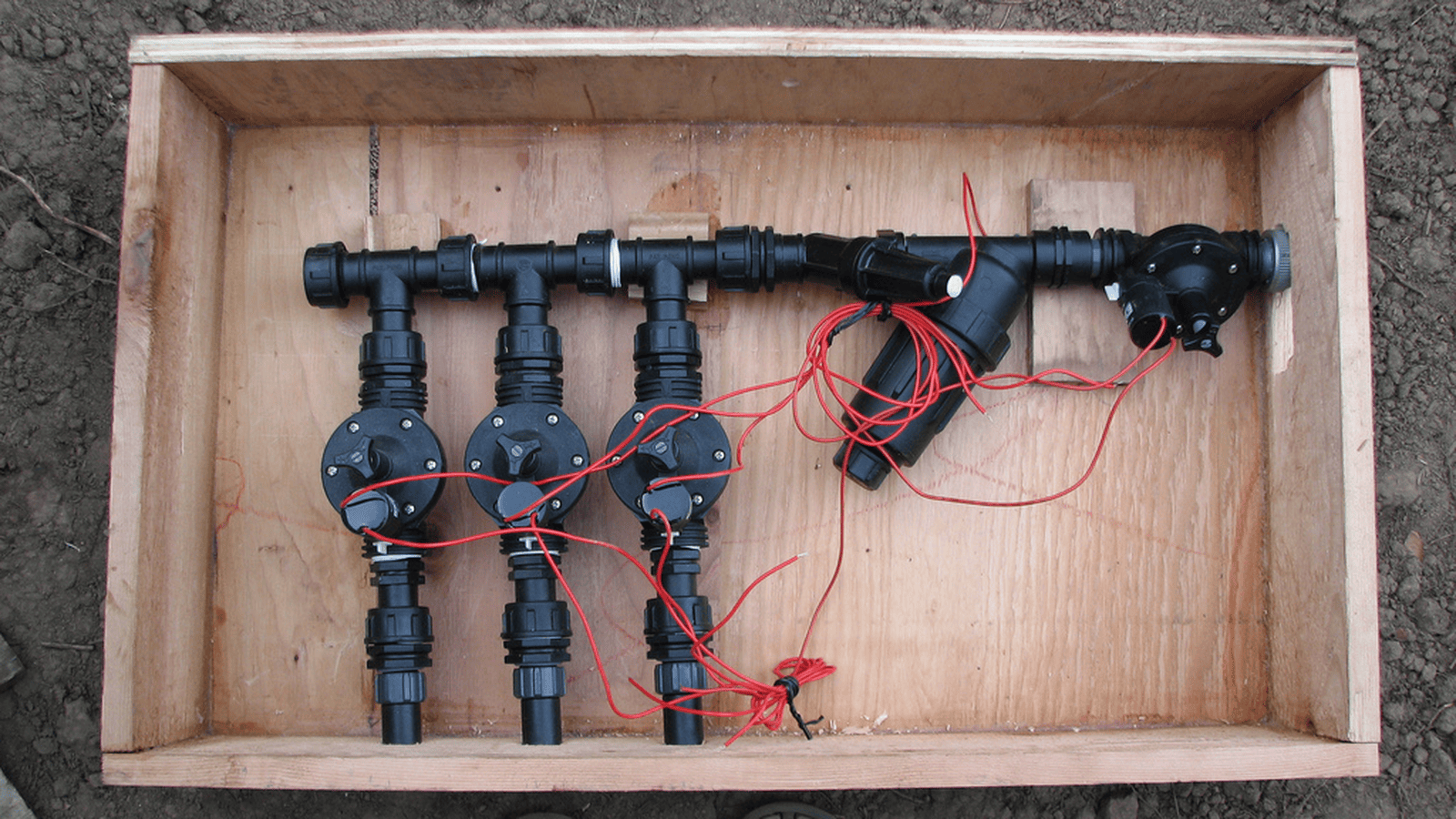
If you install or repair landscape irrigation for a living, your insurance has to follow the work you actually do. That starts with an open lateral trench on a Tuesday morning and ends with a leak that soaks a finished patio six months after you left. In between are the controllers and valve manifolds riding a trailer between jobs, the helper who lifts the trencher, and the HOA that wants a certificate before you break ground.
This guide covers general liability and the lines around it for licensed irrigation and sprinkler contractors in Nevada, Arizona, California, and Utah. If irrigation is one piece of a broader lawn and softscape book, our landscaping contractor insurance guide is the better starting point, and tree service insurance has its own page. For the policies every trade carries, start with contractor insurance explained. Western Pacific Insurance is an independent agency in Henderson, Nevada, and we place this coverage in all four states.
Who Needs Irrigation Contractor Insurance?
This coverage fits licensed crews who design, install, or repair landscape irrigation and sprinkler systems on property they don’t own. That includes residential spray-to-drip conversions, commercial and HOA zone packages, drip retrofits, controller swaps, valve manifold rebuilds, and the backflow work that rides the irrigation ticket.
A few neighboring trades look similar but price differently. A lawn crew that clips a head while mowing is still a landscaping risk, and an arborist who trenches near roots is still a tree service risk. If you run the whole site and hire the irrigation sub, you need general contractor insurance instead. Arizona’s R-21 / C-21 / CR-21 Hardscaping and Irrigation Systems card is the clearest example of the overlap. The same license covers a landscape book and an irrigation book, and the carrier will rate them differently depending on which one your invoices describe.
What Coverage Does an Irrigation Contractor Need?
Most irrigation operations run on a core stack, and general liability sits at the base. It responds when your work injures someone else or damages their property: a neighbor trips in an open lateral trench, spoils slide onto a finished patio, or a parked car takes a scuff from the trencher you were unloading. Workers compensation covers your helper when a dig, a manifold set, or a controller lift ends in a clinic visit. Commercial auto covers the trucks and trailers hauling PVC, poly, heads, and controllers between sites.
Three property lines round out the stack. Inland marine, often sold as a tools and equipment floater, covers trenchers, pipe pullers, cutters, locators, and spare controllers wherever they travel. An installation floater covers controllers, valve manifolds, and specialty heads from the time they leave your shop until the owner accepts the job. A business owners policy can bundle general liability with property coverage for the yard.
Two more lines deserve a look as you grow. A commercial umbrella stacks limits above general liability and auto for the GCs, HOAs, and municipalities that ask for more than your primary policy carries. Professional liability can respond to claims about the design itself, such as a coverage map or water-budget dispute that general liability treats as workmanship. Pollution or chemical endorsements matter when flush water, residual fertilizer in a line, or solvent cement fumes show up in a claim. Many standard general liability forms limit or exclude that exposure, so treat it as something to confirm before you bind rather than something to assume.
Which Policy Pays Which Irrigation Claim?
Coverage questions get easier when you map real claims to the policy that responds. Here are the losses we see most often in this trade and where each one lands.
| The claim | The policy that responds |
|---|---|
| Neighbor trips in an open trench or on a spoils pile during a lateral dig | General liability |
| Helper is hurt setting a valve manifold or lifting a trencher | Workers compensation |
| Truck hits a parked car between Green Valley jobs | Commercial auto |
| Locator or spare controller stolen from the truck overnight | Inland marine tools and equipment |
| Smart controller damaged in transit before the owner accepts the job | Installation floater |
| Lateral leak soaks a finished patio months later | Completed operations on the general liability policy, if the damage is to other property |
| Owner wants a free redo because the coverage map was wrong | Often professional liability or your own pocket, not general liability |
| Flush water or residual chemical runoff claim | Pollution endorsement territory. Verify before you bind |
| Yard stock of PVC and heads burns after hours | Commercial property on the yard, not the irrigation GL |
Two of those rows carry an asterisk in real life, and we cover both below. Damage to the system you’re installing usually sits outside general liability, and a leak that ruins the next patio is a different claim from a coverage map that was wrong.
Residential Conversions, Commercial Zones, and Repair Tickets
A backyard spray-to-drip conversion and a commercial multi-zone package can both live on one policy when the invoices describe irrigation work, but they don’t price the same. Commercial and HOA books bring taller certificate language, traffic control, and water-budget rules that house jobs rarely ask for. Repair and controller work is a third category with its own claim pattern. Tell your agent which mix you actually bid so the carrier assigns the right class. The wrong class is a rating and audit problem, and it invites a fight at claim time that you don’t want.
Why Completed Operations and Your Own Work Still Matter
The lateral that leaks into a patio crack months after punch list is a completed operations question. Standard general liability responds to injury or damage that happens during the policy period, including damage that shows up after you’ve left the site. Some inexpensive irrigation policies restrict that grant. Ask where completed operations lives before you bind, and ask whether its aggregate is shared with the rest of the policy or stands on its own.
The part that surprises contractors is what general liability won’t do. It typically excludes damage to the particular part of the property you’re working on, and it excludes property in your care, custody, or control. The laterals and heads you’re installing usually sit in that gap. A bad coverage map, a zone that never comes up, or a controller that fails after the first season is a workmanship or warranty dispute, and general liability steps aside. A leak that ruins the neighbor’s finished patio is damage to other property, and that claim is far more likely to be covered. Photograph the trench and the existing hardscape before you start, and write the invoice so it matches the class on the policy.
Controllers, Valve Manifolds, and Backflow on the Same Ticket
Controllers, valve manifolds, and specialty heads move from your shop to owner acceptance on an installation floater. Theft of a staged controller from the yard or a trailer is usually an inland marine or installation floater claim, not a general liability claim. Confirm who buys that coverage before the first cabinet leaves the warehouse.
Backflow and potable connections sit at the edge of this file. Arizona’s R-21 / C-21 scope expressly includes backflow prevention devices and connection to potable lines. Nevada and California often push you toward a second license or a plumbing sub once the work leaves landscape laterals and enters building plumbing. Name the cards you hold on the application and let the underwriter sort the rest.
Commercial Property for the Yard
General liability won’t rebuild the storage rack after a fire, and inland marine won’t replace inventory that never left the lot. PVC, poly, heads, valves, and staged controllers sitting in the yard belong on a business owners policy or a standalone commercial property form. That policy covers the premises, the stock, and the tools that stay put. Heat damage in a closed yard and a winter leak in a shop bay are both property claims. Our commercial property insurance page covers the building in more detail. Name the yard on the application so the inventory is actually insured.
Commercial Auto for the Irrigation Crew
The truck that hauls a trencher and a spare controller between the shop and the dig belongs on commercial auto, and so do the flatbeds and trailers behind it. The policy also needs hired and non-owned coverage for the day an employee grabs fittings in a personal vehicle. A personal auto policy is a weak home for that trip once the carrier sees business use. Our business auto insurance page covers the truck policy, and keeping the truck and the irrigation class on separate lines keeps the application clean.
How Do Licensing Rules Differ in Nevada, California, Arizona, and Utah?
The inspector who wants your license number before the trench opens works for a different board in every state. A Henderson crew that wins a Mesa HOA retrofit answers to the Arizona Registrar of Contractors, not the Nevada State Contractors Board. A Lehi tract inspector wants an S330 number for sprinkler work. Nevada puts landscape irrigation on C-10 and also lists it under C-1d plumbing. California puts broad landscape irrigation on C-27, with a limited D-12 drip specialty. Arizona prints a dedicated hardscape-and-irrigation ticket. Utah keeps sprinkler and irrigation on S330 now that pools have moved off that card. The table is the short version.
| State | Irrigation / sprinkler card | Watch the split | Bond or insurance rule |
|---|---|---|---|
| Nevada | C-10 Landscape contracting (drainage and landscape irrigation); C-1d Plumbing also lists landscape irrigation systems (former C-1g holders are deemed C-1d but restricted to irrigation) | A-18 is farm and crop irrigation; C-1b is fire-protection sprinklers, not lawn irrigation; lawn and fert books stay on landscaping | Contractor bond set by the board from your monetary limit and financials; the board does not require general liability |
| California | C-27 Landscaping Contractor (primary path; exam covers irrigation); C-61 / D-12 limited specialty for PVC irrigation piping and subsurface drip | No standalone irrigation C-class; C-36 plumbing may touch potable connections; dual-card or hire when the job leaves landscape laterals | $25,000 contractor bond; no CSLB general liability mandate for a sole proprietor C-27; an LLC licensee needs at least $1 million aggregate; universal workers comp January 1, 2028 |
| Arizona | R-21 / C-21 / CR-21 Hardscaping and Irrigation Systems | Same card our landscaping guide covers for landscape books; excludes swimming pools and pool deck coatings; describe installer vs. lawn work accurately | Bonds scale with class and volume; license required at $1,000 or any permitted job; Registrar of Contractors does not require general liability; workers comp at one employee |
| Utah | S330 Landscape and Recreation for sprinkler systems and irrigation water distribution (pools removed from S330 effective March 30, 2026) | Backflow install sits behind continuing-education conditions; lawn books stay on landscaping; pool install is B100 / R100, not this file | Licensed classes: a current general liability floor around $1 million per occurrence and $2 million aggregate, with the Division of Professional Licensing as certificate holder; workers comp or a Labor Commission waiver |
Watch the labels. Nevada C-1b is fire sprinklers and A-18 is farm irrigation, and neither one is a backyard conversion. California has no standalone irrigation classification. Arizona’s residential irrigation classification language is published at Arizona Administrative Code R4-9-103. Application forms in every state can lag the current rule, so confirm the number with the board before you rely on it.
How Much Does Irrigation Contractor Insurance Cost?
Price follows the class, the payroll, and the deductible, not a national average on a comparison site. A solo residential repair crew prices differently than a shop that digs new commercial zones and hangs HOA packages across a metro, so we don’t publish a monthly teaser. The stack around general liability moves the bill more than the GL number alone. Tools and equipment, commercial auto, the yard, and workers compensation are where the surprises live. Trench depth, a helper on payroll, solvent cement, and a multi-site commercial book all change the class. A callback that costs a few thousand dollars usually sits inside your deductible, and the insurance question stays the same: is the class right, and is the residential-versus-commercial split accurate? Request a quote and we’ll price the work you actually do.
What Do General Contractors and Site Owners Require?
A certificate of insurance is evidence of coverage, not coverage itself. Most general contractors, property managers, and HOAs want at least $1 million per occurrence and $2 million aggregate. They’ll also ask to be named as additional insured, with a waiver of subrogation and primary and noncontributory wording. The endorsement has to actually exist on the policy. A certificate that promises wording the policy doesn’t carry is a problem waiting for a claim. Ongoing operations usually use CG 20 10, completed operations usually use CG 20 37, and many jobs also ask for CG 25 03, the per-project aggregate. We review the contract language and place the endorsements the job requires.
City pages under this guide cover local license and certificate detail for Henderson, the Phoenix metro, San Diego County, and Lehi and Utah County.
Questions to Ask Before You Bind
Walk through these with your agent before the first certificate goes out.
- What class did the carrier assign: residential irrigation, commercial irrigation, repair, controller work, or a mix?
- If you trench laterals, hang manifolds, set controllers, or add drip conversions, does the file show that exposure?
- What happens to coverage when an irrigation job adds lawn, fert, tree work, or a full landscape package?
- Does completed operations stay on after you leave the trench, and does it have its own aggregate?
- How does the policy treat damage to the laterals, heads, or controller you just installed?
- Are trenchers, locators, and spare controllers scheduled on inland marine, and is there an installation floater for equipment in transit?
- Can the carrier issue the additional insured wording builders and HOAs actually ask for?
“I Only Repair Residential Heads.” Why Carry All of This?
We hear this one a lot, and it deserves a straight answer. A head swap feels small, so the risk feels small. The exposure math says otherwise. One trip at an open trench can produce a four-figure claim, and one helper injury can produce a six-figure one. Beyond the raw risk, insurance is a sales tool in this trade. Builders, HOAs, and many homeowners require a certificate before you start. Utah requires general liability just to hold an active license on the cards that carry sprinkler install, and a California C-27 needs workers compensation the moment you have help. A solo operator usually needs less coverage than a ten-person crew, not none.
Frequently Asked Questions
Do I need workers compensation if I work alone?
Nevada, Arizona, and Utah require it once you have employees, and Utah also wants a Labor Commission waiver when you don’t. A solo California C-27 can still file an exemption until January 1, 2028, unless the qualifier is an RME. Confirm the current Contractors State License Board rules for your entity type before you assume the exemption still fits.
Does general liability cover the irrigation system I just installed?
Usually not for damage to those laterals or heads, because general liability typically excludes the part you’re working on. A leak that ruins the next patio is a different claim and is more likely to be covered. Redoing your own coverage map is usually a job cost.
Does a landscaping policy cover irrigation installs?
A landscaping policy can price irrigation when it rides inside a lawn and softscape book, which is why our landscaping contractor insurance guide exists. This page is for the installer whose invoice is the irrigation system. The wrong class doesn’t automatically void the policy, but it does create a rating and audit problem and invites a fight at claim time. Start on the guide that matches the bulk of your work.
Is a homeowners policy enough?
No. Homeowners policies exclude business activity, so paid irrigation work on someone else’s property won’t find a home there. The truck between digs also sits outside personal auto once the carrier sees business use. Sprinkler questions about your own residence are a different conversation.
Can I get coverage with a prior claim?
Almost always, though the market may change. We can move a risk between standard carriers and specialty markets until the fit and the price both work.
How is this different from landscaping or tree service insurance?
Landscaping contractor insurance is the lawn, fert, and softscape file, and that includes Arizona hardscape-irrigation books on R-21 / C-21 when the invoice describes landscape work. Tree service insurance is the arborist file. Irrigation contractor insurance is the design, install, and repair file for landscape irrigation and sprinkler systems. Many operations need more than one of these conversations, and the right starting point is whichever guide matches most of your invoices.
Ready to Compare Options?
Irrigation work rewards a clean invoice and the right class. We shop your operation across a broad carrier lineup and match the policy language to the jobs you actually take, pairing general liability with the completed operations, tools, yard, and certificate wording this trade demands. If a residential repair book is growing into commercial zones and HOA packages, we’ll say so before the certificate goes out. Request a quote and tell us about the trenches you dig. For state-specific detail, see our Nevada, Arizona, California, and Utah insurance pages.


