
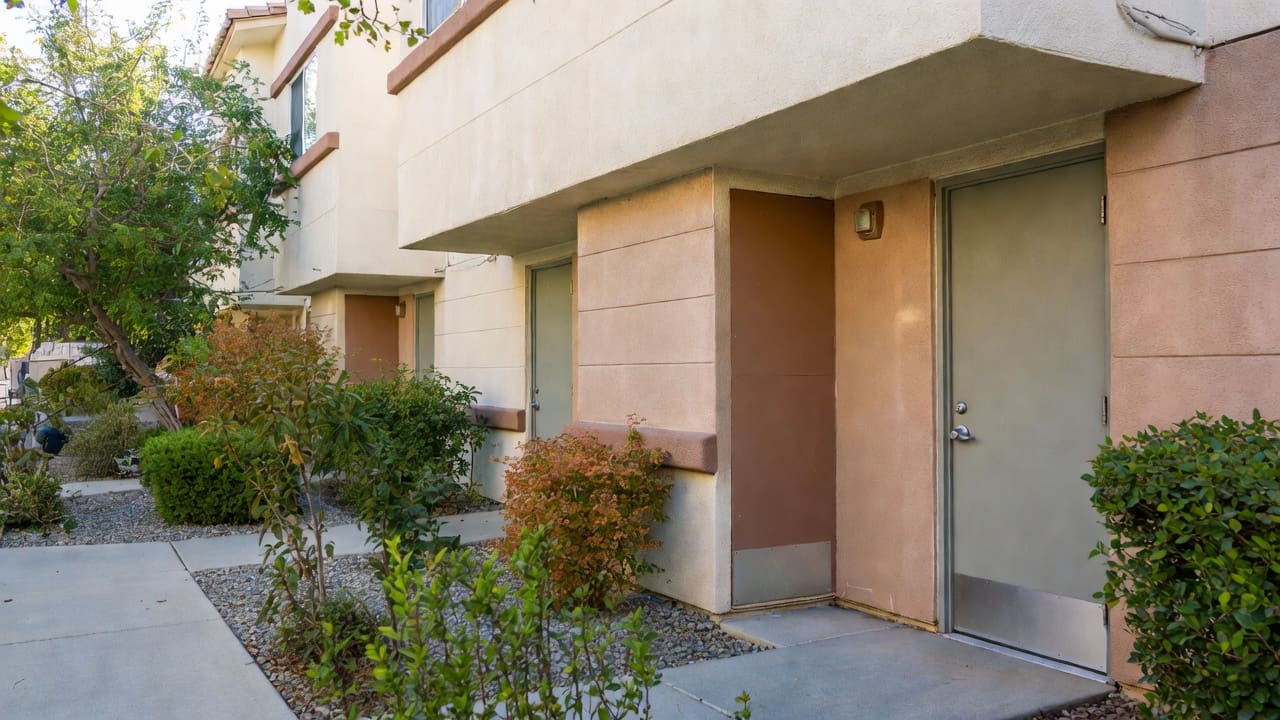
Why Property Managers Should Require Renters Insurance From Every Tenant
If you manage rentals and do not require renters insurance, you are carrying risk that does not need to be yours. Roughly 40% of renters have no policy, and many believe the landlord policy covers their stuff. It does not. That gap can cost you the deductible, a premium increase, legal fees, and lost rent when a tenant-caused loss hits. Below we cover what a landlord policy leaves out, what an HO-4 pays, and the three lease terms that make the requirement stick.
If you are the renter sharing the unit, see our guide to renters insurance for roommates.
What Your Landlord Policy Actually Covers — And What It Doesn’t
Your landlord insurance policy — often written on a DP-3 form or a similar landlord-specific form — is designed to protect three things: the physical structure of the building, your liability as the property owner, and your lost rental income if a covered event makes the unit uninhabitable. That’s the extent of what it does. It does not cover your tenants’ personal belongings. Their furniture, electronics, clothing, kitchenware — none of it is on your policy. If a fire, burst pipe, or theft destroys everything your tenant owns, your insurance will not reimburse them for a single item.
This distinction matters far more than most landlords realize. When an uninsured tenant loses their belongings in a covered event, they have no policy to file a claim against. That leaves them financially devastated — and looking for someone to hold responsible. In many cases, that someone is the property owner. Even if you did nothing wrong, the absence of a tenant’s renters policy removes a layer of protection that would have resolved the situation without involving you at all.
What Renters Insurance Covers and Why It Protects You
A standard renters insurance policy — known in the industry as an HO-4 — provides three types of coverage that directly benefit both the tenant and the property owner.
Personal property coverage protects the tenant’s belongings against named perils such as fire, theft, vandalism, and certain types of water damage. When a tenant has this coverage, they can file a claim on their own policy to replace what they lost. Without it, the tenant absorbs the entire financial loss — or attempts to recover it from you through legal action.
Liability coverage is the component that matters most to property owners and managers. If a tenant is legally liable for damage to your property — a kitchen fire caused by unattended cooking, a bathtub that overflows and damages the unit below, a candle that ignites a curtain — their renters insurance liability coverage can pay for the damage to your building. This is critical. Without the tenant’s liability coverage in play, you’re filing a claim on your own landlord policy, paying your own deductible, and potentially facing a premium increase at renewal. Liability coverage on a renters policy typically starts at $100,000, with many policies offering $300,000 or more for a modest increase in premium.
Loss of use coverage (also called Additional Living Expenses) pays for the tenant’s temporary housing if their unit becomes uninhabitable due to a covered event. This matters to you because without it, the tenant may have nowhere to go, which creates pressure for you to provide accommodations, negotiate lease terminations, or deal with disputes about habitability. When the tenant’s own policy covers their temporary relocation, that pressure disappears.
The Real-World Scenarios That Make This Urgent
The dramatic scenario is a kitchen fire that guts a unit and damages neighboring apartments. That happens, and when it does, the costs are catastrophic. But the more common — and arguably more important — scenario for property managers is water damage. A washing machine hose fails. A toilet overflows on the second floor and damages the ceiling and flooring of the unit below. A child flushes something that shouldn’t be flushed and it backs up the plumbing.
These are not rare events. They happen constantly in rental properties. And the financial outcome depends almost entirely on whether the responsible tenant has renters insurance.
Consider a straightforward example: a tenant causes $18,000 in water damage to the unit below theirs. If that tenant has renters insurance with $100,000 in liability coverage, their policy handles the damage to your property. Your landlord policy stays untouched — no claim, no deductible, no premium increase. The tenant’s personal property coverage handles their own belongings. Everyone is made whole through the appropriate insurance channels.
Now consider the same scenario without renters insurance. You file a claim on your landlord policy. You pay your deductible — which could be $1,000, $2,500, or $5,000 depending on your policy. Your premium may increase at renewal. And then you attempt to recover the cost from the tenant, who may not cooperate, may not have the money, and may not even be your tenant by the time the process is resolved.
Subrogation: The Dynamic Most Landlords Don’t Think About
There’s an additional wrinkle that most property owners and managers don’t consider. When you file a claim on your landlord policy for damage caused by a tenant, your insurance carrier may pursue the tenant directly for reimbursement through a legal process called subrogation. In simple terms, your insurance company pays you and then goes after the person who caused the loss to recover their money.
If your tenant has renters insurance, the subrogation process is handled between the two insurance companies. It’s routine and invisible to you. If your tenant doesn’t have renters insurance, your carrier is pursuing an uninsured individual — potentially someone who is still living in your property, paying you rent, and now dealing with a legal claim from your insurance company. That’s not a dynamic that benefits anyone, least of all you as the property manager trying to maintain a functioning landlord-tenant relationship.
Yes, You Can Legally Require It
In most states — including Nevada, Arizona, Utah, and California — landlords and property managers can legally require renters insurance as a condition of the lease. No state mandates that tenants carry renters insurance by law, but property owners are well within their rights to make it a lease requirement, just like any other term or condition of occupancy. It’s standard practice, it’s enforceable, and it’s increasingly common — particularly among professional property management companies managing larger portfolios.
What to Include in Your Lease Requirement
If you’re going to require renters insurance — and you should — there are three specific elements to include in your lease language.
A minimum liability limit. Most renters policies default to either $100,000 or $300,000 in liability coverage. For meaningful protection, require at least $100,000. Requiring $300,000 is better and costs the tenant very little extra — often just a few dollars more per month. The liability component is what protects your property, so don’t leave it vague.
Additional interested party status. Require that you — the property owner or management company — are listed as an additional interested party (sometimes called “additional interest”) on the tenant’s policy. This is an important distinction: you are not being added as an additional insured, which would mean you have coverage under their policy and create complications. Additional interest status simply means the insurance carrier will notify you if the policy is canceled, lapses, or is not renewed. Without this notification, a tenant could purchase a policy on the day they sign the lease, cancel it the next day, and you would have no way of knowing.
Proof of coverage at move-in and renewal. Make it part of your move-in checklist: the tenant provides a copy of their declarations page showing that coverage is active, that the liability limit meets your minimum requirement, and that you are listed as an additional interested party. Verify it again at each lease renewal. A requirement that isn’t enforced is not a requirement at all.
Addressing the Pushback: “Won’t This Scare Off Tenants?”
This is the most common objection landlords raise, and it doesn’t hold up. Renters insurance costs, on average, somewhere between $15 and $20 per month. Many policies through competitive carriers come in under $15 per month. That’s less than the cost of a single streaming subscription. We’re talking about comprehensive coverage — personal property protection, liability coverage, and temporary housing — for roughly fifty cents a day.
If a prospective tenant is unwilling to spend $15 per month to protect their own belongings and your property, that tells you something meaningful about how they approach financial responsibility. That’s not a tenant worth compromising your risk management standards for.
The reality is that most tenants, when the requirement is explained clearly and the cost is made transparent, have no issue purchasing a policy. Many are grateful for the prompt, because they didn’t realize how inexpensive it was or how much they stood to lose without it. As we explain in our YouTube video on this topic, the conversation is usually easier than landlords expect.
For Property Managers: Protecting Your Client’s Asset
If you manage properties on behalf of investor clients, requiring renters insurance is part of your fiduciary responsibility to protect their asset. It’s also part of protecting yourself. If a loss occurs that could have been partially or fully mitigated by a tenant’s renters policy and you didn’t require it, that’s a difficult conversation to have with your property owner — and potentially a liability issue for your management company.
The math is straightforward. If you’re managing fifty units and roughly 40% of your tenants are uninsured, that means twenty tenants in your portfolio are one accident away from becoming your problem. Making renters insurance mandatory is one of the lowest-cost risk management decisions you’ll ever implement as a property manager. It protects the tenant, it protects the property owner, and it protects you.
How to Set This Up
If you don’t currently require renters insurance, the implementation is straightforward. Update your lease language to include the requirement, specifying the minimum liability limit and the additional interested party provision. For existing tenants, introduce the requirement at the next lease renewal with adequate notice. For new tenants, make it part of the application and move-in process from day one.
If you want help setting up a streamlined renters insurance program for your portfolio — including carrier options, minimum coverage standards, and proof-of-coverage tracking — that’s exactly what we do. At Western Pacific Insurance, we’re an independent agency licensed in Nevada, California, Arizona, and Utah, and we work with multiple renters insurance carriers to make compliance easy for property managers and affordable for tenants. Request a quote here or give us a call at 702-932-3105 to get started.


