
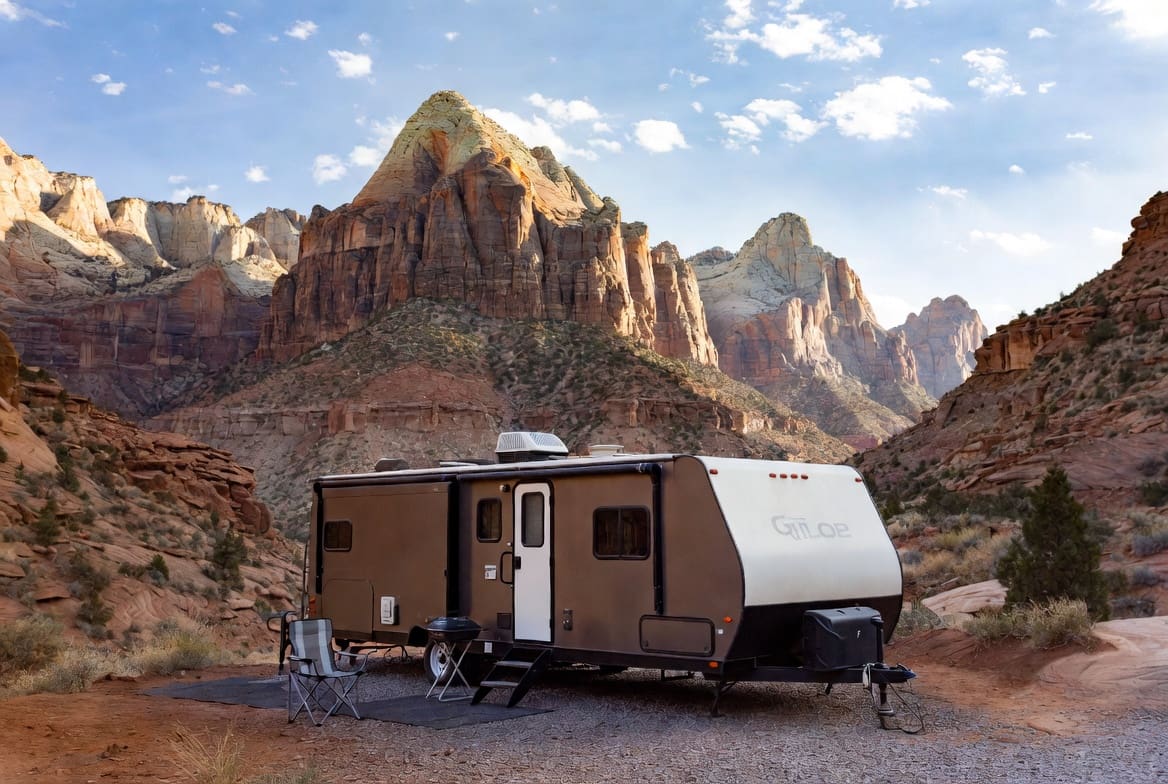
RV Insurance in Utah – What the National Parks State Gets Wrong
Utah RV insurance is not the same product as your auto policy, and it is not one product for every rig. A motorhome needs its own liability at Utah’s 30/65/25 minimum. A towable trailer borrows the tow vehicle’s liability while hitched, but a tree on your fifth wheel at Zion is not an auto claim. Weekend campers and Wasatch Front full-timers need different policies. Below we cover campsite liability at the national parks, valuation after a total loss, and why you should not cancel coverage for winter storage.
Utah RV insurance depends on two things. The type of rig you own and how you use it. A motorhome needs a standalone policy with state-required liability coverage. A towable trailer relies on your tow vehicle for liability but needs its own coverage for physical damage. And the product that works for a few camping weekends a year is not the same product that works for someone who sold the house and lives on the road.
Utah’s Liability Requirements for Motorhomes
Utah requires liability insurance on motorhomes. The state minimum is 30/65/25. That is thirty thousand per person for bodily injury, sixty-five thousand per accident, and twenty-five thousand for property damage. Utah updated these limits in 2025, and they are higher than most neighboring states. Even so, state minimums satisfy the law. They do not provide adequate protection if a serious accident produces costs that exceed them.
Towable trailers do not need their own liability policy in Utah. Your tow vehicle’s liability extends to the trailer while hitched. Physical damage to the trailer requires a separate RV policy or endorsement. A tree falling on your fifth wheel at a Zion campground is not covered by your auto policy.
Campsite Liability in the National Parks
Utah campgrounds get crowded, especially during peak season from May through October. Sites at Watchman in Zion, Sunset in Bryce, and Devil’s Garden in Arches are packed tight. When RVs are parked close together and foot traffic is high, the liability exposure at the campsite is real. If someone trips over your leveling equipment or your awning damages a neighboring rig, standard auto liability does not cover that exposure.
Vacation liability fills the gap. Some policies include a small default amount. Others leave it out entirely. If you spend multiple weeks a year in Utah campgrounds, the default limit may not be enough. Ask your agent to verify the coverage and the amount.
Full-Time Living Along the Wasatch Front
Some Utah residents live in RV parks and communities full-time. If you live in your RV for more than six months out of the year, a recreational policy leaves gaps. It assumes you have a house carrying homeowners coverage. A full-timer policy fills some of those same roles, including personal liability at the campsite, medical payments for guests, and higher personal property limits.
The RV Industry Association maintains construction and safety standards for recreational vehicles, but the insurance side is a separate question. Making sure your policy matches how you actually live in the rig is the owner’s responsibility.
Valuation on a Total Loss
Most RV policies default to actual cash value. The carrier pays what the rig is worth at the time of the loss minus depreciation and your deductible. If you owe more on the loan than the depreciated value, you are covering the difference. Agreed value removes the depreciation question by locking in a set amount when the policy is written. Total loss replacement covers the cost of a comparable new unit within the first few model years. Gap coverage closes the loan-to-value difference if you are financing.
Winter Storage in Utah
Utah winters make RV storage a necessity for most owners. Rigs parked in storage lots from November through March are exposed to snow, ice, freeze-thaw cycles, and wind. Do not cancel your policy during the off-season. Canceling can create a gap in your insurance history that affects eligibility, discounts, or pricing when you come back. Your homeowners insurance is not designed to cover physical damage to the RV in your driveway or at a storage facility.
A storage option keeps comprehensive coverage active. That means theft, vandalism, fire, and weather damage remain covered while you are not using the rig. If it is financed, your lender almost certainly requires continuous coverage.
What Utah RV Owners Should Check
Liability limits above the state minimum. Uninsured and underinsured motorist coverage. Vacation liability verified and at a useful limit. A full-timer policy if the rig is your primary residence. Valuation method confirmed. Personal property coverage that matches what is inside the RV. Roadside assistance and towing limits for your vehicle size. Emergency expense coverage for breakdowns on remote mountain passes. A storage plan that keeps coverage continuous through the winter.
If you own an RV in Utah and want to make sure the policy matches your lifestyle, get a quote from Western Pacific Insurance. We write RV coverage across the state. Learn more about our Utah coverage.


