
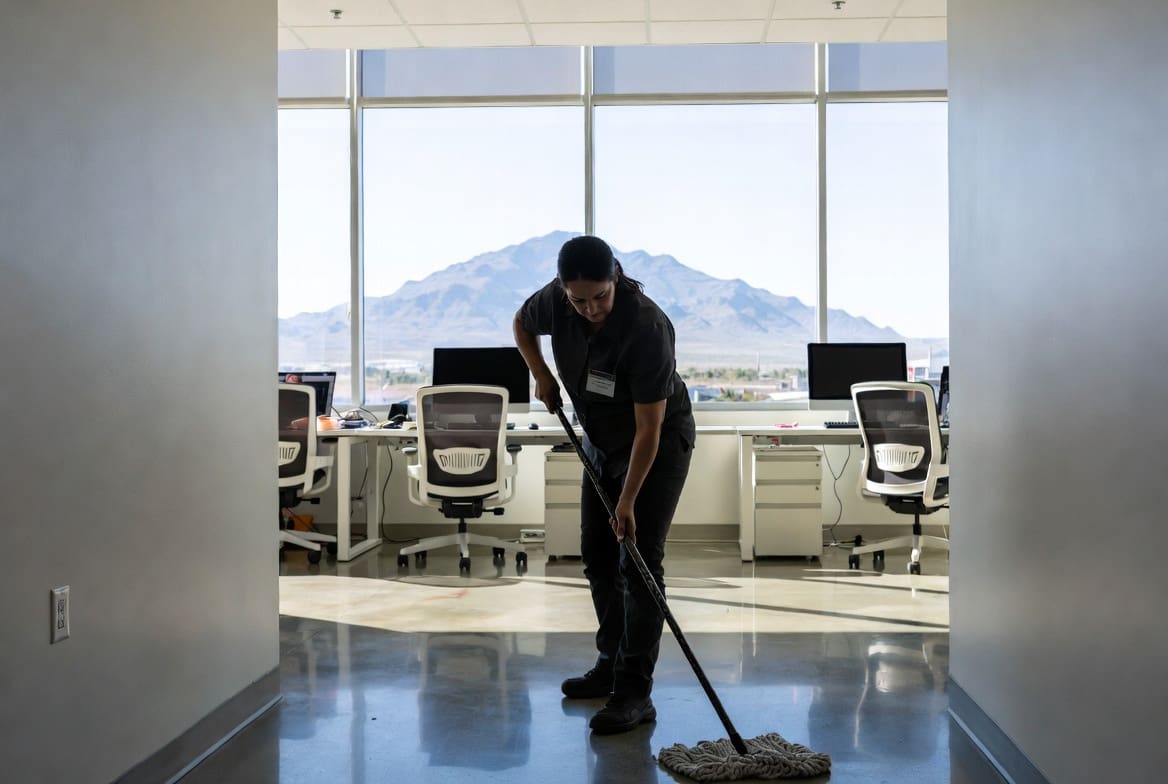
Utah Cleaning Business Insurance – Covering the Gaps Before They Cost You
Utah cleaning and janitorial insurance is more than a general liability certificate for Salt Lake City and Utah County routes. The care, custody, and control exclusion in most GL forms hits cleaning and janitorial crews harder than almost any other trade. If your crew damages a client’s property while working on it, that policy may not respond. Below we cover the CCC gap, workers comp, bonding, and how to build a program that matches the work.
.
Why the Standard Policy Falls Short
General liability covers third-party bodily injury and property damage. If a visitor slips on a wet floor your crew just mopped, that claim is covered. But if your crew damages a client’s laptop, scratches a conference table, or stains a countertop with a cleaning chemical, the carrier can deny the claim under the care, custody, and control exclusion. The property was in your crew’s possession when the damage happened.
This gap can be closed. Carriers offer endorsements that buy back some or all of the excluded coverage. A voluntary property damage endorsement or a care, custody, and control buyback are the most common tools. The right solution depends on the carrier, the policy form, and what your crews are doing on the job. The Utah Insurance Department’s business insurance page offers guidance and resources for Utah business owners shopping for coverage.
Workers Compensation Along the Wasatch Front
Utah requires workers compensation for most employers. Cleaning crews in Salt Lake City, Provo, Ogden, and the surrounding communities face the same physical risks as cleaning crews anywhere – ladder falls, chemical burns, back injuries, and repetitive strain. Workers compensation covers the medical costs and partial lost wages when an employee is hurt on the job.
Utah’s growing commercial construction market means more post-construction cleaning opportunities. These job sites come with higher physical risk profiles. Dust, debris, unfinished surfaces, and heavy equipment create additional hazards. Your workers compensation program should reflect the types of jobs your crews are actually performing.
Bonding and the Utah Commercial Market
Property managers and commercial building owners along the Wasatch Front routinely require proof of bonding before awarding cleaning contracts. A janitorial bond covers employee theft only. It is not insurance. It does not cover accidental damage, bodily injury, or chemical spills. Being bonded tells your client that a financial guarantee exists if an employee is dishonest.
Commercial contracts may also require specific liability limits, additional insured endorsements, and workers compensation documentation. Meeting every contract requirement means having the right coverage in place before you bid on the job.
Commercial Auto in Utah
Cleaning companies move crews and equipment between job sites daily. Utah winters add road hazard exposure during the months when ice and snow make driving conditions unpredictable. Commercial auto covers your business vehicles. Hired and non-owned auto covers liability when employees drive personal vehicles for work purposes. If even one employee has driven their own car to a client location, the exposure exists.
Building Coverage That Matches Your Business
Start with the care, custody, and control exclusion. Confirm it is addressed. Verify workers compensation compliance. Add bonding, commercial auto, and tools and equipment coverage. As your team grows, employment practices liability insurance becomes relevant. An independent agent can review the full picture and find the right carriers. We serve cleaning businesses across Utah. Get a quote or learn more about our Utah coverage.


