
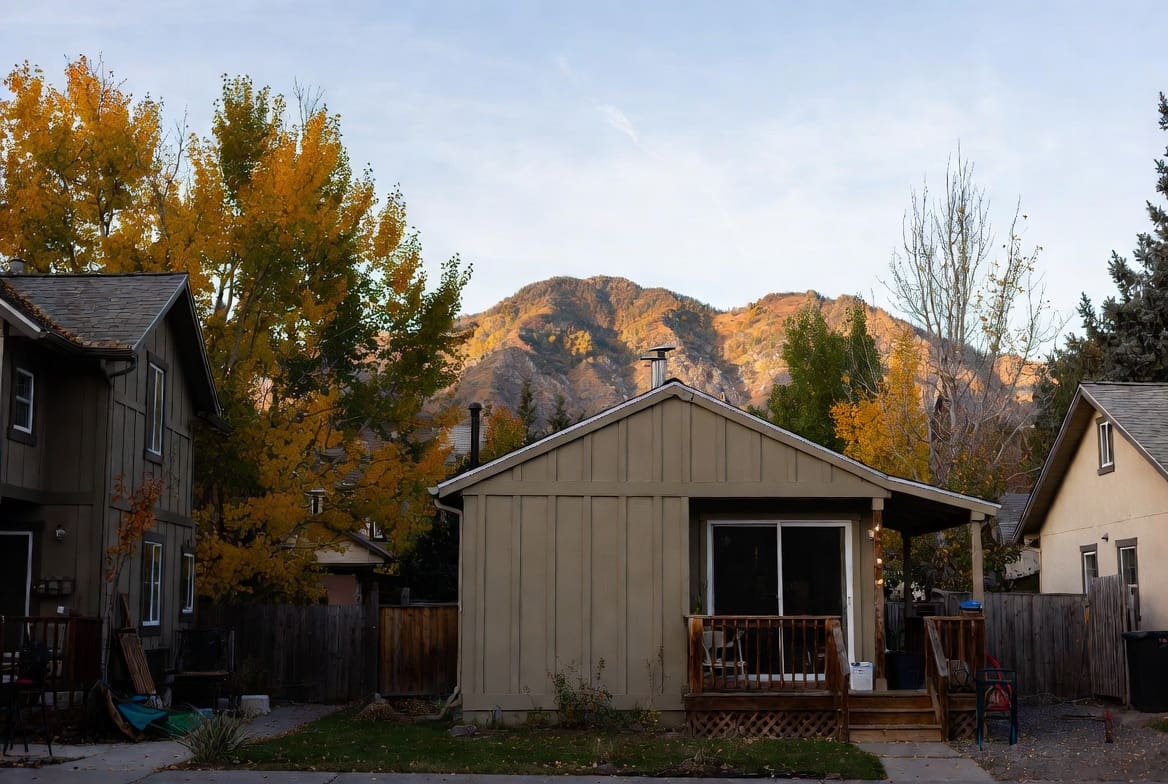
Utah ADU Insurance: What to Check Before and After the Build
Utah ADU insurance is easy to forget. The permits close. An inspector signs off. Your unit gets finished. Meanwhile the homeowners policy still describes the property you had before the project started.
Utah is one of the states that has opened up accessory dwelling units through statewide law. Along the Wasatch Front, housing pressure has made backyard cottages and basement apartments a practical option for a lot of families.
The insurance side rarely keeps up with the construction side.
Two projects, two coverage parts
Your homeowners policy sorts added living space by one question. Attached or detached?
A detached backyard cottage is a separate structure. It goes to other structures coverage. A converted attached garage stays part of the dwelling. It goes to dwelling coverage.
Different limits. Different math.
Other structures runs on a default percentage
Other structures coverage is typically set as a share of your dwelling limit. Insurance.com notes it is generally calculated at ten percent of dwelling coverage.
On a Salt Lake County home insured for $550,000, that is roughly $55,000. It covers your fence, your shed, and your cottage together.
A finished detached unit costs more than that in most cases. The default was never sized for a second dwelling.
You can raise the limit. You have to ask for it.
Garage conversions change what rebuilding costs
A converted attached garage stays under dwelling coverage. The rebuild number changed anyway.
Your dwelling limit is based on rebuilding the house as it currently stands. A garage is a slab, framing, and a door. A finished space adds insulation, surfaces, wiring, plumbing, and heating.
Utah winters make that heating system real work. A converted garage needs to hold temperature through January. That is part of the rebuild cost.
If the carrier still values the space as a garage, the limit is based on a house that no longer exists.
Basement apartments count too
Utah has a long tradition of basement apartments. The same principle applies.
Finishing basement space into a separate living unit changes what the house costs to rebuild. It also raises the occupancy question if someone pays rent to live there.
Renting changes the classification
The moment rent is involved, you have added a business activity to a residential property.
Standard other structures coverage does not extend to structures rented or held for rental to someone who is not a tenant of the dwelling. That can move a detached unit out of the coverage part entirely.
Some carriers endorse the homeowners policy for one rental unit. Others require a different form. Ask before the lease is signed.
Tenants carry their own policy
Your homeowners coverage protects your property, not a tenant’s belongings.
Anyone renting the unit should carry renters insurance for their things and their liability.
What to do next
Call your agent before you break ground. Ask what the finished unit does to your limits and whether your carrier will write it.
If it is already done, call now. Updating the policy is routine.
Our guide to casita and garage conversion insurance walks through both projects.
Western Pacific Insurance is an independent agency serving Utah homeowners. We shop multiple carriers to find the fit for your property.


