
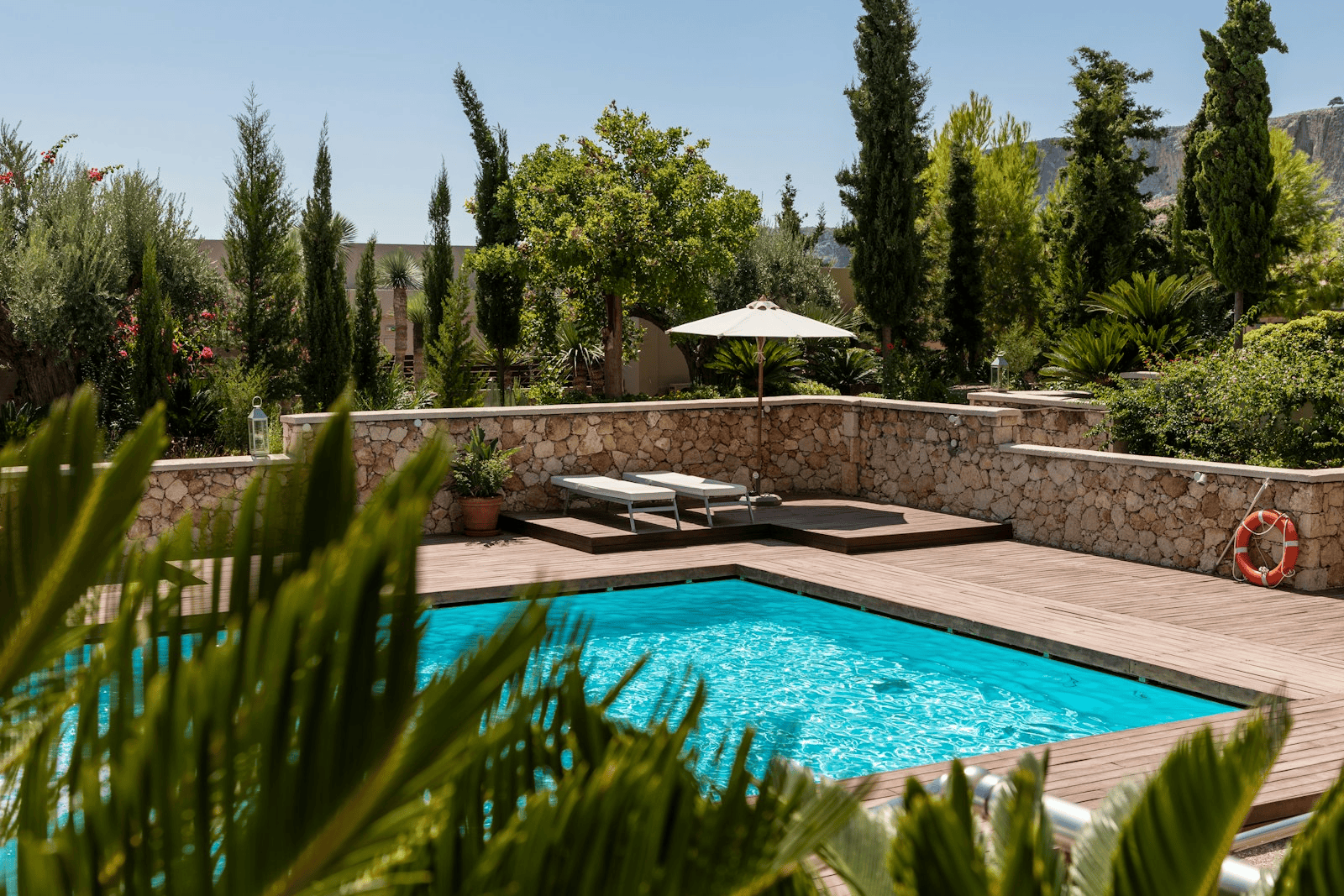
You dig the hole, set the steel, shoot the gunite, pour the deck, and hang the pump package. Then you leave, and the risk stays behind. Six months after the final walkthrough, the homeowner calls because the deck settled and cracked a patio you never touched. Or the neighbor’s kid stepped into the open trench during week one. Or the heater you staged in the side yard walked off overnight. Pool contractor insurance is the set of policies that answers those calls, and the right setup depends on which of those calls you are picturing.
Western Pacific Insurance is an independent agency in Henderson, Nevada, licensed in Nevada, California, Arizona, and Utah. We wrote this guide for the contractor who owns the pool invoice, whether that is a backyard shell in Green Valley or an HOA remodel in Mesa. If you want the coverage stack that applies to every trade first, start with contractor insurance explained and come back here for the pool-specific gaps.
Who Needs Pool Contractor Insurance?
This coverage fits licensed crews that dig, shell, remodel, or equip swimming pools and spas on property they do not own. That includes residential builds, commercial and HOA pool packages, plaster and pebble rehabs, equipment swaps, and the pavers, decks, and outdoor kitchens that sell on the same pool contract. Most carriers rate that work under a pool and spa contractor class rather than a landscaping or hardscape class, and the difference matters the day a claim gets audited. If you run the whole site and hire the pool sub, you are a general contractor and need that program instead.
What Coverage Does a Pool Contractor Need?
General liability is the base of the stack. It pays when your operations injure someone who does not work for you or damage property that is not yours. A neighbor tripping over a spoils pile and a form scuffing a parked car both land here. Workers compensation covers your own crew when a steel set or a pump lift sends someone to the clinic. Commercial auto covers the trucks and trailers hauling forms, coping, and pumps between the shop and the dig, including the day an employee grabs fittings in a personal vehicle.
Three property coverages round out the core. An inland marine policy, usually sold as a tools and equipment floater, follows your saws, vibrators, laser levels, and spare pumps wherever they travel. An installation floater covers the pumps, filters, heaters, and automation you have bought but the owner has not accepted yet. That holds whether the gear is in transit, staged in the side yard, or half installed. Commercial property, or a business owners policy that bundles it with general liability, covers the yard itself. That means the shop, the racks, and the coping and pavers that stay put until a job needs them.
As you grow, two more coverages enter the conversation. A commercial umbrella adds limits above your general liability and auto policies for the GCs, HOAs, and municipalities that ask for more than your primary carries. Professional liability can respond when the complaint is about the work itself, such as a layout or design dispute that general liability treats as workmanship. Acid washing, plaster chemistry, and sanitizer handling can also trigger pollution exclusions on standard forms. Ask whether a pollution endorsement belongs on your policy before you assume a chemical claim is covered.
Which Policy Pays Which Pool Claim?
Coverage gets clearer when you map real losses to the policy that responds. These are the claims we see most in this trade.
| The claim | The policy that responds |
|---|---|
| Neighbor trips on an open trench or spoils pile during the dig | General liability |
| Helper is hurt setting steel, shooting gunite, or lifting a pump | Workers compensation |
| Crew truck hits a parked car between jobs | Commercial auto |
| Laser level or spare pump stolen from the truck overnight | Inland marine (tools and equipment) |
| Automation panel damaged in transit or staged heater stolen before the owner accepts the job | Installation floater |
| Deck settles and cracks the homeowner’s existing patio months later | Completed operations on general liability, because the damage is to other property |
| Owner wants a free redo because the plaster mottled | Usually your own pocket or professional liability; general liability excludes your own work |
| Chemical burn or runoff complaint after an acid wash | Pollution endorsement, if you carry one. Verify before you bind |
| Pallets of coping and pavers burn in the yard after hours | Commercial property on the yard |
Where General Liability Steps Aside
Two rows in that table surprise people, and both come from the same part of the policy. General liability excludes damage to the specific part of the property you are working on, and it excludes property in your care, custody, or control. The shell, the plaster, and the deck you are building sit inside that exclusion while you are building them. Mottled plaster, a pebble finish that peels the first summer, or an equipment swap that fails in season one is a warranty conversation and usually a job cost. General liability was never going to pay for your own redo, and any agent who tells you otherwise has not read the form.
Completed operations is the other half of the story. Standard general liability covers injury or damage that happens after you leave the job, as long as the damage is to something other than your work. A deck that settles and cracks the homeowner’s existing patio months after punch list is a completed operations claim. A barrier that fails and lets a child reach the water is a completed operations claim. Some inexpensive pool policies restrict or remove that grant, and some share a single aggregate across everything you do in a year. Before you bind, ask where completed operations lives on the form and whether it carries its own aggregate. Photograph the dig and the existing hardscape before the first shovel goes in, because those photos decide whether the patio crack was your work or theirs.
Equipment, the Yard, and the Trucks
The heater on the trailer, the staged automation panel, and the pallet of coping in the yard are all property claims. None of them ride on general liability. Equipment moving from the shop to owner acceptance belongs on the installation floater. Tools that travel belong on inland marine. Stock and racks that stay at the yard belong on commercial property, either standalone or inside a business owners policy. The application has to name the yard, or the inventory is not insured at all. A fire in a closed yard or a burst line in a shop bay is a property loss no matter how high your liability limits are. Our commercial property insurance page covers the building side in more detail.
The trucks live on their own policy. Commercial auto covers the flatbeds, crew trucks, and trailers running between the shop and the dig. It should also include hired and non-owned coverage for the employee who runs to the supply house in her own car. A personal auto policy will not hold that trip once the carrier sees business use. Our business auto insurance page explains how the vehicle schedule works.
Residential Builds, Commercial Packages, and Remodels
A backyard shell and an HOA pool package can share a crew and a policy, but they do not price the same. Commercial and municipal work brings taller certificate requirements, traffic control, barrier codes, and additional insured wording that most house jobs never ask for. Remodel and service work carries its own claim story, because most of what goes wrong on a rehab is workmanship rather than third-party damage. Tell your agent the mix you actually bid. A policy classed as residential remodel that turns out to be half commercial new construction is a rating problem. The carrier will find it at audit or at claim time, and neither is a good moment.
How Do Licensing Rules Differ in Nevada, California, Arizona, and Utah?
The inspector who wants your license number before the shotcrete truck backs in works for a different board in every state, and the boards do not agree on what a pool license is. Nevada issues a dedicated A-10 pool classification. California issues C-53. Arizona splits commercial A-9 from residential B-5 and keeps hardscape on a separate license. Utah moved swimming pool installation onto its B100 and R100 building licenses on March 30, 2026, which means the S330 landscape license that used to pass on a pool permit no longer does. The table is the short version, and the board links are where to confirm before you bid across a state line.
| State | Pool / spa license | Watch the split | Bond or insurance rule |
|---|---|---|---|
| Nevada | A-10 Commercial and Residential Pools (A-10a through A-10f sub-classifications); A-24 for fountains and water features not meant for swimming | C-10 is landscaping with capped hardscape and does not authorize pool work; larger outdoor living may need other C-classes | Standard contractor bond plus a residential pool and spa consumer-protection bond under NRS 624.276; the board does not require general liability |
| California | C-53 Swimming Pool Contractor | C-27 is landscaping; a C-27 prime may include a pool inside a landscape project only with a C-53 sub or a dual C-53 under BPC 7027.5; outdoor living often sits with C-27 and/or C-8 / C-29 | $25,000 contractor bond; no general liability mandate for a sole proprietor C-53; an LLC needs $1 million aggregate; workers compensation becomes universal January 1, 2028 |
| Arizona | A-9 commercial / B-5 residential (A-19 / B-6 with solar; KA-5 / KA-6 dual) | R-21 / C-21 / CR-21 Hardscaping and Irrigation expressly excludes swimming pools and pool deck coatings; B-5 excludes other structures, so name both licenses when outdoor living sits outside the pool scope | Bonds scale with class and volume; a license is required at $1,000 or any permit; the Registrar of Contractors does not require general liability; workers compensation at one employee |
| Utah | B100 General Building or R100 Residential and Small Commercial for swimming pool installation (effective March 30, 2026) | S330 Landscape and Recreation no longer covers swimming pool installation; it remains the landscape and outdoor-living specialty | Licensed classes carry a general liability floor of around $1 million per occurrence and $2 million aggregate, with the Division of Professional Licensing as certificate holder; workers compensation or a Labor Commission waiver |
Two things trip up out-of-state crews most often. Nevada’s C-10 landscaping license and Arizona’s R-21 / C-21 hardscape license both look adjacent to pool work, and neither authorizes it. A Henderson crew picking up a Mesa remodel needs a Registrar of Contractors pool license before it pulls the permit. Utah still prints the old general liability minimums on many application forms and third-party pages. Treat anything below $1 million per occurrence as a lagging document rather than a current rule, and carry more than the floor when a contract asks for it. The California C-53 definition is published at 16 CCR § 832.53 if you want the source language.
What Do General Contractors and HOAs Require?
A certificate of insurance is evidence that coverage existed on the day the certificate was issued. It is not coverage. Most builders, property managers, and HOAs want at least $1 million per occurrence and $2 million aggregate, and many commercial packages ask for more. They also want to be named as additional insured, with a waiver of subrogation and primary and noncontributory wording behind it. Those are endorsements, and the endorsement has to exist on the policy for the certificate to mean anything. Ongoing operations usually run on CG 20 10, completed operations on CG 20 37, and a per-project aggregate on CG 25 03. When a contract asks for wording your policy does not carry, we would rather add the endorsement before the certificate goes out than explain the gap after a claim.
How Much Does Pool Contractor Insurance Cost?
Price follows the class, the payroll, the deductible, and how much of the stack you carry, and any monthly figure on a comparison site is a guess about someone else’s business. A solo remodel crew with no employees and one truck prices very differently from a shop that digs new shells and hangs commercial packages across two metros. The lines that move the bill most are usually workers compensation, commercial auto, and the equipment and yard coverages, because those scale with people and property. General liability by itself is often the smaller number. A callback that costs a few thousand dollars usually sits inside your deductible. The real insurance question is whether the class and the residential-versus-commercial split on your application describe the work you actually take.
Questions to Ask Before You Bind
Walk through these with your agent before the first certificate goes out.
- What class did the carrier assign: residential pool, commercial pool, remodel, equipment, or a mix?
- If you dig shells, pour decks, hang heaters, or build outdoor living, does the application show that exposure?
- Does completed operations stay on after you leave, and does it carry its own aggregate?
- How does the policy treat damage to the shell, plaster, or deck you just built?
- Are forms, lasers, and spare pumps scheduled on inland marine, and is there an installation floater for equipment in transit?
- Is there a pollution exclusion, and does an endorsement cover acid wash and chemical handling?
- Can the carrier issue the additional insured, waiver, and primary wording that builders and HOAs actually ask for?
I Only Remodel Residential Pools. Why Carry All of This?
We hear this often, and it deserves a straight answer. A plaster rehab feels small, and the third-party risk on a rehab is smaller than on a new dig. The helper on the ladder does not know that. One injury on a small job can produce a claim larger than a year of revenue, and every state you work in requires workers compensation once you have an employee. Beyond the risk, coverage is a sales tool in this trade. HOAs, builders, and a growing share of homeowners will not sign without a certificate. In Utah, an active license on the classifications that now carry pool work requires general liability on file with the state. A solo operator needs less coverage than a ten-person crew, but the core stack is the same.
Frequently Asked Questions
Do I need workers compensation if I work alone?
Nevada, Arizona, and Utah require it once you have an employee, and Utah wants a Labor Commission waiver on file when you do not. A solo California C-53 can still file an exemption until January 1, 2028, unless the qualifier is a responsible managing employee. Confirm the current rule for your entity type with the licensing board before you rely on the exemption.
Does general liability cover the pool I just built?
Not for damage to the shell, plaster, or deck itself. General liability excludes the part of the property you are working on, so a redo of your own work is a job cost. Damage your finished pool causes to other property, such as a leak that ruins the neighboring patio, is a different claim and is far more likely to be covered.
Will a landscaping or homeowners policy cover pool work?
A landscaping policy prices lawn, irrigation, and softscape, and a carrier that finds pool excavation under that class at audit will rerate the policy or fight the claim. A homeowners policy excludes business activity on someone else’s property entirely, and the truck between digs falls outside personal auto once the carrier sees business use. A pool invoice needs a pool class.
Can I get coverage with a prior claim?
Almost always. One claim narrows the market and may move the price, but standard carriers and specialty markets both write pool contractors with history. We shop the risk until the fit and the price both work.
How is this different from landscaping, fence, or excavation insurance?
Each of those trades has its own guide because each carries a different class and a different set of gaps. Landscaping contractor insurance covers lawn, irrigation, softscape, and the Arizona hardscape-and-irrigation licenses. Fence contractor insurance covers posts, panels, and gate operators. Excavation contractor insurance covers earthwork as a specialty, while a dig that is incidental to a pool contract stays on the pool policy. Many operations need two of these conversations on one program, and we would rather have both than guess which class the carrier will apply at audit.
Ready to Compare Options?
Pool work rewards a clean invoice and an honest class. We shop your operation across a broad carrier lineup and match the policy language to the jobs you actually take. That means pairing general liability with the completed operations, equipment, yard, and certificate wording this trade demands. If a residential remodel business is growing into new shells and commercial packages, we will say so before the certificate goes out rather than after the audit. Request a quote and tell us about the digs you take.
Local license and certificate detail lives on the city guides under this one: Henderson pool contractor insurance, Phoenix pool contractor insurance, San Diego pool contractor insurance, and Lehi pool contractor insurance.


