
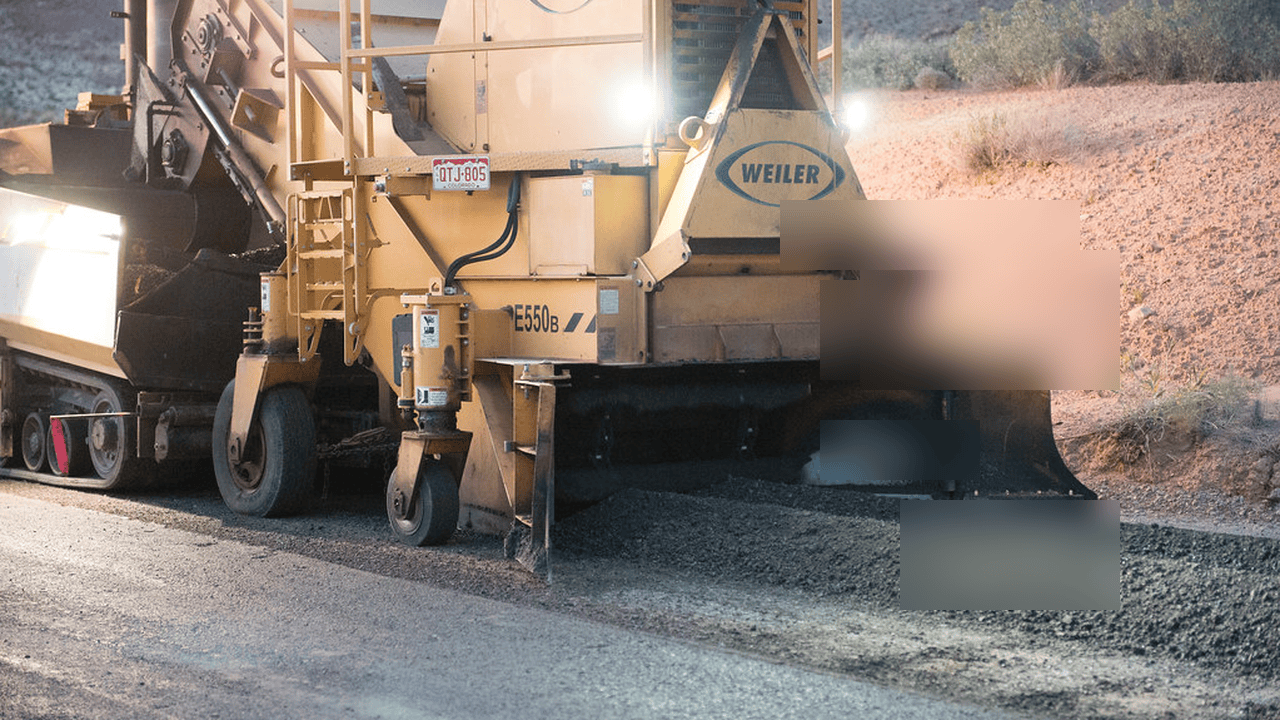
A paving crew works a strip of ground that everyone else wants open at the same time. Cars need the lot. A city needs the lane back before rush hour. A property manager wants the mat finished, cured, and striped before tenants complain. Paving contractor insurance has to match that open-traffic reality, not a generic contractor template built for work behind a fence.
Most asphalt paving companies build their program around four coverages: general liability, commercial auto, workers compensation, and equipment coverage for pavers, rollers, and hand tools. A shop or yard usually calls for commercial property too. Emulsions, tack coat, and diesel raise pollution questions that deserve their own conversation rather than an assumption that “liability” already handles them.
Western Pacific Insurance places this coverage for paving contractors in Nevada, Arizona, California, and Utah. This guide walks through the coverage stack, the claim patterns that actually show up on paving jobs, and the licensing starting points in each state.
Who Needs This Coverage
This guide is written for a business whose main revenue comes from asphalt paving: driveways, HOA streets, commercial parking lots, overlays, patches, municipal street work, milling and replacement, and seal coat or striping sold alongside the paving work. The crew runs a paver, rollers, skid steers, saws, and plate compactors, often in heat, on night closures, or in a tight lot with parked cars on three sides.
Tell your agent what the company actually builds. A driveway overlay carries a different exposure than a night arterial resurfacing job with lane closures. Parking-lot work next to occupied vehicles isn’t the same claim story as an empty pad. If the company also sells earthmoving, structural flatwork, or plant work outside asphalt paving, say so plainly instead of folding it into a paving description that doesn’t cover it.
Keep that same description consistent across the application, the quote request, bid documents, certificate requests, and subcontracts. Owners and general contractors often want proof of coverage before the first truck reaches the site, and the certificate needs to match what the policy actually says.
What Coverage Does an Asphalt Paving Contractor Need?
General liability is the foundation. It can respond when paving operations injure someone outside the company or damage property that belongs to someone else. A driver hits a soft mat before it’s ready for traffic. Hot asphalt spatters a parked car. A roller clips a curb, a gate, or a light pole. A pedestrian slips on tracking compound in a parking lot. These are the incidents that make property managers and cities ask for a certificate before they’ll let a crew close a lane.
General liability doesn’t promise coverage for every surface the crew touches, though. Care, custody, or control of a customer’s property, damage to the specific part of the job the crew is actively working on, contractual liability, and pollution exclusions can all change the outcome of a claim. Completed operations coverage matters most when a lot ruts, softens, or drains poorly after the crew has already left. Ask your agent where the form draws these lines before you promise a client that “liability” covers every paving dispute that could come up.
Workers compensation covers employees hurt while raking, shoveling, directing trucks, working near rollers, or handling hot mix. Burns, strains, and struck-by injuries are common on a paving crew, and so are the traffic incidents that come with working beside live lanes. Nevada, Arizona, California, and Utah each set their own workers compensation rules, owner elections, and employee classification tests, so report payroll accurately, including seasonal help and anyone the company treats as a subcontractor.
Commercial auto covers dump trucks, crew trucks, trailers, distributor trucks, and water trucks used for business. Backing into a crowded lot, hauling mix on the highway, and staging near open traffic are auto exposures that general liability won’t step in for. A personal auto policy is rarely built to carry a revenue-generating truck. Hired and non-owned auto coverage can matter too, if the company rents a truck or an employee runs a company errand in a personal vehicle.
Inland marine or contractors’ equipment coverage follows the mobile gear: pavers, rollers, milling machines, saws, lasers, and hand tools that spend nights on a trailer, in a yard, or staged at a job site. General liability won’t replace a stolen roller. Tell your agent where the equipment sits overnight and which pieces are valuable enough to schedule individually.
Commercial property can cover a shop, an office, spare parts, and yard contents, depending on eligibility and the form. Fuel, emulsions, and heated materials raise separate property and pollution questions, so ask how the carrier treats tanks, stored oil, and staged materials before a pour.
Pollution coverage deserves its own conversation rather than an assumption. Standard liability forms often limit or exclude pollution outright. Tack coat, diesel, release agents, and material that tracks into a storm drain can turn what looks like ordinary property damage into a pollution claim argument. A limited endorsement or a specialty form may fill that gap, but don’t assume any endorsement covers every spill, every regulatory demand, or intentional dumping.
Common Claims and Where the Conversation Starts
This table is a practical starting point, not a coverage promise. The facts of the claim, the exclusions in the policy, the limits, and the applicable law all control the outcome.
| Paving loss pattern | Likely first policy conversation |
|---|---|
| A driver or pedestrian is hurt on a soft mat, ramp, or tracking residue | General liability, subject to the facts |
| Hot mix or oil damages a parked vehicle, storefront, or neighboring driveway | General liability; watch care, custody, or control and pollution wording |
| A roller or paver strikes a curb, gate, light pole, or underground utility | General liability and utility-locate records |
| A parking lot ruts, softens, or drains poorly after the job is accepted | Completed operations under the liability program |
| A laborer is burned by hot mix or strained while raking | Workers compensation |
| A dump truck backs into a parked car while delivering mix | Commercial auto |
| A roller or paver is stolen from a trailer or overnight staging area | Inland marine or scheduled equipment |
| Tack coat or diesel reaches a storm drain or soils a neighboring property | Liability plus a pollution coverage review |
Two patterns are worth watching closely. The mat itself is both a work product and a temporary hazard: soft asphalt, missing cones, and early traffic create injury claims before the surface is even ready for use. And completed operations claims tend to show up after the first hot season or the first hard rain, once a lot has had time to move. Compaction notes, mix tickets, weather logs, and job photos help a carrier reconstruct what happened, but none of that documentation can rewrite an exclusion that’s already in the form.
Job-Site Records That Support the File
Photograph existing pavement, drains, curb condition, striping, and nearby vehicles before the first truck arrives on a job. Mark soft areas and keep traffic off the mat until it can safely take a load. Confirm utility locates before any cutting begins, and keep mix tickets, temperature notes, and roller-pass records with the job file.
None of this creates coverage on its own. What it does is give a carrier facts to work with when a customer claims the crew caused a stain, a soft spot, or a drainage failure that was already there. A clear scope of work helps too: spell out thickness, patch limits, whether striping is included, and who’s responsible for controlling early traffic.
Fleet, Yard, and Mobile Equipment
A paving company runs like a mobile plant. Trucks haul mix, trailers carry rollers, and a yard may hold oil, emulsion, and spare parts. Describe the fleet honestly to your agent: dump bodies, crew trucks, tankers, water trucks, trailers, and any rented units. Commercial auto handles the road exposure; inland marine handles the equipment sitting on it. Neither one substitutes for the other.
Overnight storage matters more than most contractors expect. A roller left overnight on an unfenced lot is a very different theft risk than equipment locked inside a lighted yard. Tell your agent which units stay on trailers, which stay parked at job sites, and which are scheduled by serial number, and update that schedule whenever the company buys or sells a paver.
Licensing Across Nevada, Arizona, California, and Utah
Asphalt paving is a licensed construction trade in all four states when the work meets each board’s definition of contracting. Confirm the current classification for the services you sell and the address where the work will happen. These rules change, and a starting point here isn’t a substitute for checking the live rule.
| State | Starting point for asphalt paving | Verify before bidding |
|---|---|---|
| Nevada | Nevada State Contractors Board Classification A-16 covers paving of streets, driveways, and parking lots with asphalt; related A subclasses may cover sealing, striping, or asphalt recycling. | Current NAC 624 text, exam requirements, monetary limit, bond, and local business registration. |
| Arizona | Arizona ROC lists A-14 (commercial asphalt paving), R-13 (residential asphalt paving), and CR-69 as a dual classification. Seal coating has its own commercial and dual paths. | Current ROC scope language, qualifying-party experience, exam or waiver status, bond, and city tax licenses. |
| California | CSLB specialty classification C-12, Earthwork and Paving, covers placing asphalt and other surfacing materials; C-32 may apply to certain parking and highway improvement scopes. | Current CSLB classification text, experience requirements, exams, contractor bond, and workers compensation proof. |
| Utah | Utah DOPL specialty classification S260 covers asphalt paving, overlays, chip seal, fog seal, slurry seal, striping, and related base work under R156-55a-301. | Current DOPL specialty requirements, pre-licensure course, GL certificate floors, and workers compensation rules. |
A license classification doesn’t create insurance coverage, and an insurance policy doesn’t replace a missing license. Treat the table above as a starting point and confirm the live rule language with each board directly, since classification scopes and requirements do get amended.
Certificates, Additional Insured Status, and Bid Specs
A certificate of insurance is evidence that a policy exists. It doesn’t add an endorsement, erase an exclusion, or turn a driveway policy into a program built for highway lane closures. When a city, HOA, or general contractor asks for additional insured status, primary wording, a waiver of subrogation, completed operations coverage, or specific auto limits, send that request to your agent before the bid is locked in. Those terms need to be backed by actual endorsements, not just a certificate.
Read the indemnification and traffic-control language in commercial bid specs carefully before signing. Some ask the paving company to indemnify the owner for nearly any job-site event or to meet traffic-control standards the bid never priced in. Insurance follows what the policy actually says, not the boldest sentence in a vendor packet.
Building the Quote Around the Real Operation
Bring your agent annual receipts, the mix of residential, commercial, and municipal work, employee payroll, subcontractor use, a truck and trailer list, equipment values, overnight storage locations, operating radius, night-work percentage, seal coat or striping revenue, and any prior claims. Explain whether crews work beside open traffic, heat oil on site, mill existing pavement, or accept early traffic under a contract clause.
Revisit the program whenever the company adds a paver, a second crew, municipal night work, or a new materials stream. A description built for a small driveway crew won’t fit a multi-crew parking-lot contractor a year later, and it’s better to update the carrier before the work changes than after a claim exposes the gap.
Completed Operations After the Mat Cools
A lot of paving disputes start after the crew has already packed up. The first summer heat softens a section. A delivery truck ruts a travel lane the owner thought was ready. Water pools against a storefront because the finish grade didn’t match the drains. These are completed operations conversations under the liability program, and the outcome depends on the form and the facts of the job.
Ask your agent whether completed operations coverage remains available for the type of asphalt work the carrier is accepting. Keep mix tickets, compaction notes, weather conditions, finished-surface photos, and the signed scope together in the job file. If the contract allowed early traffic, document that too. Records can’t invent coverage that isn’t there, but they keep a claim from turning into a contest of memory.
Your-work exclusions and similar limitations can also shape how a carrier treats damage to the paving itself versus damage to something else nearby. A soft spot in the mat the crew placed is a different question than hot mix that stained a neighbor’s car, and the actual policy language is what settles it.
Traffic Control and Open Lots
Paving rarely happens in an empty world. Residential driveways share space with mail trucks and kids on bikes. Commercial lots often stay partly open for tenants during the job. Municipal streets need cones, flaggers, and a real plan for night work. Traffic control is a safety practice, but it’s also an underwriting fact. Describe to your agent how the company closes lanes, protects a soft mat, and stages trucks.
Injuries from missing signs, early entry onto a soft surface, or a bad ramp usually start as general liability claims. Vehicle collisions during haul routes or while backing toward the paver usually start as commercial auto claims. Keeping those two coverages aligned with how the crew actually runs a closure matters more than either one alone.
Get the Coverage Built Around Your Jobs
Western Pacific Insurance places coverage for asphalt paving contractors across Nevada, Arizona, California, and Utah. Call 702-932-3105 or request a quote and bring your next certificate request, equipment list, and a plain description of the work your crews actually do.
For more background on the coverages mentioned above, see III.org’s guide to business insurance or the business insurance overview on our site.


