
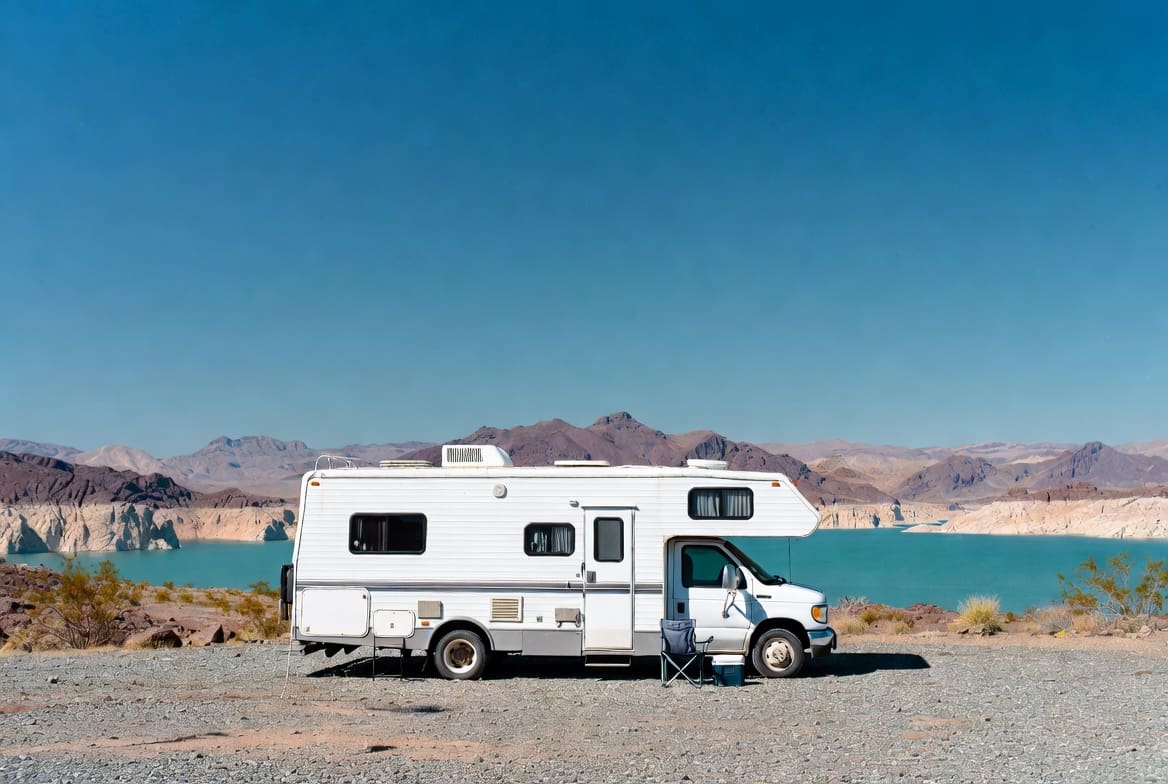
RV Insurance in Nevada – What Local Owners Get Wrong
Nevada RV insurance looks simple until something goes wrong at Lake Mead, Great Basin, or Valley of Fire. A motorhome is a motor vehicle, and Nevada liability starts at 25/50/20. That floor satisfies the DMV. It does not protect much in a serious crash. A weekend trailer and a full-timer living in the Las Vegas Valley are different products. Towable trailers need their own physical damage cover. Summer heat storage still needs continuous coverage. Below we cover liability, vacation liability at campgrounds, full-timer policies, valuation, and storage.
Nevada RV insurance depends on your rig type and your lifestyle. The product that covers a weekend trip to Lake Mead is not the same product that covers someone who sold their house and lives in the motorhome year-round. Most owners have a policy. Fewer have the right policy. The gap between the two shows up at claim time.
Nevada Motorhome Liability Requirements
A motorhome is a motor vehicle. Nevada requires liability insurance on every motor vehicle operating on public roads. The state minimum is 25/50/20. That is twenty-five thousand per person for bodily injury, fifty thousand per accident, and twenty thousand for property damage. Those limits satisfy the DMV requirement. They do not provide adequate protection in a serious accident. Carrying higher limits costs less than most owners expect.
Towable trailers do not require their own liability policy. Your tow vehicle’s liability extends to the trailer while it is hitched. But your auto policy does not cover physical damage to the trailer. If it gets damaged in a windstorm while parked at a campground or someone backs into it at a storage lot, you need a separate RV policy or endorsement to cover that loss. Progressive details the differences between recreational and full-time RV policies and explains the coverages that come with each.
Vacation Liability at Nevada Campgrounds
Lake Mead campgrounds, Red Rock overflow sites, and Valley of Fire can get crowded. When RVs are parked close together and people are walking between sites, the liability exposure at the campsite is real. If someone is injured at your site while your rig is parked, standard auto liability is not built for that scenario. Vacation liability is the coverage that fills the gap.
Default limits on vacation liability are often low. In a campground environment where someone could trip over equipment, get bitten by your dog, or get hit by a falling awning, ten thousand dollars may not cover a medical claim. Ask your agent to verify the limit and whether it makes sense for how you camp.
Full-Time RV Living in the Las Vegas Valley
Some Nevada residents have moved into RV parks and communities as full-time housing. If you live in your RV for more than six months out of the year, a standard recreational policy leaves gaps. It assumes you have a house somewhere else carrying your homeowners liability, personal property, and umbrella. A full-timer policy fills some of those roles. It provides broader personal liability while parked, medical payments for guests, and higher contents limits for the belongings inside the rig.
The difference between the two products is not about the vehicle. It is about the lifestyle. The policy needs to match how you actually live.
Valuation and the Financing Gap
RVs depreciate fast. Most policies default to actual cash value, which pays the depreciated market value minus your deductible. If you financed the rig and owe more than it is worth, the gap between the payout and the loan balance comes out of your pocket. Agreed value sets a fixed amount at the start of the policy. Total loss replacement covers the cost of a comparable new unit within the first few model years. Gap coverage addresses the loan-to-value difference directly.
Storage in the Nevada Heat
Nevada summers are brutal on RVs sitting in storage. UV damage, extreme heat cycles, and dust take a toll. If your rig sits in a storage lot for part of the year, do not cancel your policy. Canceling can create a gap in your insurance history that affects your eligibility and pricing when you come back. Your homeowners insurance is not designed to cover physical damage to the RV in your driveway or at a storage facility.
A storage option keeps comprehensive coverage active while reducing or suspending coverages you do not need. Theft, vandalism, fire, and weather damage are still covered. If the rig is financed, your lender almost certainly requires continuous coverage regardless of whether you are using it.
What Nevada RV Owners Should Verify
Liability limits above the state minimum. Uninsured and underinsured motorist coverage. Vacation liability verified at an appropriate limit. A full-timer policy if the rig is your home. Your valuation method confirmed. Contents coverage that reflects what is actually in the RV. Roadside assistance and towing limits for your vehicle size. Emergency expense coverage for breakdowns on remote highways. A storage plan that keeps coverage continuous through the summer.
If you own an RV in Nevada, get a quote from Western Pacific Insurance. We are based in Henderson and write RV coverage across the state. Learn more about our Nevada coverage.


