
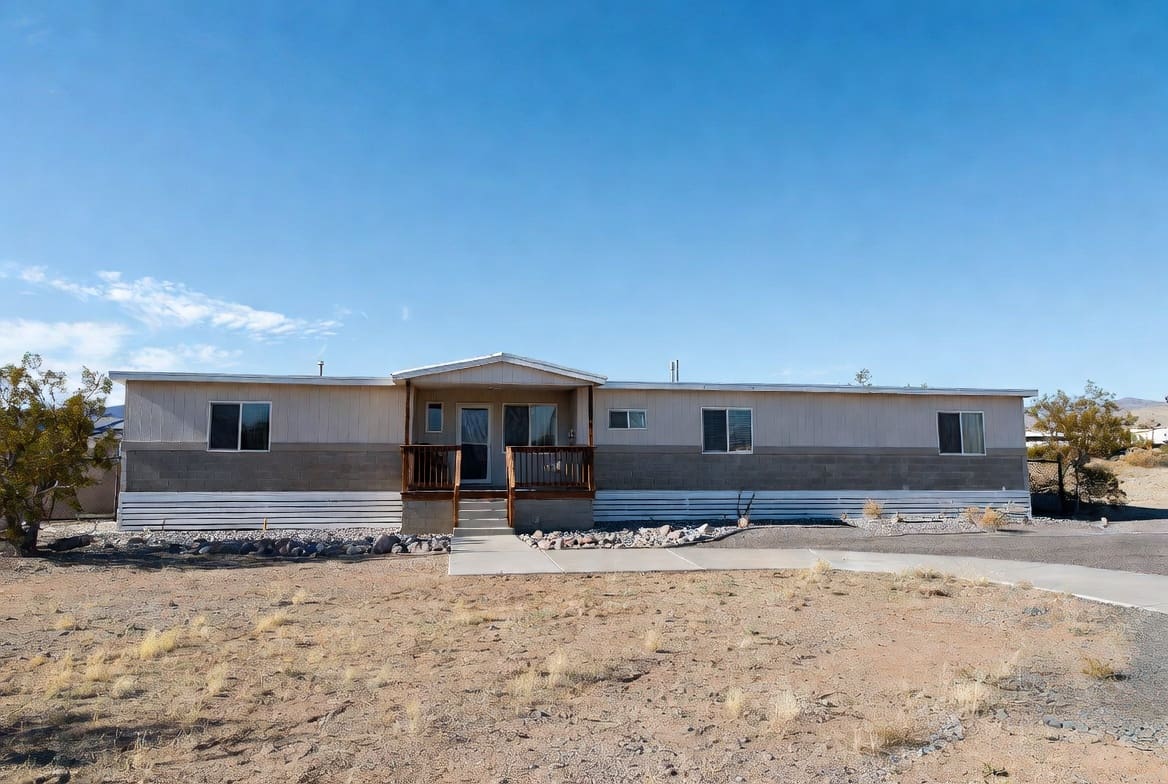
Nevada Manufactured Home Insurance – What Every Owner Should Know
Nevada manufactured home insurance is a specialty product that works differently from standard homeowners coverage. If you own a manufactured home in Nevada, the policy you need, the carriers that write it, and the underwriting rules that apply are not the same as what you see on a stick-built home. Understanding the differences before something goes wrong is the whole point.
A manufactured home is typically covered under an HO-7 policy form. The HO-7 provides open peril coverage on the dwelling and named peril coverage on personal property. Liability, loss of use, and medical payments all work the way they do under a standard homeowners policy. The form name can vary by carrier, but the concept is consistent. A standard HO-3 policy will not work for a manufactured home in almost every case. Not every carrier writes the HO-7, which means your options are more limited than they are for a site-built home.
The year the home was built is one of the first questions a carrier asks. June 15, 1976 is the dividing line. Before that date, factory-built homes were not required to meet federal construction standards. Carriers treat those pre-1976 homes differently. Fewer will write them. Coverage is often limited to actual cash value. Some carriers set hard age limits and decline homes older than 25 or 30 years. A home built after 1976 with a HUD certification label on the exterior is easier to insure. If you are buying a manufactured home and the HUD label is missing, that needs to be verified before you proceed. The Clayton Homes guide to HUD certification explains how to locate and verify your label and data plate.
Nevada has a large manufactured home population, especially in the Las Vegas valley, Pahrump, and Reno metro areas. Many of those homes are in parks or communities. In a park, you own the home and lease the lot. The park’s insurance covers common areas, but not your home, your belongings, or your liability. You need your own manufactured home policy. Some parks require proof of liability coverage as a condition of your lease.
If your home is on your own land, you have more flexibility. Your policy can account for the home, the premises, and other structures. But lot size matters. If the property is larger than a few acres, some carriers will not write it. Distance from fire services also factors into your rate, especially outside the metro areas.
Nevada’s high wind events are a factor. Monsoon season and desert wind gusts put stress on tie-down and anchoring systems. Carriers may require verification that your anchoring meets current standards. Corroded or loose straps can create underwriting problems or lead to a non-renewal. Check your tie-downs periodically, especially after storm events.
When reviewing your policy, look at whether dwelling coverage is replacement cost or actual cash value. Understand your deductible structure. Make sure liability limits are strong. Flood and earthquake are excluded from a standard manufactured home policy and require separate coverage.
If you own a manufactured home in Nevada or you are thinking about buying one, get a quote and make sure your coverage matches the home you actually live in. Visit our Nevada insurance page for more.


