
How to Talk to an Insurance Adjuster in Nevada — Timelines, Rights, and Mistakes to Avoid
When something damages your home or property in Nevada, the insurance adjuster shows up to evaluate the claim. Most people aren’t prepared for that conversation. They don’t know what the adjuster’s role is, what their rights are under Nevada law, or how a few wrong words can shrink or kill their payout. We cover the core adjuster strategy in our companion video, but this guide focuses on what Nevada residents need to know.
Nevada’s Claims Timeline — Know the Deadlines
Nevada law sets specific deadlines your insurance company must follow. Knowing them gives you leverage.
Your carrier must acknowledge your claim within 20 working days of receiving notice. During that same window, they must send you all necessary claim forms, instructions, and reasonable assistance. After you submit a completed proof of loss, the carrier has 30 working days to accept or deny the claim. If they need more time, they must tell you why in writing within that same 30-day period. Once a claim is approved, payment is due within 30 working days.
That adds up to roughly 80 working days from start to finish. If your carrier is missing these deadlines, document everything and escalate.
Nevada-Specific Risks That Trigger Claims
The types of claims Nevada homeowners file shape how you should prepare for the adjuster visit.
Monsoon and flash flood damage. Southern Nevada’s monsoon season runs from late June through September. Henderson, Las Vegas, and North Las Vegas see sudden, intense storms that dump inches of rain in minutes. Flash flooding damages foundations, garages, landscaping, and anything at ground level. Here’s the critical language issue: if you tell the adjuster your home “flooded,” you may trigger the flood exclusion. Standard homeowners policies exclude flood damage. Describe what you observed — storm water entered through the garage, runoff overwhelmed the window well — and let the adjuster determine causation.
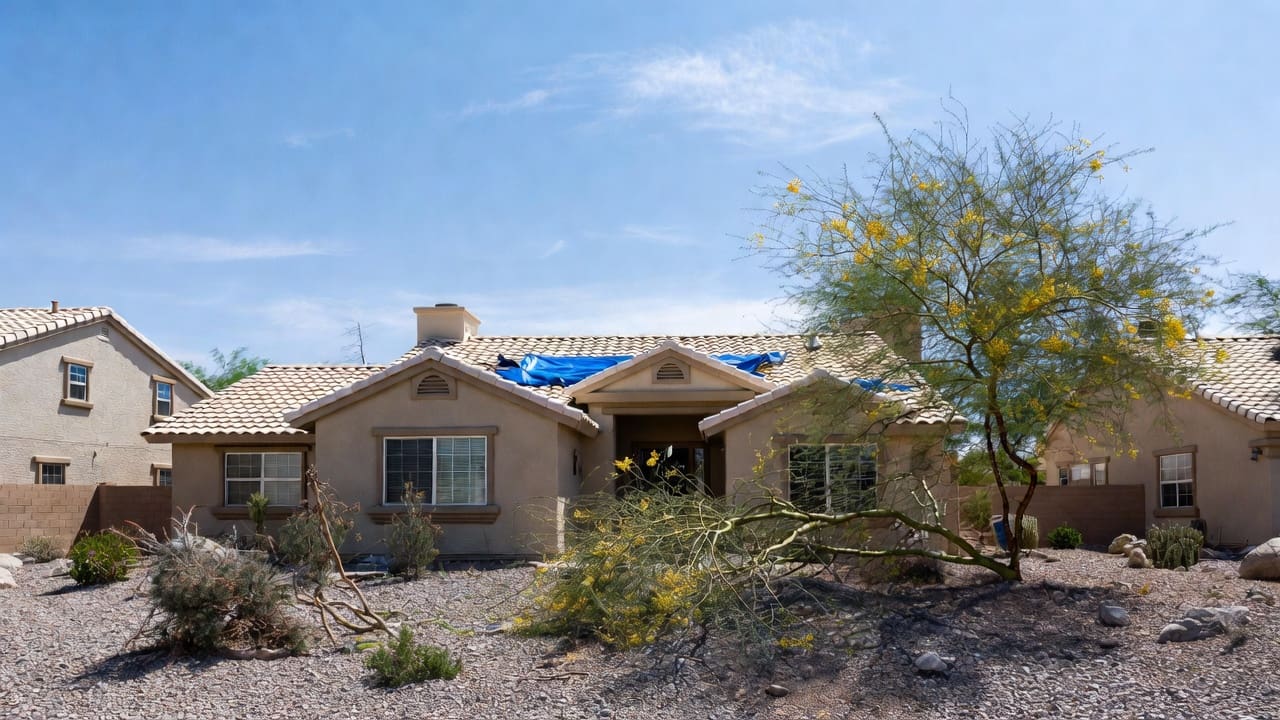
Wind and hail damage. Summer storms in the Las Vegas Valley bring wind gusts that tear off shingles, damage stucco, and break fences. Hail is less common but hits the northern part of the state. Document roof damage thoroughly — missing shingles, cracked tiles, dented gutters. The adjuster may not climb the roof. If your contractor found damage the adjuster missed, provide that report.
Extreme heat and HVAC failure. When temperatures in Henderson and Las Vegas hit 115°F, HVAC systems fail. If the failure causes secondary damage — burst pipes from thermal expansion, mold from condensation — that secondary damage may be covered even if the HVAC failure itself isn’t. Document the chain of events carefully.
Desert landscaping and retaining wall damage. Storm runoff in master-planned communities can undermine retaining walls and wash out desert landscaping. These claims get complicated fast because causation matters. Was it poor drainage design or storm damage? Have your own assessment ready.
Preparing for the Adjuster in Nevada
Before the adjuster arrives, do these five things.
Document all damage with photos and video. Get wide shots and close-ups. Capture timestamps on your phone. If water damage occurred, show the source and how far it spread. Nevada storms move fast and evidence changes quickly.
Make a list of all damaged or destroyed items. Include purchase dates and replacement costs. If you have receipts or a home inventory, pull them now.
Make temporary repairs to prevent further damage. Tarp the roof. Board up windows. Shut off the water if a pipe burst. Your policy requires mitigation. Keep all receipts — they’re typically reimbursable. But don’t make permanent repairs before the inspection.
Read your policy. Know your deductible, your dwelling coverage limit, and your personal property limit. Know whether you have replacement cost or actual cash value coverage.
Get your own contractor estimate. One or two written estimates from licensed Nevada contractors give you a comparison point when the adjuster’s numbers come in.
During the Inspection
Be present for the inspection. If the damage is in Henderson, Summerlin, or a master-planned community, make sure the adjuster sees all exterior damage — not just what’s visible from the front door. Walk the full perimeter.
Get the adjuster’s name, phone, email, and claim number. Write it down.
Walk them through every piece of damage. Adjusters in Nevada carry heavy caseloads, especially after monsoon season. Things get missed. Your job is to make sure they see everything.
Be honest and factual. Don’t exaggerate. Don’t downplay. Don’t speculate about causation. Let the adjuster determine what caused the damage.
Before they leave, confirm what they documented. Walk through it one more time.
The Language Trap in Nevada Claims
This is where Nevada claims get tricky. The desert creates unique damage patterns that straddle coverage boundaries.
“My house flooded” triggers the flood exclusion. “Storm water overwhelmed the window well and entered the basement” describes wind-driven water, which is typically covered. Same water. Different outcome.
“The leak has been going on for a while” shifts the claim from sudden and accidental to gradual deterioration. Sudden is covered. Gradual typically is not. Describe what you saw, not what you assume happened over time.
“I knew the stucco was cracking” implies failure to maintain. Don’t volunteer information about pre-existing conditions unless directly asked.
When the Estimate Comes in Low
Get the adjuster’s estimate in writing. Compare it line by line to your contractor’s estimate. Identify whether the gap is scope, pricing, or methodology.
Nevada construction costs have risen sharply in recent years, especially in the Las Vegas metro. Adjuster estimating software may lag behind current pricing. If your licensed Nevada contractor quotes higher, submit that estimate and ask the carrier to review.
If you have replacement cost coverage, the carrier may pay actual cash value first. The remaining amount is released after you complete repairs and submit receipts. Make sure you understand how your policy handles recoverable depreciation.
Escalation in Nevada
Your agent. Start here. An independent agent can review the adjuster’s report and push back. We work for you.
A public adjuster. For larger claims, a public adjuster reinspects the damage and negotiates with the carrier. They charge 10 to 15 percent. The math has to work — it only makes sense if they can recover significantly more than what was offered.
The Nevada Division of Insurance. The Consumer Services Section handles roughly 25,000 inquiries per year and has recovered millions for Nevada policyholders. You can file a complaint online or call the Las Vegas office at (702) 486-4009 or the Carson City office at (775) 259-0700. Filing a complaint triggers a formal investigation into how the carrier handled your claim.
An attorney. Last resort. Most appropriate if you believe the carrier is acting in bad faith — not following their own policy or unreasonably delaying payment.
We Can Help
If you have a claim question or you’re not sure your coverage is set up correctly, get a quote or give us a call. We serve homeowners, landlords, and business owners across Nevada from our Henderson office. Learn more about our Nevada insurance services.
Check out our Google reviews to see what our clients say. And for more on what your policy covers, watch our videos on landlord insurance and umbrella policies.


