
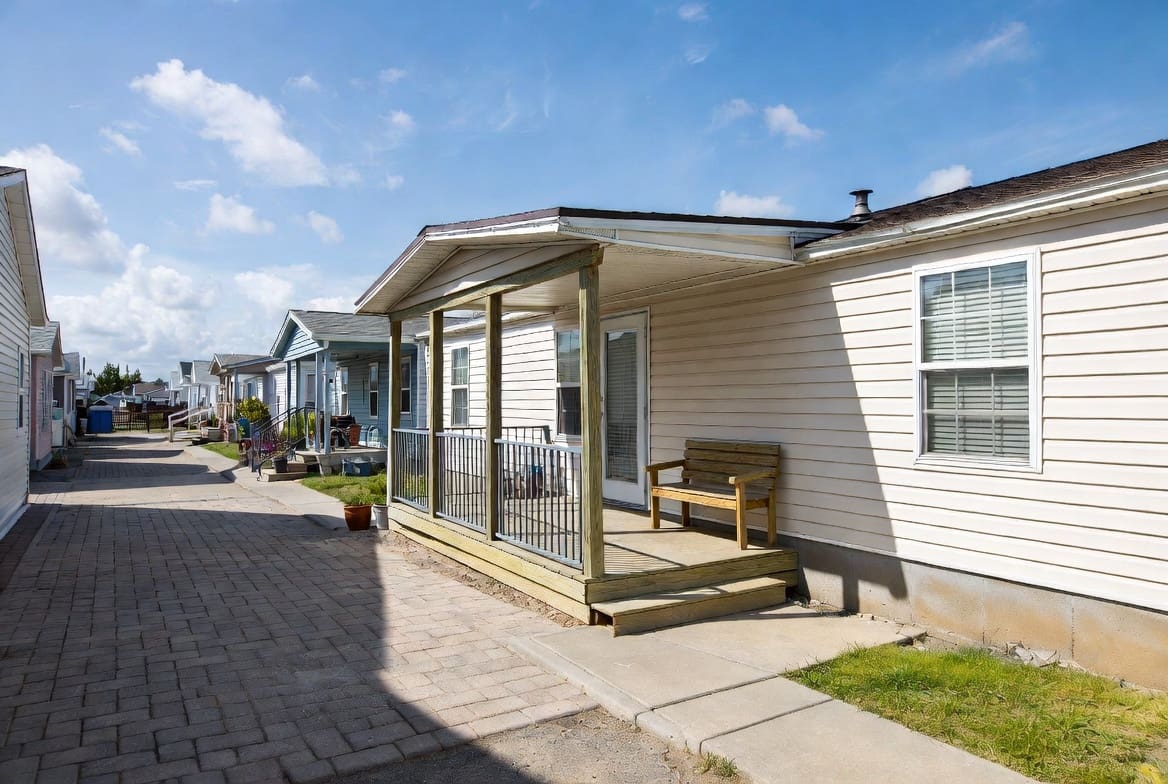
Manufactured Home Insurance – What Makes It Different and What to Look For
Manufactured home insurance is not the same as a standard homeowners policy. The policy form is different. Carriers that write it are different. The underwriting rules are different. If you own a manufactured home or you are thinking about buying one, the insurance side works in ways most people do not expect.
The Policy Form Is Not the Same
A site-built home typically carries an HO-3 policy. A manufactured home needs a different form, most often called an HO-7. The HO-7 works a lot like the HO-3. It covers the dwelling on an open peril basis and personal property on a named peril basis. Liability, loss of use, and medical payments all function the same way. But a standard HO-3 will not work for a manufactured home in almost every case. Not every carrier writes the HO-7, either. That makes this a specialty product, and it means you need an agent who knows the market.
Why the Year Your Home Was Built Matters
One of the biggest factors in how your manufactured home gets insured is the year it was built. June 15, 1976 is the dividing line. Before that date, no federal construction standards existed for factory-built homes. Those homes went by the name mobile homes, and manufacturers built them without standardized safety or structural requirements. After that date, HUD put its federal code into effect. Every home built after June 15, 1976 must meet standards for structural integrity, fire safety, electrical, plumbing, and energy efficiency. Each of those homes carries a HUD certification label on the exterior and a data plate inside. You can learn more about HUD labels, data plates, and homeowner resources at the U.S. Department of Housing and Urban Development manufactured housing page.
Why does this matter for insurance? A home built before 1976 is harder to insure. Fewer carriers will write it. The ones that do may only offer actual cash value coverage, which means the carrier subtracts depreciation from your claim payout. Some carriers set age limits and decline homes older than 25 or 30 years entirely. A home built after 1976 with the HUD label is easier to place, more likely to qualify for replacement cost coverage, and more straightforward to underwrite.
Park Versus Your Own Land
Where the home sits also changes the insurance. If your manufactured home is in a park or community, you own the home but lease the land. The park’s policy covers common areas. It does not cover your home, your belongings, or your liability. You need your own manufactured home policy. If your home sits on your own land, your policy can account for the home, the premises, and other structures. But acreage can work against you. Distance from a fire station or hydrant can also affect your eligibility and rate.
Tie-Downs and Anchoring
Tie-downs and anchoring matter more than most people realize. Manufactured homes sit on a steel chassis and weigh less than site-built homes. Wind can get underneath them. Carriers may require verification that the anchoring system meets current standards before they issue or renew a policy. Homes on permanent foundations often qualify for better rates.
What to Look For in the Policy
When reviewing a manufactured home policy, pay attention to several things. First, check whether your dwelling coverage uses replacement cost or actual cash value. On an older manufactured home, the gap between those two numbers can be significant. Second, check your deductible structure. Some policies carry separate wind and hail deductibles that run higher than the standard deductible. Third, make sure your liability limits are adequate. Fourth, know what the policy excludes. Flood, earthquake, and transit damage all require separate coverage. Fifth, check your sub-limits on high-value items like jewelry, firearms, or collectibles.
Manufactured homes are real homes. They deserve proper insurance. The key is understanding that the policy form, the carrier market, and the underwriting rules work differently from standard homeowners insurance. If you have questions about your coverage or you want to compare options, we write manufactured home insurance in Nevada, Arizona, Utah, and California.
Get a quote for your state:


