
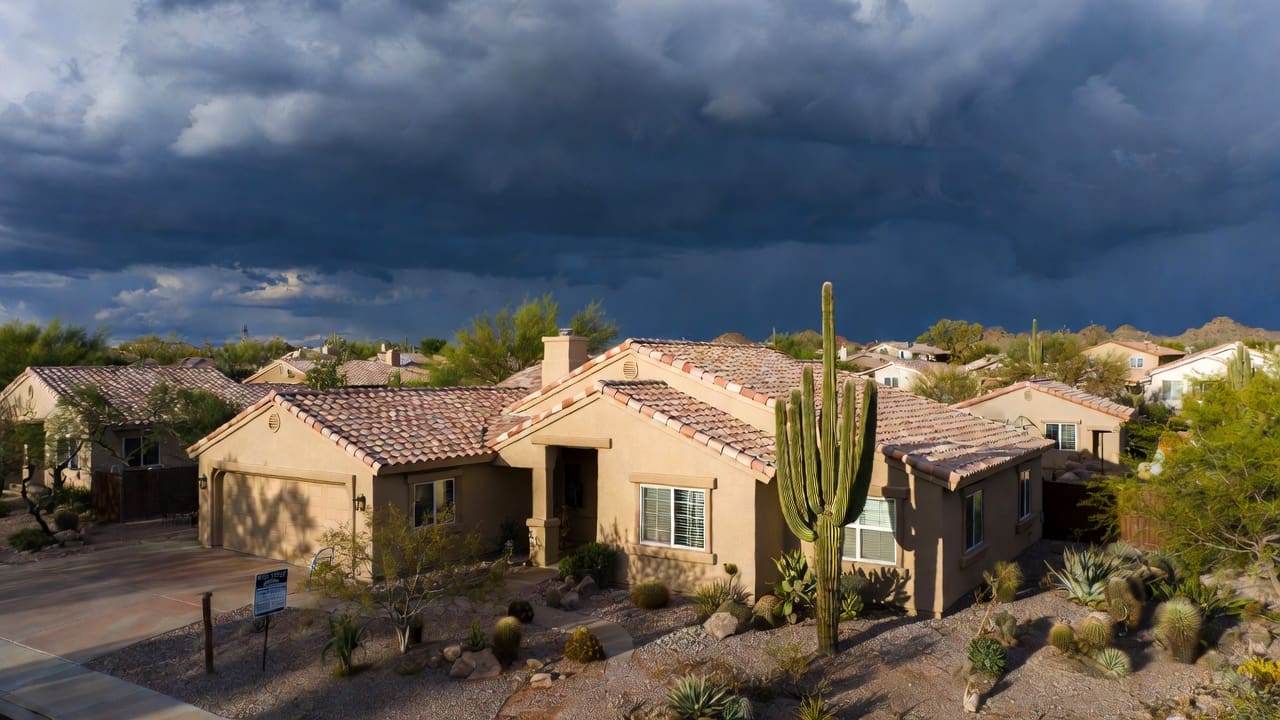
Landlord Insurance in Arizona — What Phoenix and Maricopa County Rental Property Owners Need to Know
Arizona ranks among the most landlord-friendly states in the country, with low property taxes (0.72% — one of the lowest nationally), no state rent control, and a legal framework that gives property owners significant flexibility in managing rentals. That combination has drawn investors into the Phoenix metro, Tucson, Mesa, Scottsdale, and fast-growing communities across Maricopa and Pima counties. Average rents in Arizona sit around $1,995 per month statewide, with Phoenix averaging roughly $1,850.
But being landlord-friendly from a legal standpoint doesn’t mean your insurance can be casual. The most common mistake we see from Arizona landlords is the same one we see everywhere: keeping a homeowners policy on a property that has tenants living in it. In Arizona, that mismatch between policy type and property use can leave you exposed when a monsoon blows through, a haboob damages your roof, or a tenant files a liability claim. We cover the fundamentals of landlord insurance in our companion video:
This guide focuses specifically on what Arizona landlords face — including the Arizona Residential Landlord and Tenant Act, monsoon and dust storm exposure, and the unique climate risks that come with owning rental property in the Sonoran Desert.
Why Your Homeowners Policy Doesn’t Work on an Arizona Rental
A homeowners policy — the standard HO-3 — covers owner-occupied properties. The carrier underwrites it based on the assumption that you live there, you maintain it, and the people inside are your family or guests. The moment you move out and a tenant moves in, those assumptions break down.
We’ve seen this play out firsthand at our agency. A policyholder told the carrier the property was owner-occupied. It wasn’t — tenants lived there. When the home suffered a major loss, the carrier investigated, confirmed tenant occupancy, and denied the claim entirely. That was a six-figure loss with zero payout.
In Arizona’s investor-heavy market — where out-of-state buyers frequently pick up rentals in the Phoenix metro and manage them remotely — this mistake happens constantly. If you rent out a property in Arizona, you need a landlord policy, also called a dwelling fire policy or DP-3. This type of policy specifically covers properties you own but don’t live in.
The Arizona Residential Landlord and Tenant Act and Your Insurance Exposure
Arizona landlords operate under the Arizona Residential Landlord and Tenant Act (ARLTA), codified in ARS Title 33, Chapter 10. Your insurance policy sits on top of this legal framework. The obligations ARLTA places on you as a landlord directly shape your liability exposure — and understanding them helps you buy the right coverage.
Habitability requirements. Arizona landlords must provide a dwelling that meets basic health and safety codes. That means working plumbing, heating, electrical, and — critically in Arizona — air conditioning where the unit has A/C installed and offered. In a Phoenix summer where temperatures routinely hit 115°F, a failed cooling system isn’t just uncomfortable. If a tenant suffers heat-related illness because you failed to maintain the A/C, that’s a liability claim your landlord policy needs to cover.
Faster repair timelines than most states. Under ARLTA, Arizona tenants can take action if you don’t complete repairs within 5 days for health and safety issues or 10 days for non-hazardous problems. Compare that to Nevada’s 14-day window or many states that use vague “reasonable time” language. Arizona moves fast. If you don’t, tenants can hire a licensed contractor, deduct the cost from rent (up to half a month’s rent), or terminate the lease. From an insurance perspective, failing to address a known hazard within those tight timelines strengthens a negligence argument against you if a tenant gets injured.
Security deposit rules. Arizona caps security deposits at one and a half months’ rent — lower than Nevada’s three-month cap. You must return the deposit within 14 business days of lease termination with an itemized deduction list. You must also provide tenants with a blank move-in checklist so they can document the unit’s condition. Landlords who fail to comply can face damages of up to three times the amount wrongfully withheld. These documentation requirements mirror exactly what you’d need to support an insurance claim for tenant-caused damage — another reason to follow them closely.
Eviction process. Arizona’s eviction timelines move relatively quickly: 5 days for nonpayment of rent, 5 days for health and safety lease violations, and 10 days for non-hazardous violations. For material and irreparable breaches — illegal activity, weapons discharge, assault — the landlord can terminate immediately with no cure period. Even so, evictions take time through the courts, and properties face elevated risk of intentional damage during that process. Whether your landlord policy covers intentional tenant damage varies by carrier — ask your agent before you’re in that situation.
No state agency enforces ARLTA. This is a key difference from some other states. The Arizona Department of Housing publishes the Act but does not enforce it. Disputes between landlords and tenants in Arizona are treated as private matters, resolved through the courts. That makes your liability coverage even more important — if a tenant sues you for habitability violations or injury on the property, you’re handling it through litigation, not a regulatory complaint.
Arizona Climate Risks That Affect Your Landlord Policy
Arizona’s Sonoran Desert climate creates a set of property risks that landlords from other states often underestimate — and that directly affect what coverage you need.
Monsoon season. Arizona’s monsoon runs from June 15 through September 30 and brings intense thunderstorms, heavy rain, high winds, and lightning across much of the state. Maricopa County experiences all three major flood types: localized flooding from heavy rain overwhelming drainage, flash floods from mountain runoff moving through normally dry washes, and broader flooding from tropical storm remnants. Standard landlord policies do not cover flood damage. If your rental sits near a wash, in a low-lying area, or in a FEMA flood zone, you need a separate flood policy. Even properties outside designated flood zones face real risk — Arizona’s monsoon storms can dump inches of rain in minutes on ground that doesn’t absorb water.
Haboobs and dust storms. If you haven’t experienced an Arizona haboob, picture a wall of dust thousands of feet high sweeping across the valley at 50+ mph. Phoenix typically sees one to three major haboobs per year during monsoon season. In August 2025, a massive haboob hit the Phoenix metro, causing property damage, power outages, and airport delays across Maricopa County. Haboobs damage roofing, clog HVAC systems, sandblast exterior finishes, and deposit debris that can lead to secondary water intrusion during the storms that follow. Wind damage from haboobs generally falls under your landlord policy. The secondary water damage may or may not, depending on the source and your policy terms — another conversation to have with your agent.
Extreme heat and material degradation. Arizona’s extreme summer heat — 100+ days above 100°F in Phoenix — accelerates wear on roofing materials, exterior paint, seals, and weather stripping. HVAC systems run under heavy load for roughly half the year, and A/C failures rank among the most common maintenance issues for Arizona rental properties. When the A/C fails and a condensate line backs up or a unit leaks, the resulting water damage can go undetected in attics and closets for weeks. Your landlord policy typically covers sudden and accidental water damage. It does not cover damage from deferred maintenance or gradual deterioration — and Arizona’s heat makes everything deteriorate faster.
Wildfire risk in the wildland-urban interface. Arizona’s expanding development into wildland-urban interface areas — particularly around Scottsdale, Cave Creek, Fountain Hills, Prescott, Flagstaff, and communities near national forests — puts some rental properties at elevated wildfire risk. The Arizona Department of Insurance has noted increasing severity of storms and natural disasters driving up claims frequency and insurance costs statewide. If your rental sits in or near a WUI zone, confirm your policy’s wildfire coverage and understand how your carrier treats that risk.
What an Arizona Landlord Policy Covers
Dwelling coverage protects the structure against covered perils — fire, wind, hail, lightning, vandalism, and others. In Arizona, wind and hail damage from monsoon storms, fire, and dust storm damage drive the most common claims on rental properties.
Liability coverage protects you when a tenant or visitor gets injured on your property and a court holds you liable. Given Arizona’s tight 5-to-10-day repair timelines under ARLTA and the fact that no state agency mediates disputes, liability claims go straight to court. Carrying adequate liability limits matters here.
Loss of rental income reimburses you for lost rent when a covered event makes the property uninhabitable during repairs. At Arizona’s average rent of roughly $1,995 per month, a three-month repair timeline after a monsoon-related loss means nearly $6,000 in lost income — money your landlord policy can replace.
Landlord personal property covers items you own at the rental for tenant use — appliances, lawn equipment, pool maintenance tools (common in Arizona). It does not cover the tenant’s belongings.
What It Doesn’t Cover
Tenant belongings fall outside your landlord policy. Arizona law does not require tenants to carry renters insurance, but smart landlords require it in every lease. List yourself as an additional interest — not additional insured — so you receive cancellation notices if the tenant drops coverage.
Intentional tenant damage varies by carrier. Arizona’s relatively fast eviction process helps limit exposure, but damage can still happen during the notice period. Ask your agent how your specific carrier handles this before you need to file.
Flood damage requires a separate policy. Despite Arizona’s desert reputation, flash flooding during monsoon season causes real damage — particularly near washes and in areas with poor drainage. The desert soil in much of Maricopa and Pima counties doesn’t absorb water, so rainfall runs off fast and concentrates in low-lying areas.
Earthquake. Arizona has lower seismic activity than neighboring Nevada and California, but it’s not zero. If you want earthquake coverage, it’s a separate policy or endorsement.
Vacancy gaps. If your rental sits empty for 30 to 60 days between tenants, your landlord policy may restrict or exclude certain coverages. Vacant properties attract higher risk for vandalism and undetected water damage. In Arizona’s seasonal rental market — where some areas see turnover spikes in summer when fewer people want to move during extreme heat — a vacant property endorsement may be worth carrying.
The Entity and Umbrella Connection in Arizona
Arizona’s landlord-friendly reputation and low property taxes attract investors who frequently hold rentals in LLCs. If you hold your property in an LLC, the named insured on your landlord policy must match the legal owner. If the LLC owns the property but the policy lists your personal name, that mismatch can lead to a denied claim.
Your umbrella policy also needs to align. A personal umbrella may not extend to cover claims against an LLC-held rental. We see this gap frequently with Arizona investors who own multiple properties across different ownership structures — some personal, some in LLCs — and assume one umbrella handles everything. It may not.
We covered entity structures and insurance in detail in our entities and insurance video.
Cost of Landlord Insurance in Arizona
Landlord insurance in Arizona typically runs 15-25% more than a homeowners policy on the same property. The exact cost depends on location (Phoenix and Scottsdale tend to run higher than Tucson or rural Arizona), the age and condition of the property, proximity to wildfire-prone areas, and what coverages you select.
As a rough benchmark, if you pay $1,800 a year for homeowners insurance on a property in Maricopa County, expect to pay $2,100-$2,250 for a landlord policy with comparable coverage. On a property generating $1,850 per month in rent, that premium difference amounts to less than a week’s worth of rental income — protecting an asset that could produce income for decades.
How Western Pacific Insurance Can Help
If you own rental property in Arizona and you’re not sure whether your current policy accounts for tenant occupancy, we can help. At Western Pacific Insurance, we work with Arizona landlords across Maricopa County, Pima County, and throughout the state. We’ll review your landlord policy, make sure it addresses Arizona-specific exposures like monsoon wind and water damage, haboob-related claims, HVAC failures in extreme heat, and vacancy gaps between tenants. We’ll also make sure your entity structure, your umbrella, and your underlying policies all line up.
Request a quote here or call us at 702-932-3105 to get started. You can also visit our Arizona insurance page to learn more about the coverages we offer across the state.


