
HVAC Contractor Insurance – What Your Policy Needs to Cover
HVAC contractor insurance protects your business from the claims that come with installing, repairing, and maintaining heating and cooling systems in occupied buildings. If you are running an HVAC business, a generic small business policy may leave gaps in the coverage areas that matter most for your trade.
General Liability and Completed Operations
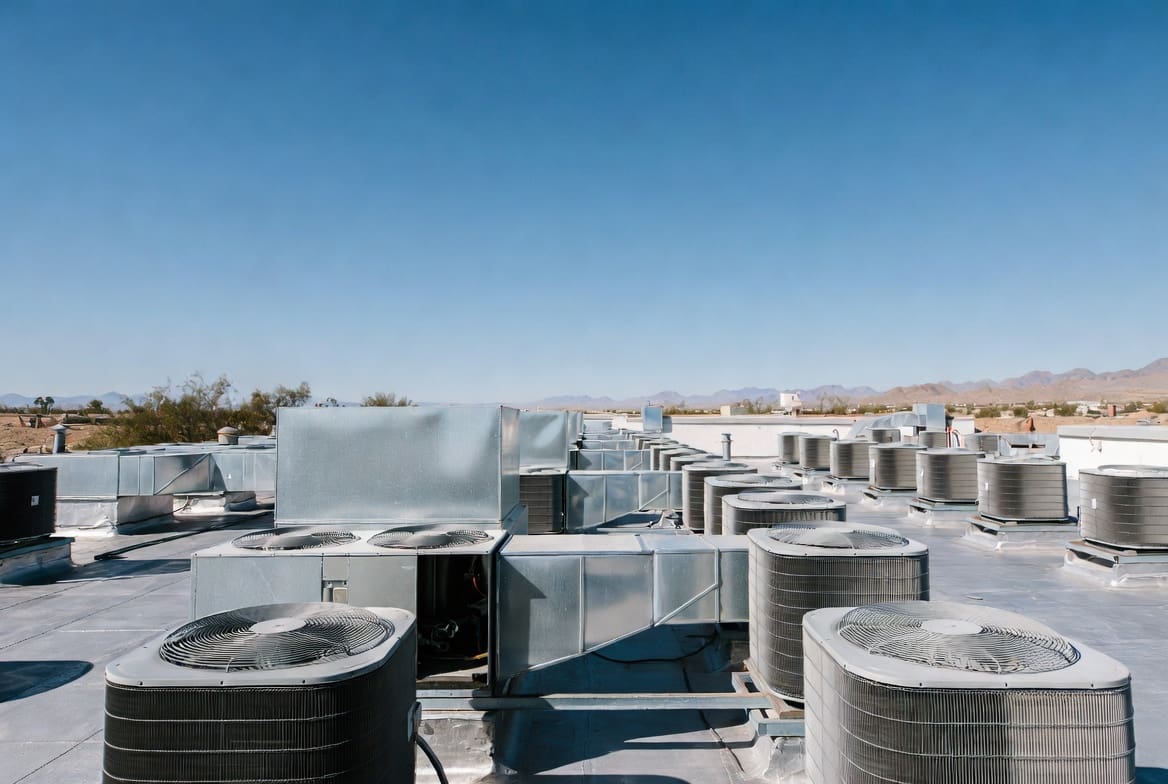
General liability covers third-party bodily injury and property damage that happens during your operations. Small job site damage – a cracked tile or a drywall ding – is usually handled out of pocket. It is not worth filing a claim when you are carrying a five or ten thousand dollar deductible. The claims that matter are the ones where the number gets big. A condenser unit comes loose during a rooftop crane lift and damages the roof structure. A brazing torch catches insulation in a ceiling cavity. Those are general liability claims where the repair bill can reach six figures.
Completed operations is the coverage you need for claims that happen after you leave the job site. Your crew installs a rooftop AC unit, and two weeks later a heavy rain gets in at the penetration point. Water damage spreads across the building below. The work is done, the crew is gone, and now there is a claim. Many HVAC contractors do not realize completed operations is a separate coverage part within general liability. If it is excluded or limited, you have a major gap.
General liability is not a warranty on your workmanship. If the only issue is that the work has to be redone, that may not be a covered claim. The claim gets serious when faulty work causes damage to other property – the ceiling, the walls, inventory, or another part of the structure.
Tools, Equipment, and Installation Floaters
HVAC technicians carry expensive diagnostic and service equipment. Recovery machines, vacuum pumps, manifold gauges, leak detectors, and combustion analyzers fill out the average service van. A fully equipped van can carry tens of thousands of dollars in tools. A standard commercial property policy covers equipment at your business location. It may give little or no coverage for tools in a van at a job site or in a driveway overnight.
Inland marine coverage fills that gap with two pieces. A contractor’s tools and equipment floater covers your portable tools and diagnostic equipment wherever they go. An installation floater covers materials in transit or stored on site before permanent installation. That includes condensers, air handlers, ductwork, and line sets. Both are standard options on most commercial packages. If nobody asked about them when your policy was set up, they may not be there.
Workers Compensation
Falls from ladders and rooftops are some of the most common and expensive workers comp claims in HVAC. Technicians work on rooftop units, climb into attics, and get onto scaffolding regularly. Electrical contact and burns from brazing and soldering are common. Respiratory issues from confined spaces and repetitive strain from heavy lifting round out the risk profile.
If you have employees, your state requires workers compensation coverage. HVAC sits in a moderate to high risk category because of the combination of heights, electrical exposure, and heavy lifting. If you hire subcontractors without their own workers comp, their payroll could end up on your audit. Their injury could become your problem.
Refrigerant Handling and EPA Exposure
Anyone who maintains, services, repairs, or disposes of equipment that could release regulated refrigerant generally needs the proper EPA Section 608 certification. Intentionally venting regulated refrigerants is illegal, and the penalties can run into tens of thousands of dollars per violation per day. A general liability policy does not cover federal fines and penalties. Manage this risk through proper certification, detailed record-keeping, and compliance with recovery and recycling requirements. The Insurance Information Institute’s guide to construction contractor coverage provides a broader overview of how specialty contractors can structure their insurance programs.
Commercial Auto and Hired and Non-Owned Auto
Service vans and trucks need commercial auto coverage. A personal auto policy will not cover a vehicle used for business. If employees ever use their personal vehicle for any business purpose, you need hired and non-owned auto coverage. Even a supply run or a stop at a parts house counts.
Certificates of Insurance
HVAC contractors working under general contractors or for property managers will be asked for a certificate of insurance before starting work. That certificate needs to show general liability limits, workers comp, and usually commercial auto. Many contracts require a million per occurrence and two million aggregate at minimum. Additional insured status and waiver of subrogation are common requests. Your policy has to be set up correctly before your agent can turn a certificate around quickly.
The Full Coverage Stack
A well-insured HVAC contractor typically carries general liability with completed operations, workers compensation, commercial auto, and hired and non-owned auto. Add inland marine for tools and an installation floater, a business owners policy or commercial package, and a commercial umbrella for additional limits. The umbrella follows the terms of the policies underneath it – if something is excluded on your base general liability, the umbrella does not fix that.
If you are running an HVAC business and you have not had a detailed conversation with your agent about these coverages, it is worth having that conversation. Get a quote from Western Pacific Insurance. We write commercial insurance in Nevada, Arizona, Utah, and California.
Learn more about our coverage in Nevada, Arizona, Utah, and California.


