
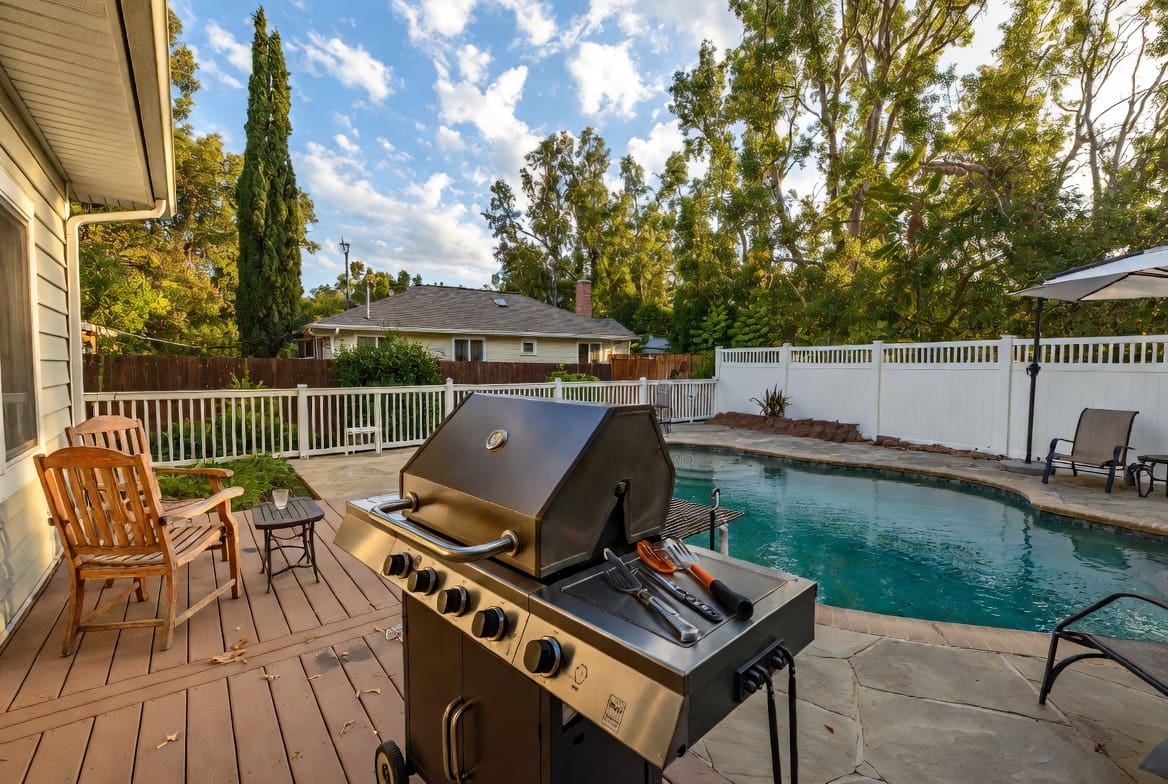
Homeowners liability coverage is one of the most important parts of your insurance policy. Most homeowners never look at it until something goes wrong. Section II of your homeowners policy protects you when someone gets hurt on your property or because of something you are responsible for. It includes two distinct coverages that work very differently from each other.
What Is Section II of Your Homeowners Policy?
Your homeowners policy has two main sections. Section I covers your property – the structure of your home, your belongings, and additional living expenses if you cannot stay in your home after a covered loss. Section II covers liability. This is the part that responds when someone else gets hurt.
Section II includes two coverages. Coverage E is personal liability. Coverage F is medical payments to others. They serve different purposes, carry different limits, and respond under different circumstances. The NAIC’s consumer guide to homeowners and renters policies provides a solid overview of how these coverages fit into the broader policy structure. Understanding both can help you avoid gaps in your protection.
Coverage F – Medical Payments to Others
Medical payments to others is sometimes called good neighbor coverage. It pays for minor medical expenses when a guest is injured on your property. The key feature is that it works on a no-fault basis. Nobody has to prove that you did anything wrong for the coverage to respond.
A friend slips on your patio and sprains an ankle. A guest slices their finger helping chop vegetables in the kitchen. In both cases, medical payments coverage can handle the urgent care visit, X-rays, and stitches without anyone filing a lawsuit or determining fault.
Typical limits range from $1,000 to $5,000 per person. Some policies offer higher limits. The coverage does not apply to injuries sustained by you or members of your household. It also does not cover injuries that occur in a business context on your property.
One of the big practical benefits of medical payments coverage is that it can resolve smaller injuries before they turn into bigger disputes. A quick, quiet resolution keeps relationships intact and keeps attorneys out of the picture.
Coverage E – Personal Liability
Personal liability is the larger coverage. It responds when you are found legally responsible for someone else’s injuries or property damage. Unlike medical payments, personal liability requires fault. Someone has to be negligent.
A neighbor’s child breaks an arm on your trampoline. The parents hire an attorney. The medical bills, surgery costs, lost wages for a parent who had to take time off work, and pain and suffering add up quickly. Personal liability coverage can pay those damages and provide your legal defense.
Standard limits typically start at $100,000 and go up to $300,000 or $500,000. That may sound like a lot. But serious injuries – a traumatic brain injury, a paralysis case, a drowning – can push well past those limits.
Trampolines, Pools, and Attractive Nuisances
Certain features on your property create elevated liability risk. Trampolines, swimming pools, and similar items are often classified as attractive nuisances. This legal concept means they can draw children onto your property, even uninvited children, and you may still face liability exposure if a child is injured.
A real case from Twin Falls, Idaho illustrates the stakes. A father at a barbecue attempted tricks on a backyard trampoline. He landed wrong and was paralyzed. In another case, a jury awarded $19 million to a man who broke his neck jumping into a raft in a friend’s pool.
Many carriers require safety features for pools and trampolines – fencing, self-latching gates, safety enclosures. Some carriers will not write a policy at all if these items are on the property. Others will exclude injuries related to them. If you own any of these items, make sure your carrier knows and make sure there is not an exclusion or underwriting issue.
Dog Bites and Homeowners Liability
Dog bites are among the most common homeowners liability claims. Your homeowners liability coverage can respond when your dog injures someone, and the coverage typically follows you off your property as well. A bite at the park or at a friend’s house can still trigger your homeowners policy.
After a bite claim, your carrier may surcharge your premium, exclude your dog from future coverage, or nonrenew your policy entirely. Breed restrictions vary by carrier and by state. If you own a dog, talk to your agent. Make sure your carrier knows about the dog, and make sure you understand how the dog is treated on your policy.
Common Exclusions You Should Know
Homeowners liability coverage is broad, but it has boundaries. Intentional acts are not covered. Liability arising out of business activity is generally excluded under a standard homeowners policy. If you run any kind of business from home, talk to your agent about whether you need a separate policy or endorsement. Liability from auto accidents is handled under your auto policy, not your homeowners policy.
The Personal Umbrella Policy
If a lawsuit exceeds your homeowners liability limits, your personal assets may be exposed. A personal umbrella policy sits on top of your homeowners and auto liability and extends your coverage by $1 million or more. For many families, this costs a few hundred dollars a year. When measured against the exposure it covers, it is one of the better values in insurance.
Review Your Coverage Today
Pull out your homeowners declarations page. Look for Coverage E and Coverage F. Check your limits. If you have a pool, a trampoline, a dog, or you host gatherings regularly, talk to your agent about whether your current limits are adequate for your situation. Ask about an umbrella policy.
Western Pacific Insurance writes homeowners coverage across Nevada, Arizona, Utah, and California. We also handle life insurance in nearly every state. If you want someone to walk through your liability coverage and identify any gaps, get a quote today. You can also learn more about our coverage in Nevada, Arizona, Utah, and California.


