
Lehi Framing Contractor Insurance: S220 and Utah’s GL Floor
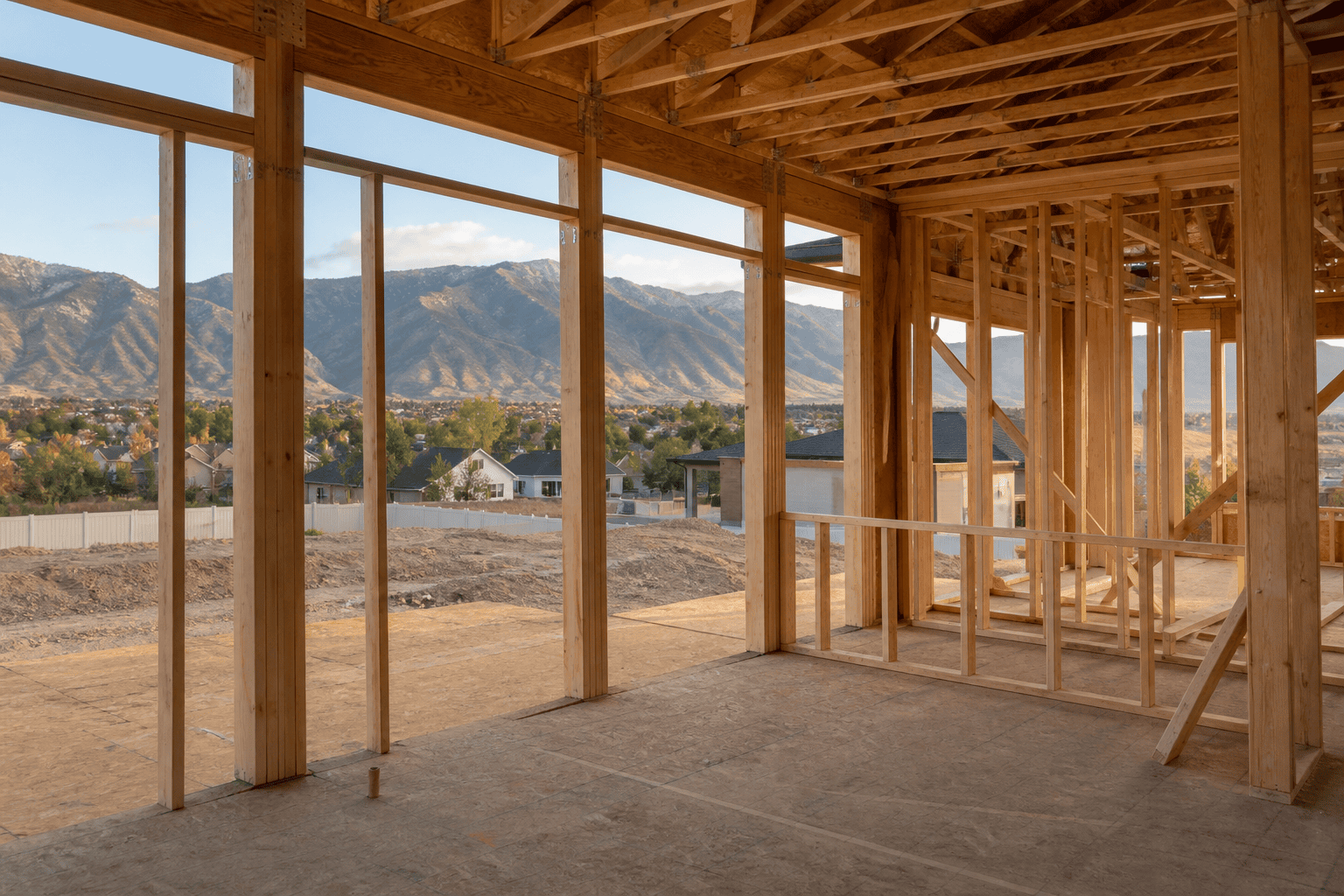
Framing is some of the steadiest work in Lehi right now. Production builders keep crews moving from lot to lot on Traverse Mountain. Around Thanksgiving Point and Pioneer Crossing, office and flex projects need walls standing on a tight calendar. Almost every one of those jobs starts the same way. Before you unload a single stud, the builder asks for your license number and a certificate of insurance.
Lehi framing contractor insurance has to clear two bars at once. The first is Utah’s licensing division, which raised its general liability minimum sharply in 2026. The second is the builders along Silicon Slopes, who decide whether your crew gets on the schedule.
Utah’s S220 License Now Carries a Hard General Liability Floor
Utah’s insurance requirement for contractors used to be easy to meet. For years the minimum was $100,000 per occurrence and $300,000 in total, and plenty of websites still print those numbers. They are out of date. Under Filing 57949, effective June 25, 2026, every contractor classification needs $1 million per occurrence and $2 million aggregate. The Division of Professional Licensing publishes the current figure on its specialty contractor page. Your certificate also has to name the division as certificate holder.
If your policy still sits at the old limits, the problem will surface at renewal, usually at the worst possible time. You may also notice that some application paperwork shows a different aggregate than the division’s website. The forms have lagged behind the rule. When two numbers disagree, buy the higher one. Carrying more liability than the state requires never costs you a license or a bid, and carrying less can cost you both. In practice, the new floor is where most builders already were, since $1 million and $2 million has been the standard ask for years.
Which License Covers Framing in Lehi
Utah does not issue a license called framing. Structural framing falls under S220 Carpentry and Flooring, a specialty classification from the Division of Professional Licensing. The scope is broad. It covers wood and metal carpentry for structural, non-structural, and finish purposes, and it specifically names metal structural studs and bearing walls. The same S220 license lets you frame a house on Traverse Mountain and set metal studs in an office build near Thanksgiving Point.
Getting licensed means completing a 25 hour pre-license course from an approved provider, registering your business, and filing proof of insurance. If the division asks you to post a license bond to show financial responsibility, the minimum for a specialty classification is $15,000.
Here is the part that trips people up. Your license is broad, but your insurance policy is not. A carrier rates a framing crew very differently from a finish carpenter, even though both hold S220. Suppose your application describes trim and cabinets while your crew is standing two-story walls. That policy may not respond when a framing claim comes in. When your work is casing, cabinets, or millwork, start with our Utah carpenter insurance guide. When it is walls, floors, and roofs, our framing contractor insurance guide goes deeper on how carriers classify the work.
What Lehi Framing Contractor Insurance Should Include
General liability is the foundation because the state requires it, but one policy does not cover a framing operation.
Workers compensation comes first once you have anyone on payroll. Framing is physical work at height, and comp pays the medical bills and lost wages when someone comes off a top plate. If you have no employees, Utah still wants paperwork. You file a Workers Compensation Coverage Waiver from the Utah Labor Commission instead.
Commercial auto covers the trucks and trailers hauling lumber and crews up and down the Silicon Slopes corridor. Your personal auto policy is not built for that use, and a carrier can deny a claim once it learns the truck was working.
Inland marine, usually sold as a tools and equipment floater, covers compressors, nailers, saws, and materials wherever they travel. It earns its premium on multi-lot production work, where equipment moves between houses and sits on open sites overnight.
Finally, think about the frame itself. Wind, fire, or theft that hits an open frame during a Utah County winter is a property loss, and your general liability policy does not cover it. That exposure belongs on builders risk insurance in Lehi. Find out who is buying that policy before the first lumber delivery shows up.
The Claim General Liability Will Not Pay
The most common surprise in this trade has nothing to do with accidents. A builder walks the house, decides a wall is out of plumb or a floor system missed the plan, and wants it redone. That is a workmanship dispute, and general liability does not pay for it. Standard policies exclude the cost of redoing your own work. What they cover is the damage your work causes to something else, like water that gets past your framing and ruins finished drywall in the next room.
A contractors errors and omissions policy, which is a form of professional liability, can fill part of that gap depending on how the form reads. It is worth a conversation if you frame for production builders with strict punch lists.
The other quiet gap is scope. Many contractor policies limit coverage to the operations listed on the policy. If your carrier classified you as a wall framer and you start taking roof packages, the roof work may sit outside your coverage. Tell your agent whenever the work changes, because a quick endorsement costs far less than an uncovered claim. None of this replaces the local process, either. Lehi City still issues permits and inspects the work when a job triggers one, and a state license does not change that.
Certificates Win the Builder’s Schedule
The general contractors building this corridor prequalify their framing crews, and the certificate is usually the first thing they check. Builders rarely reject a bid out loud. The bid just stalls when the certificate shows old limits, a lapsed policy, or the wrong company name. Most builders also want additional insured status, a waiver of subrogation, and primary and noncontributory wording. Those are real endorsements that have to exist on the policy, not just words typed on a certificate.
Keeping that paperwork clean is one of the cheapest competitive advantages you have. A crew that sends a correct certificate the same day gets on the schedule ahead of one that needs a week to sort it out. If you are the builder asking for that paperwork, see our guide to Lehi general contractor insurance. Be specific with your agent about what you bid, too. A crew framing single-family homes and a crew framing commercial space near Thanksgiving Point do not price the same way. Your policy should reflect the work you actually do.
Get a Lehi Framing Insurance Quote
Western Pacific Insurance is an independent agency, so we shop your operation across multiple carriers instead of handing you one company’s price. We work with framing contractors across Utah County and the Wasatch Front, and we help businesses with their insurance needs. We will match your classification to the work you really do. We will also make sure your limits satisfy both the state and the builders who hire you. Start with a Utah quote request, call us at (801) 955-3755, or visit our Utah insurance page to see everything we write in the state.


