
This article expands on the real-world scenarios discussed in our food & beverage distribution insurance video
and provides deeper context around how coverage actually applies when things go wrong.
Why Food & Beverage Distribution Faces Unique Risks
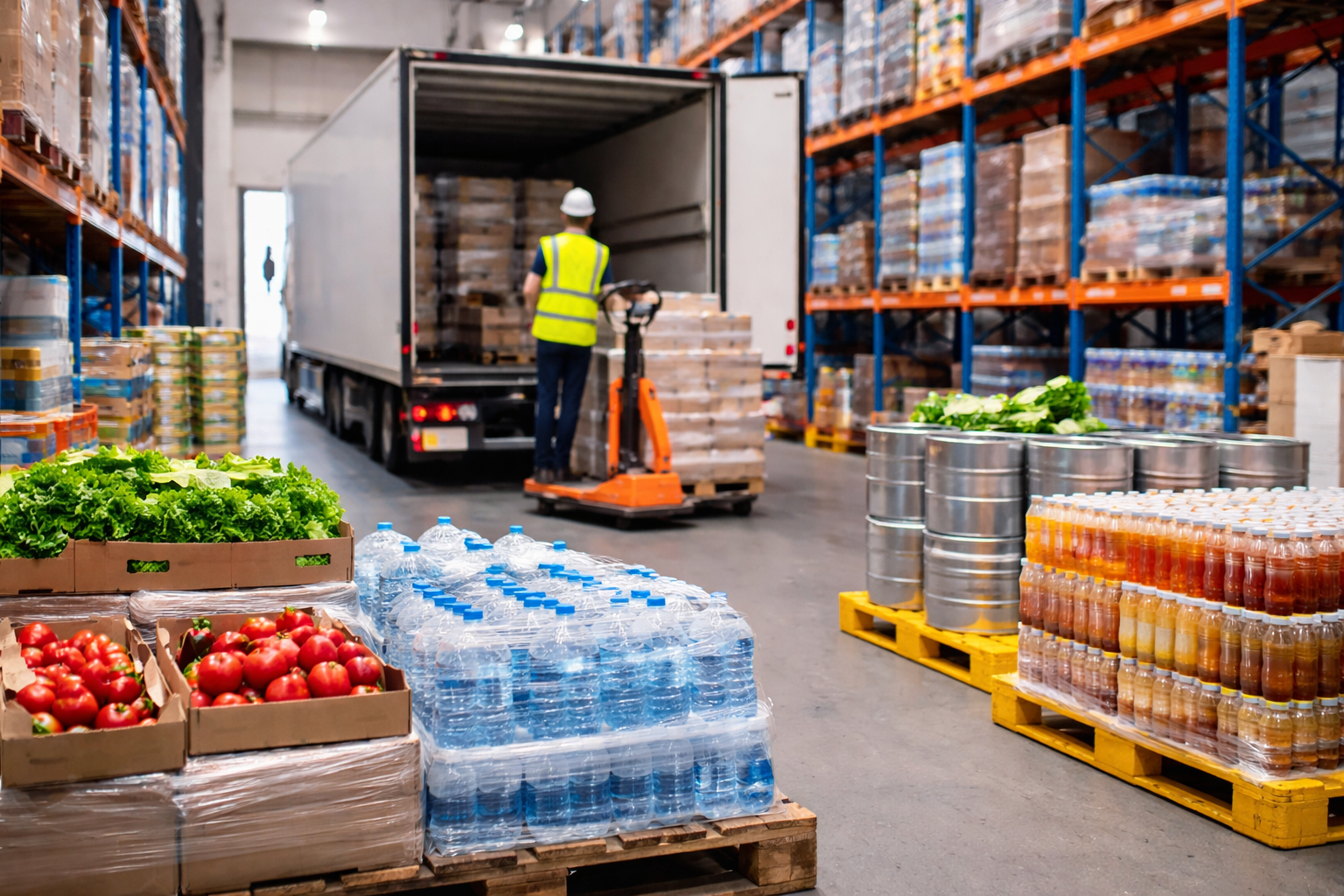
Food and beverage distribution is a high-velocity operation. Inventory moves constantly—from docks to warehouses, onto trucks, and into retail environments. Perishable goods demand strict temperature control, while tight delivery schedules leave little room for error. Minor issues—like a pallet tipping during delivery or a refrigeration delay—can quickly escalate into property damage, product loss, or liability claims.
General Liability: Your First Line of Defense
General liability insurance is foundational for food and beverage distributors. It typically covers bodily injury and third-party property damage arising from your operations. For example, if a delivery incident causes damage to a customer’s building, shelving, or equipment, general liability can respond with legal defense and settlement costs.
However, it’s critical to understand what general liability does not cover. Damage to your own product—such as broken cases, spoiled inventory, or lost goods—usually falls outside the scope of general liability and must be addressed through other coverage types.
Learn more about this coverage on our General Liability Insurance page.
Product Liability: Exposure Beyond Manufacturing
Many distributors are surprised to learn they can still be named in a product liability claim even if they didn’t manufacture the product. Courts and plaintiffs’ attorneys often pursue every business in the distribution chain when bodily injury or illness is alleged.
Common triggers include foodborne illness, undeclared allergens, contamination during handling, or temperature abuse after the product leaves the manufacturer. Even if the root cause occurred upstream, defense costs begin immediately once your business is named.
For broader context on how food-related liability claims develop across supply chains, the
Insurance Information Institute’s overview of food safety and insurance provides a solid industry perspective.
Product liability is often bundled with general liability, but limits and exclusions matter. You can review how these policies fit together on our
Business Insurance overview.
Commercial Auto: Beyond Personal Policies
Delivery vehicles are a constant exposure for food and beverage distributors. Whether you operate vans, straight trucks, or refrigerated units, personal auto policies generally exclude business use. If an accident occurs during deliveries, only a properly structured commercial auto policy will respond.
Many distributor contracts require specific liability limits, commonly $1 million or more, making correct commercial auto coverage both a legal and operational necessity.
Details on coverage structures can be found on our Business Auto Insurance page.
Motor Truck Cargo & Spoilage: Protecting Perishable Inventory
One of the most common—and costly—coverage gaps involves spoiled or unsellable inventory. Refrigeration failures, temperature excursions, or delayed deliveries can destroy an entire load. Motor truck cargo insurance, often paired with spoilage coverage, is designed to address this risk.
Without it, a single spoiled shipment can erase weeks of profit. Many distributors mistakenly assume manufacturers or carriers will absorb these losses, only to find they are contractually responsible.
Inventory protection ties closely to your property coverage, which we break down further on our Commercial Property Insurance page.
Workers’ Compensation: Protecting Employees and the Business
Warehouse environments involve forklifts, pallet jacks, conveyors, and frequent manual lifting. Slips, strains, and impact injuries are among the most common claims in distribution operations.
Workers’ compensation insurance covers medical care and lost wages for employees injured on the job while protecting the business from direct lawsuits related to workplace injuries.
More details are available on our Workers’ Compensation Insurance page.
Property & Business Income: Surviving Operational Disruption
Property insurance protects your warehouse, refrigeration equipment, racking, and inventory from events like fires, burst pipes, and severe weather. Business income coverage helps replace lost revenue when operations are temporarily shut down for repairs.
Together, these coverages help distributors continue meeting payroll and customer obligations during recovery periods.
Risk Management: Closing the Gaps
Insurance works best when paired with disciplined risk management. Driver training, temperature monitoring, supplier contract review, and warehouse safety protocols all reduce the likelihood and severity of claims.
Our Risk Management services help distributors identify and close gaps before they turn into costly problems.
Wrap: Layered Coverage for Layered Risk
Food and beverage distribution risk isn’t isolated—it’s layered across premises, products, vehicles, cargo, employees, and property. A well-structured insurance program aligns coverage across these layers so small operational issues don’t become business-threatening events.
For a visual walkthrough of how these risks play out in real operations, we recommend watching our Food & Beverage Distribution Insurance video.


