
EV Fleet Insurance for Business: What Your Commercial Auto Policy Might Be Missing
If your business is adding electric vehicles to the fleet, the insurance conversation needs to happen before you take delivery. EV fleet insurance covers risks that standard commercial auto policies were not designed around – higher repair costs, longer downtime, charging infrastructure on your property, and employees using personal EVs for work. Most business owners walking into fleet electrification have no idea how different the coverage stack looks compared to a traditional gas fleet.
Why Commercial Auto Insurance Can Cost More for EV Fleets
Electric vehicles use specialized components that require trained technicians and a thinner parts supply chain. Fewer shops can work on them. Many EVs are heavier than their gas counterparts, and claim severity can run higher than comparable gas vehicles. The Insurance Information Institute’s guide to business vehicle insurance covers how commercial auto policies work and why the coverage form matters when vehicles are used for business. Carriers are still building out their loss data on commercial EVs. Some carriers are comfortable writing EV fleets. Others are declining the risk or pricing it at a premium that makes the numbers hard to justify. An independent insurance agency with access to multiple carriers can identify which ones are actively writing commercial EV fleets at competitive rates.
The Battery Changes the Repair Math
The battery is one of the most expensive single components in an electric vehicle. Depending on the van or truck, a replacement pack can run anywhere from ten to twenty-five thousand dollars. When a gas truck needs an engine replacement, the vehicle is usually back on the road in a couple of weeks. When an EV battery pack is compromised, the repair timeline can stretch to three or four months. The battery may need to come from the manufacturer. There may not be a replacement in stock.
Your commercial auto policy should cover battery repair or replacement under comprehensive or collision coverage. Valuation matters. Many claims settle on an actual cash value basis, which means the carrier looks at age, condition, and depreciation. If the van is a few years old, the gap between what the policy pays and what a new battery pack costs can be bigger than expected. Talk to your agent about how the vehicles are scheduled and how physical damage is valued before there is ever a claim.
Downtime Hits EV Fleets Harder
Downtime is the coverage gap that hits EV fleet owners hardest. Extended repair timelines mean your business could be short a vehicle for months. If that vehicle is part of a service fleet or delivery operation, you are losing revenue every day it is off the road. Depending on the carrier, you may have options like rental reimbursement, transportation expense coverage, or downtime protection. The default limits are often nowhere near enough for a business that depends on that vehicle every day.
Charging Infrastructure Creates Property and Liability Exposure
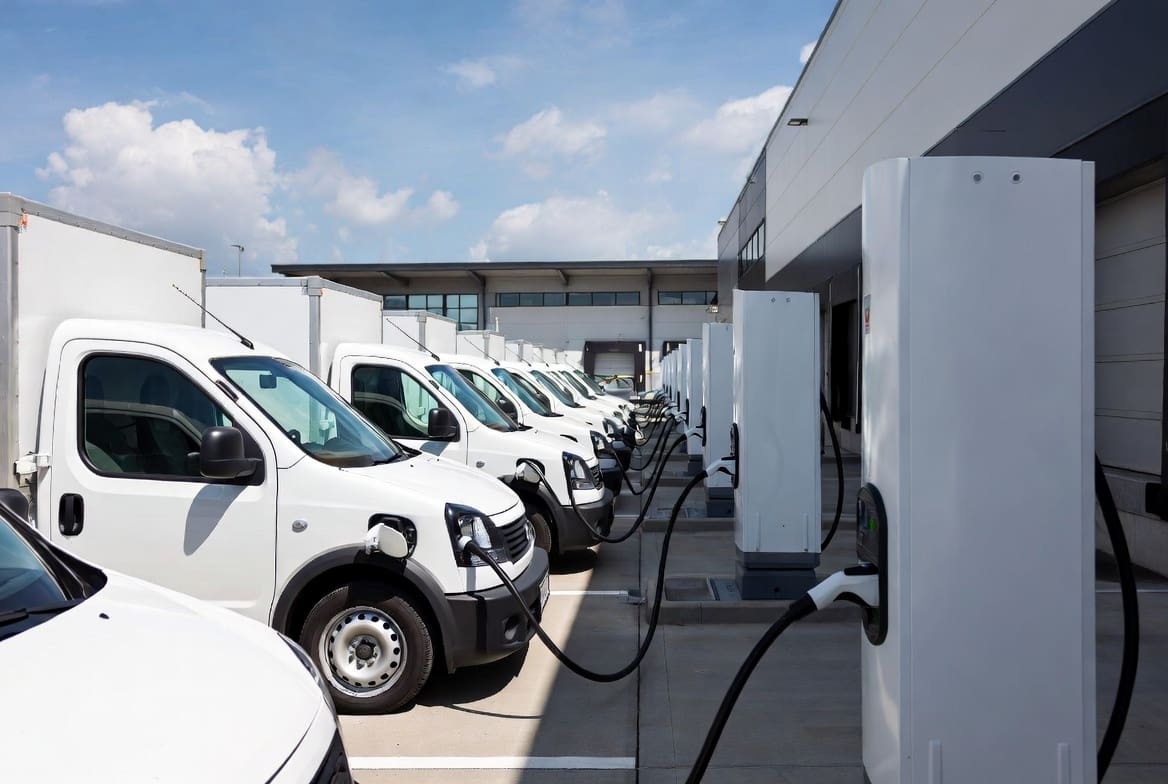
When your business installs EV charging stations, you are adding equipment to your property that creates exposure on two fronts. On the property side, charging stations can be damaged by vehicles, weather, vandalism, or electrical surges. They should be reflected in your commercial property policy or business owner’s policy. On the liability side, someone could trip over a cable, a malfunction could cause an electrical injury, or a fire could start at a charging station and spread. Your carrier needs to know the charging equipment is there. Installing charging stations without notifying your insurance carrier can create an underwriting issue that surfaces at the worst possible time.
Hired and Non-Owned Auto Coverage for Employees Using Personal EVs
More employees are using personal electric vehicles for business purposes. A field technician drives their own EV to job sites. A salesperson uses their personal vehicle to visit clients. The moment an employee uses their personal car for business, your company has liability exposure. Hired and non-owned auto coverage addresses this. It responds on a secondary basis after the employee’s personal auto policy. Many personal auto policies have a business use exclusion. If the employee’s insurance does not cover business driving and your company does not carry hired and non-owned auto coverage, there could be a gap where nobody’s policy responds as expected.
Get Your EV Fleet Covered the Right Way
The coverage stack for an EV fleet includes commercial auto insurance, commercial property or a business owner’s policy for charging infrastructure, general liability for premises exposure, hired and non-owned auto coverage, and umbrella or excess liability on top. The commercial auto market is already tough. Adding electric vehicles makes it more complicated. An independent agent who can shop multiple carriers and find the ones that understand this space is how you get the right coverage at a price that works.
Western Pacific Insurance writes commercial auto policies across Nevada, Arizona, Utah, and California. Get a quote and we will walk through your EV fleet coverage with you.


