
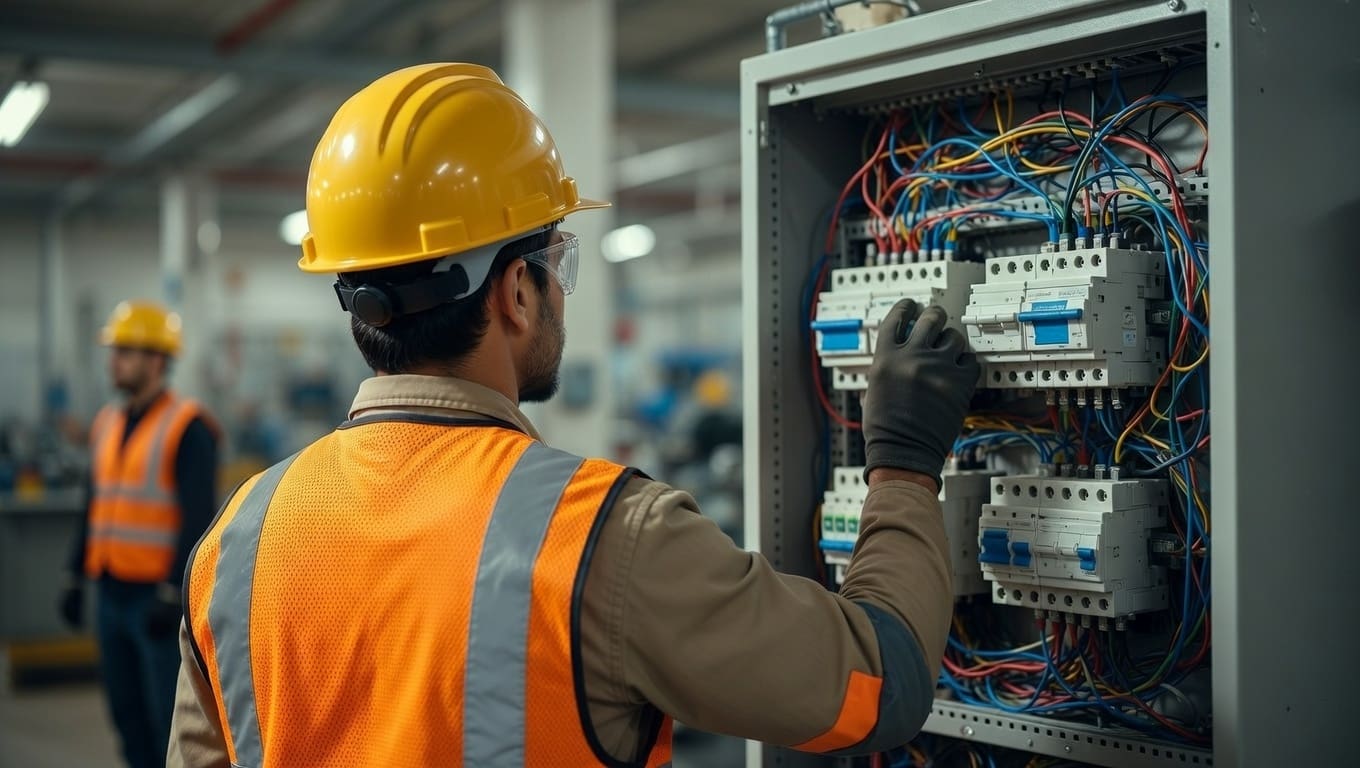
Electrical work is one of the more hazardous trades to insure. The liability exposure is significant. And the coverage a mid-size electrical contractor needs goes well beyond a basic general liability policy. If you’re running crews, bidding on commercial projects, and managing a fleet of service vehicles, your insurance program needs to match that reality. We walk through the full breakdown in our companion video.
Most electrical contractors are either underinsured, misclassified on workers comp, or carrying coverage gaps they don’t know about. They find out when a claim hits. By then, it’s too late to fix.
General Liability and Completed Operations
Commercial general liability is the foundation. Most commercial electrical contractors carry it because contracts usually require it. But the part that matters most — and the part that gets overlooked — is completed operations coverage.
Completed operations covers claims that arise after the job is done. Your crew finishes a service upgrade on a two million dollar tenant improvement. Six months later, a fire breaks out and the investigation traces it back to your wiring. If products-completed operations coverage has been restricted, excluded, or mishandled on your policy, you have a serious problem.
Completed operations matters for every contractor. But for electricians, it deserves special attention. Faulty wiring can cause damage weeks, months, or even years after the work is finished. Make sure your completed operations limits match your per-occurrence limits. And make sure the coverage hasn’t been altered by endorsements or exclusions that could limit your protection on past work.
Workers Compensation
If you have employees, workers comp is legally required in most states. For electrical contractors, the details matter more than for most businesses.
Workers comp rates are based on classification codes. Electrical work carries some of the highest rates in the trades — electrocution, falls, burns, arc flash on a 480-volt panel. If employees are classified incorrectly, you could be overpaying. Or worse, underpaying — which means a premium audit at the end of the year hits you with a bill you didn’t budget for.
Your experience modification rate (EMR or mod rate) reflects your claims history relative to others in your classification. A mod rate above 1.0 means you’re paying more than average. For mid-size contractors, a bad mod rate doesn’t just raise premiums. It can disqualify you from bidding on jobs. Many general contractors won’t work with subs whose mod rate exceeds a certain threshold.
Managing your mod rate means managing your safety program. Document everything. Train your crews. Report injuries immediately. Work with your agent to make sure claims are coded correctly and closed out promptly.
Commercial Auto
If you run an electrical contracting business, you have vans, trucks, and service vehicles on the road. You should not assume a personal auto policy will protect business use or the business itself. If one of your service vans is in an accident on the way to a job site, a personal auto policy is unlikely to cover it.
For a mid-size operation running a fleet, this isn’t just about collision. It’s about liability. If one of your trucks causes a serious multi-vehicle accident, the injured parties are coming after your business. Your commercial auto liability limits need to handle that.
Don’t overlook hired and non-owned auto coverage. If an employee drives their personal vehicle to pick up parts and causes an accident, your business can be liable. Hired and non-owned fills that gap.
Inland Marine — Tools and Equipment
This is one of the coverages electrical contractors skip most often. And when a theft or transit loss happens, it’s one of the gaps they regret most.
Your tools, testing equipment, generators, wire, conduit, and panels move between your shop, trucks, and job sites every day. Commercial property insurance is mainly designed for covered property at your premises. It often doesn’t fully protect property in transit, at temporary locations, or on a job site. That’s where inland marine comes in.
An inland marine policy covers your tools and equipment wherever they are. Theft from a job site. Damage in transit. A break-in on one of your trucks. If you’ve ever lost $20,000 or $30,000 in meters, benders, and power tools overnight, you know why this matters.
Umbrella Coverage
For a mid-size electrical contractor, especially one doing commercial work, umbrella coverage is practically mandatory. It sits on top of your general liability, commercial auto, and employers liability. It kicks in when a claim exceeds the limits on one of those underlying policies.
A single serious event — an apprentice takes an arc flash on a 480-volt panel, a fire causes seven figures in damage to a commercial building, a fleet vehicle causes a multi-injury highway accident — can blow past a one million dollar GL limit fast. An umbrella gives you an additional layer, typically in one to five million dollar increments.
You already know that most GCs and project owners require subs to carry umbrella coverage. The question is whether yours is broad enough to sit over all your underlying policies without gaps. And make sure your policy can satisfy additional insured status, waiver of subrogation, and primary and noncontributory wording. Those three come up on almost every commercial subcontract.
Builders Risk and Installation Floaters
If your electrical contracting business does new construction or large-scale installations, builders risk protects the project during construction. It covers materials, equipment, and work in progress against fire, theft, weather, and vandalism.
An installation floater is more specific. It covers the materials and equipment you’re installing — panels, wiring, switchgear — from the time they leave your shop until the project is accepted by the client.
On larger projects, the GC usually carries the builders risk policy. You already know that. But don’t assume it covers your installation exposure. Verify it.
Don’t Overlook These
Professional liability (E&O). If your firm does design-build work, value engineering, or provides specifications, you have professional exposure. A wiring design error that leads to a system failure can trigger a claim even without bodily injury or property damage.
Cyber liability. If you store client data, process payments electronically, or install networked systems like smart building controls, you have cyber exposure.
Employment practices liability (EPLI). Wrongful termination claims, discrimination allegations, and harassment complaints don’t require the employee to win to cost you money. Defense costs alone can be significant.
We Can Help
If you run an electrical contracting business and you want a coverage review, get a quote or give us a call. We serve contractors across Nevada, Arizona, Utah, and California and work with multiple carriers that understand contractor risks. Check out our Google reviews to see what our clients say.
For more on commercial coverage, watch our videos on contractor insurance, workers comp, umbrella policies, and business interruption.
Frequently Asked Questions
What insurance do electrical contractors need besides general liability?
Most electrical contractors need workers compensation, commercial auto, inland marine for tools and equipment, and umbrella coverage on top of their general liability. If you do design-build work, professional liability (E&O) is also worth considering. The right combination depends on whether you do residential, commercial, or both.
Why is completed operations coverage so important for electricians?
Faulty wiring can cause fires or system failures weeks, months, or even years after the work is finished. Completed operations coverage protects you against claims that arise after a job is done. Without it, a post-completion fire traced back to your work could leave you exposed.
What is an experience modification rate and how does it affect my business?
Your experience modification rate (mod rate or EMR) compares your workers comp claims history to other businesses in your classification. A mod rate above 1.0 means you pay higher premiums than average. It can also disqualify you from bidding on jobs, since many general contractors set mod rate thresholds for their subcontractors.
Does my personal auto insurance cover my work vehicles?
In most cases, no. Personal auto policies typically exclude vehicles used for business purposes. If a service van or work truck is in an accident, your personal policy is unlikely to cover it. A commercial auto policy is designed to cover business-owned vehicles, and hired and non-owned auto fills the gap for employees driving personal vehicles on company business.
What does inland marine insurance cover for an electrical contractor?
Inland marine covers your tools, testing equipment, materials, and portable equipment wherever they are — on a job site, in transit, or in your trucks. Standard commercial property insurance mainly covers items at your business premises and often falls short for property that moves between locations daily.


