
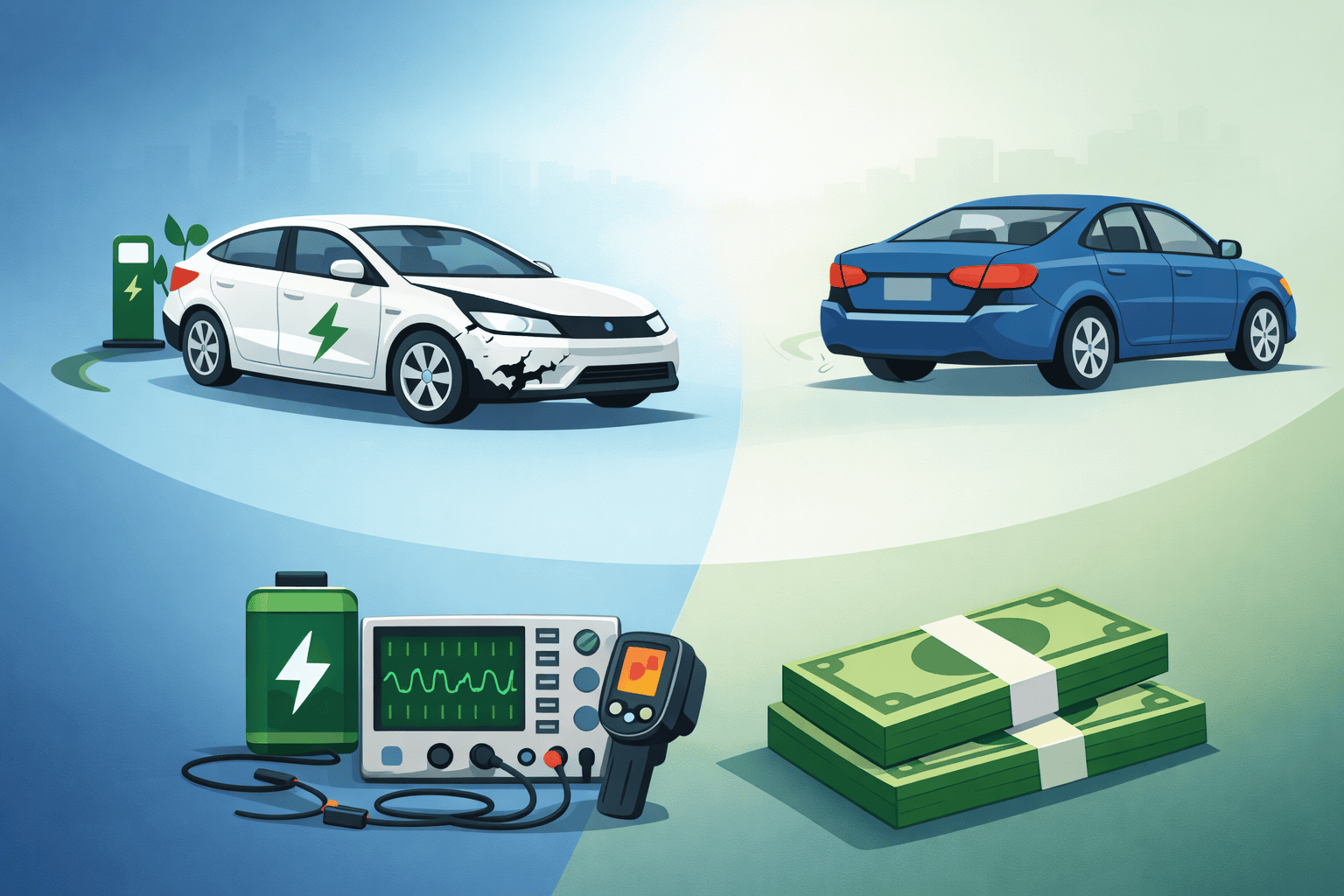
Electric vehicles often cost more to insure even when your driving, ZIP code, and limits have not changed. The reason is claim severity, not crash odds. A battery pack sits in the floor and can force a high-voltage inspection after a fender hit that would be cosmetic on a gas car. Windshield cameras and bumper sensors need recalibration. Insurers also price the full replacement value, not the price you paid after a tax credit. Below we cover repair cost, replacement value, the shorter claims history, and why Nevada shop access can add to the bill.
This isn’t unique to any one brand or model. Many EV owners notice the same pattern, even when their driving habits, location, and coverage limits haven’t changed.
The explanation has less to do with how often electric vehicles are involved in accidents and more to do with how insurance pricing works when repairs or replacement are expensive.
In a recent video on our YouTube channel, we walk through this topic in detail and explain why EV insurance pricing follows a different cost structure than most gas vehicles. This article expands on those ideas and provides additional context for anyone researching electric vehicle ownership.
Insurance Is About Severity, Not Expectation
One of the most common misconceptions about insurance is that higher premiums mean higher risk of something going wrong. In reality, insurance pricing is driven primarily by claim severity — how expensive a loss is when it occurs — not by the expectation that a loss will happen.
Most drivers, whether they drive an electric vehicle or a gas vehicle, will never file a major claim. Insurance exists to provide financial structure for uncommon but costly events, not because those events are expected.
Once electric vehicles are viewed through that lens, their insurance costs become easier to understand.
Why EV Repairs Tend to Cost More
Electric vehicles are engineered differently than gas-powered cars. The battery pack alone can represent a significant portion of the vehicle’s total value. It is integrated into the vehicle’s structure, mounted low for stability, and closely tied to high-voltage systems.
In a minor collision that might be largely cosmetic on a gas vehicle — such as a bumper or fender repair — an electric vehicle often requires additional inspection steps. Repair facilities may need to verify battery integrity, confirm that high-voltage components were not affected, and ensure electronic systems are functioning correctly.
Even when no damage is found, that verification process takes time, specialized equipment, and trained technicians. Those added steps increase the average cost of a claim.
Technology Adds Cost When Repairs Are Needed
Modern electric vehicles are typically equipped with advanced driver-assistance systems, including cameras, sensors, radar units, and integrated software. These systems can improve safety over time, but they also increase repair complexity.
A windshield replacement, for example, is no longer just glass. On many newer vehicles, the windshield houses cameras used for lane-keeping, adaptive cruise control, and collision avoidance. After replacement, those systems often require precise recalibration.
Similarly, body panels, mirrors, and bumpers may include sensors tied into the vehicle’s safety systems. Repairs that once involved basic parts now involve electronic testing and calibration, which increases claim costs.
Replacement Value Matters
Insurance coverage is closely tied to replacement cost. Many electric vehicles — especially newer models or higher trims — have higher replacement values than the vehicles they are replacing.
Even when tax credits or incentives reduce the purchase price for the owner, insurers still price coverage based on the full cost to replace the vehicle if it is totaled. Higher potential payouts translate directly into higher comprehensive and collision premiums.
Why Data History Affects Pricing
Insurers rely heavily on long-term claims data to price risk accurately. Gas vehicles benefit from decades of historical data across millions of vehicles. Electric vehicles, while growing rapidly in adoption, still have a shorter track record.
This isn’t unprecedented. When hybrid vehicles first became more common in the mid-2000s, insurance premiums were higher relative to comparable gas cars. As repair processes standardized, parts became more available, and claims data accumulated, those pricing differences gradually narrowed.
Electric vehicles are following a similar path. As data improves and repair infrastructure expands, pricing tends to become more precise over time.
Total Losses and Claim Economics
Another factor affecting EV insurance is how quickly repair costs can approach replacement value. Because electric vehicle repairs can escalate rapidly, insurers may declare a total loss at a lower damage threshold compared to gas vehicles.
This doesn’t mean accidents are more severe. It reflects the economics of repair versus replacement. Total losses are more expensive claims, and when they occur more frequently within a category of vehicles, premiums adjust accordingly.
Regional Factors Also Play a Role
Location influences insurance costs for all vehicles, and electric vehicles are no exception. In more spread-out regions, towing distances, access to EV-certified repair facilities, and limited shop availability can increase claim expenses.
Here in Nevada, long highway stretches and fewer EV-certified shops outside major metro areas can add meaningful cost to otherwise routine claims. Weather events like flash flooding can also complicate inspections and repairs, even when damage is limited.
These factors don’t make losses more common — they make them more expensive when they do occur.
Keeping Perspective as an EV Owner
Higher insurance premiums do not mean electric vehicles are unsafe. Many EVs perform very well in crash testing and have strong safety records. Insurance pricing reflects repair cost, replacement value, and complexity — not fear or expectation.
The more useful question for most buyers is whether the overall ownership picture makes sense. Lower fuel costs, reduced routine maintenance, and potential incentives can offset higher insurance premiums for many drivers.
It’s also important to compare vehicles on an equal footing. Moving from an older, paid-off gas vehicle to a new electric vehicle will almost always increase insurance, regardless of powertrain. When compared to similarly priced gas luxury vehicles, the difference is often smaller.
For a broader look at how auto insurance works across different vehicle types, you can visit our auto insurance coverage overview.
Additional Resources
The National Association of Insurance Commissioners (NAIC) provides a clear, non-promotional overview of why electric vehicles often cost more to insure, including how repair costs, replacement values, and emerging data trends affect premiums.
You can review their explanation here:
Electric Vehicle Insurance Rates – NAIC.
If you’d like to hear these concepts explained step by step with real-world context, we also cover this topic in detail in our YouTube video on electric vehicle insurance costs, which complements the information in this article.
Understanding how insurance pricing works makes these costs far less mysterious. Electric vehicles often cost more to insure because repairs, replacement values, and technology drive higher claim expenses — not because something is likely to go wrong.
Frequently Asked Questions
Why is electric vehicle insurance more expensive than gas car insurance?
EV insurance is priced higher because of claim severity, not claim frequency. Battery packs are expensive to inspect and replace, repair facilities need specialized equipment and training, and advanced driver-assistance systems add calibration costs to even minor repairs. Insurers also price based on full replacement value, not what you paid after tax credits.
Are electric vehicles more dangerous or more likely to be in accidents?
No. Many EVs have strong crash test ratings and good safety records. Higher insurance premiums reflect the cost of repairs and replacement when a claim does happen, not a higher likelihood of accidents. Insurance pricing is driven by how expensive a loss is, not how often one occurs.
Will EV insurance costs go down over time?
They are expected to. The same pattern occurred with hybrids in the mid-2000s. As repair infrastructure expands, parts become more available, technicians gain experience, and insurers accumulate more claims data, pricing tends to become more precise and competitive.
Does living in Nevada make EV insurance more expensive?
It can. Nevada’s long highway stretches, limited EV-certified repair shops outside major metro areas, and higher towing distances can add cost to otherwise routine claims. Flash flooding can also complicate inspections. These regional factors increase claim expenses when a loss does occur.
How can I reduce my EV insurance costs?
Compare quotes from multiple carriers, since EV pricing varies significantly between insurers. Ask about bundling discounts, safe driver programs, and telematics options. Make sure you are not over-insured or under-insured on coverage limits. An independent agent who works with multiple carriers can help you find the best rate for your specific vehicle and situation.


