Cleaning Business Insurance – What Every Owner Needs to Know About the Coverage Gap
Cleaning business insurance is one of the most misunderstood areas of commercial coverage. Most cleaning business owners carry general liability and assume they are protected. The problem is that a standard general liability policy contains an exclusion for property in your care, custody, or control. That exclusion removes coverage for the exact type of damage cleaning crews cause most often.
The Care, Custody, and Control Exclusion
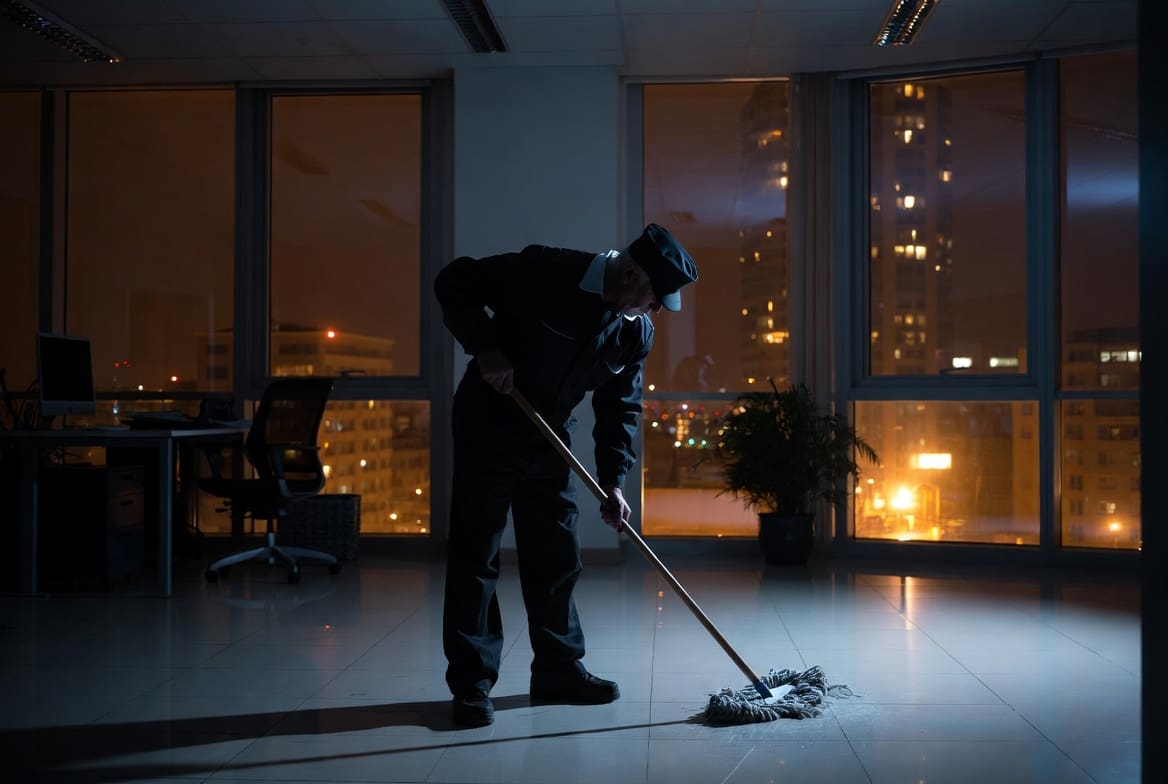
Your cleaning crew is inside a client’s office after hours. A team member knocks a laptop off a desk. It hits the ground, takes out a docking station and a monitor, and the client wants to know who is paying for it. You call your insurance company expecting your general liability policy to handle it. The adjuster tells you the damaged property may fall under the care, custody, and control exclusion. Your policy may not cover it.
This exclusion is found in most standard commercial general liability policies. It removes coverage for damage to personal property that is in your care, custody, or control at the time of the loss. For a cleaning business, this is a serious problem. Your entire job involves being inside someone else’s space, handling their property, and working around items worth thousands of dollars. Spilling a chemical on a granite countertop or running a buffer across a hardwood floor and damaging the finish can fall into this gap. So can knocking over expensive equipment.
The International Risk Management Institute (IRMI) covers the care, custody, and control exclusion in detail, including how courts have interpreted it across different fact patterns.
There are ways to address this gap. Some carriers offer a care, custody, and control buyback endorsement or a voluntary property damage endorsement on the general liability policy. In some cases, a property-of-others inland marine form may be part of the solution. The exact answer depends on the carrier and the policy form.
Janitorial Bond vs. General Liability
Cleaning business owners hear the phrase “bonded and insured” constantly. Commercial clients expect it. Residential clients ask about it. A janitorial bond and a general liability policy are two completely different things that protect against two completely different risks.
A janitorial bond is a type of surety bond. It protects your client if one of your employees steals from them while on the job. Accidental damage, slip-and-fall injuries, and chemical reactions that ruin a surface are not covered. The bond covers employee theft only. Your cleaning crews have unsupervised access to offices, homes, and commercial buildings. A janitorial bond gives your client a financial guarantee that if something goes missing, the bond will reimburse them up to the bond limit.
Being bonded matters for credibility and contract eligibility, but being bonded does not mean you are insured. Being insured does not mean you are bonded. Most cleaning businesses need both.
Workers Compensation for Cleaning Crews
Cleaning is physical work. Your employees are lifting, bending, climbing ladders, working with chemicals, and operating equipment for hours at a time. Slip-and-fall injuries, chemical burns, repetitive strain, and back injuries are common in this industry. Workers compensation covers medical expenses and partial lost wages when an employee is injured on the job.
In most states, if you have employees, you are required to carry workers compensation. The requirements vary by state. If an employee gets hurt and you do not have coverage, your business is exposed to the medical bills and the lawsuits that can follow.
Commercial Auto and Hired and Non-Owned Auto
Cleaning businesses depend on vehicles. Your crews drive to job sites with equipment, chemicals, and supplies loaded in vans or trucks. If one of your drivers is in an accident on the way to a job, your personal auto policy may not cover it. Most personal policies exclude regular business use.
Commercial auto insurance covers your business vehicles for liability and physical damage. If any employee ever uses a personal vehicle to drive to a job site or pick up supplies, that creates exposure. Hired and non-owned auto coverage addresses it.
Building the Full Coverage Stack
Cleaning businesses that are growing need more than just general liability. The full stack starts with general liability and the care, custody, and control gap addressed. Add a janitorial bond, workers compensation, and commercial auto with hired and non-owned coverage. As you scale, employment practices liability insurance and tools and equipment coverage become relevant.
Commercial cleaning contracts often require specific limits, additional insured status, waiver of subrogation, workers compensation, auto coverage, and bonding. A certificate of insurance proves a policy exists, but it does not show every exclusion, endorsement, or gap. The certificate may get you through the door. The policy wording decides whether the claim gets paid.
An independent insurance agent can shop this across multiple carriers and put together a program that fits how your business actually operates. We do this for cleaning businesses across Nevada, Arizona, Utah, and California. Get a quote from Western Pacific Insurance or visit our state pages to learn more about coverage in Nevada, Arizona, Utah, and California.


