
What Happens After You File a Car Insurance Claim?
You get in a car accident…you pull over…you exchange information. And now you’re wondering — what happens next? If you’ve never been through the auto claims process, the whole thing can feel confusing and slow. Understanding what happens after you file a car insurance claim helps you make better decisions, avoid common mistakes, and get your car repaired faster. We walk through the full process in our companion video.
Filing the Claim
Call your insurance company right away. If you have an independent agent, call them too — they can help you understand your coverage and what to expect. When you file, the carrier opens a claim and assigns a claim number. Write it down. You’ll need it for the rental car, the body shop, and every follow-up call.
Your Policy or Theirs
If the other driver caused the accident, you might expect their insurance to handle everything. Eventually it might. But liability investigations can take weeks or months. If you have collision coverage on your policy, you can file under your own insurance and get your car repaired now. Your carrier pays for the repair minus your deductible, then goes after the other driver’s insurance to recover their costs. That process is called subrogation. If it’s successful, you get your deductible back.
If you don’t have collision coverage, you have to wait for the other driver’s carrier to accept liability before anything moves. That can leave you without a car for a long time.
The Adjuster
Once you file, the insurance company assigns an adjuster. The adjuster investigates the claim, determines what happened, and figures out what the carrier owes. They’ll ask for your version of events, photos of the damage, and a copy of the police report. Be honest and thorough. Don’t exaggerate and don’t minimize.
The adjuster works for the insurance company. They’re not your adversary, but their job is to settle the claim based on the policy terms. If something doesn’t feel right, talk to your agent.
The Estimate and the Repair
The insurance company will either send an appraiser to inspect your vehicle or ask you to take it to a shop. Some carriers use photo-based estimates through an app. The carrier or their direct repair body shop will write an initial estimate based on the visible damage.
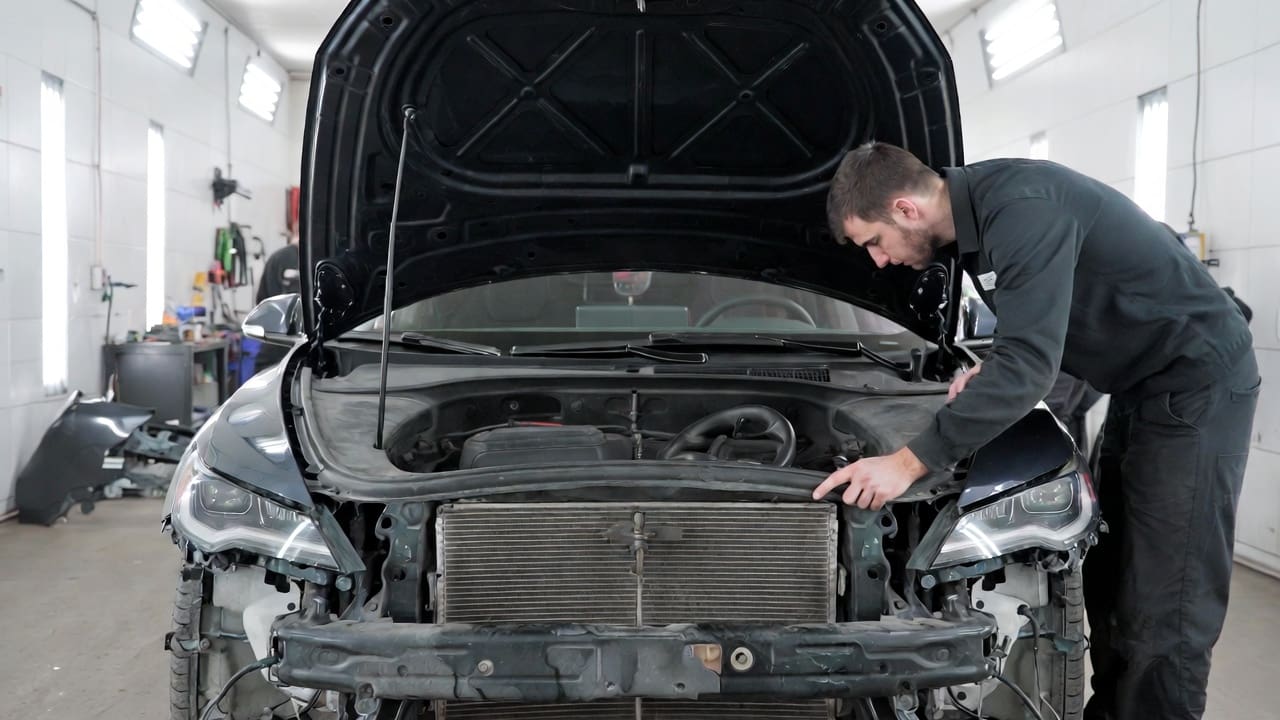
That first estimate is often not the final number. Once the shop tears down the car — meaning disassembly, sometimes called blueprinting — they frequently find additional damage behind bumper covers, fenders, and quarter panels that wasn’t visible on the surface. That’s called a supplement. The shop documents the additional damage, sends it to the carrier, and the carrier reviews and approves the added cost. This is normal. It doesn’t mean someone made a mistake. It means the shop found what was hiding underneath.
Choosing a Body Shop
Your insurance company may suggest a preferred shop or direct repair program facility. You are not required to use their shop. In most states, you have the right to take your car to any licensed repair facility you choose.
Preferred shops have agreements with the carrier — the carrier sends them work, and the shop agrees to certain pricing and processes. There’s nothing wrong with using a preferred shop. But if you have a shop you trust, you can go there instead. Keep in mind that the carrier doesn’t have to pay any price a shop charges — they still only owe what they consider reasonable under the policy. Ask your insurance company about this before you decide.
The Rental Car
If you have rental reimbursement coverage, your insurance covers a rental while your car is being repaired. There’s usually a daily limit and a maximum total. Check your policy so you know what you’re working with. If the other driver was at fault and their insurance has accepted liability, their carrier will usually cover a rental too.
Get the rental lined up early so you understand the timing, availability, and your coverage limits. The best body shops can help you arrange a rental — ask about that when you’re getting your initial estimate.
Total Loss
If the cost to repair your car exceeds a certain percentage of the car’s value — usually around 65 to 80 percent depending on the state and the carrier — the insurance company will declare it a total loss. Some states exclude certain costs from that calculation. For example, in Nevada, the cost of painting, towing, and replacing electronic components per manufacturer specs are excluded from the total loss threshold under NRS 487.790.
When a car is totaled, the carrier pays you the actual cash value of the vehicle — what it was worth before the accident, minus your deductible. If you feel the number is too low, you can negotiate. Pull comparable sales data for the same vehicle in similar condition. If you owe more than the car is worth, GAP insurance covers the difference between the payout and your loan balance.
How Long Does This Take?
A straightforward claim with clear liability and minor damage can be resolved in a couple of weeks. A complex claim with multiple vehicles, disputed liability, or significant damage can take months. The reason people get frustrated is that three things move at the same time — liability, repair cost, and parts availability — and any one of them can slow the whole file down.
Many professional body shops have apps that text you updates on your vehicle’s progress. That helps you track whether things are on track. If there are delays, you can generally expect a call from the shop. Many collision centers accept texts too, which makes quick check-ins easy.
What to Do at the Scene
What you do right after the accident matters. Take photos of everything — both vehicles from multiple angles, the damage, license plates, the intersection, skid marks, and debris. Photograph the other driver’s insurance card and license. Get witness contact information and the police report number if officers respond. Don’t argue fault at the scene and don’t speculate about what happened. Exchange information, document everything, and let the investigation sort it out.
Review Your Coverage Before You Need It
If you want us to review your auto policy before you ever have to use it, get a quote or give us a call. We can tell you whether you have collision, rental reimbursement, uninsured motorist, and the limits that matter when a claim happens. We serve drivers across Nevada, Arizona, Utah, and California.
For more on auto insurance, watch our videos on what you’re actually paying for, how to lower your rate without losing coverage, and how tickets and accidents affect your rates.


