
How to Talk to an Insurance Adjuster in California — Wildfires, Fair Claims Rules, and What to Know
California has the strictest claims regulations in the country. It also has the most devastating risk profile — wildfires, earthquakes, mudslides, and an insurance market in crisis. When you file a claim in California, the stakes are high and the rules are detailed. What you say to the adjuster shapes everything. We cover the core strategy in our companion video, but this guide focuses on what California policyholders need to know.
California’s Fair Claims Settlement Timeline
California’s Fair Claims Settlement Practices Regulations set the most detailed timeline in the country.
Your carrier must acknowledge your claim within 15 calendar days. Within that same period, they must begin investigating and provide you with all necessary forms and instructions. They must respond to your communications within 15 calendar days. After receiving your proof of claim, the carrier has 40 days to accept or deny in whole or in part. If the investigation takes longer, they must update you in writing every 30 days. Once approved, payment is due within 30 days.
That’s a maximum of 85 calendar days from notice to payment. The carrier must also provide you with a copy of your policy within 30 days of your request. If they assign a third or subsequent adjuster to your claim within six months, they owe you a written status report.
California also requires that any denial be in writing and include the factual and legal basis for the denial. No vague rejection letters. The carrier must cite the specific policy provision, condition, or exclusion.
California Risks That Drive Claims
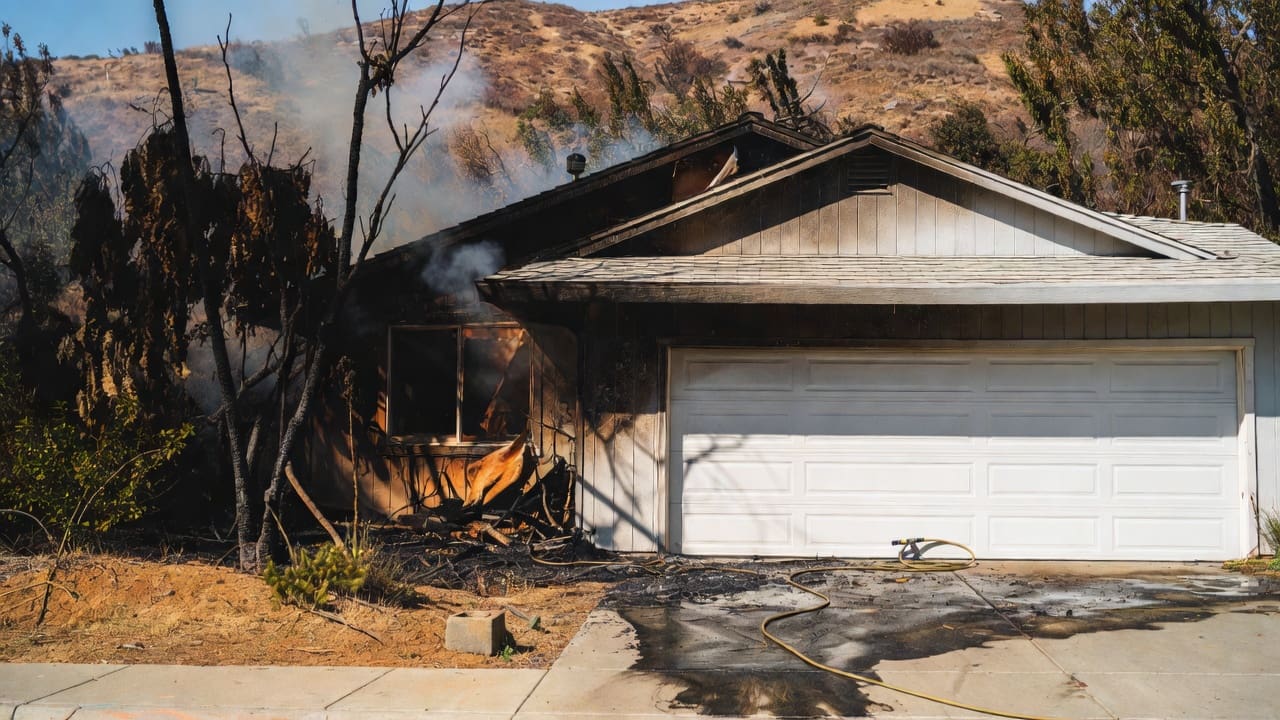
Wildfire dominates California’s claims landscape. The January 2025 Los Angeles fires burned over 50,000 acres and destroyed more than 16,000 structures. Wildfire claims in California are unlike claims anywhere else. The adjuster may evaluate damage from direct flame, radiant heat, smoke, and ember intrusion — each requiring different documentation.
After a wildfire, photograph everything before cleanup begins. Capture the exterior from all angles. Document interior smoke and soot damage room by room. If your home is a total loss, photograph the foundation, remaining structures, and surrounding property.
The language trap in wildfire claims is different. The risk isn’t misidentifying the cause — fire is fire. The risk is undervaluing the loss. California rebuild costs have surged post-wildfire. If the adjuster’s estimate uses pre-fire pricing or doesn’t account for current labor shortages, your settlement may fall far short of actual rebuild cost. Get your own contractor estimate immediately.
Earthquake is excluded from all standard homeowners policies. If you carry earthquake coverage through the California Earthquake Authority (CEA) or a private carrier, the adjuster process is separate. CEA deductibles run 5 to 25 percent of dwelling value. On a $600,000 home, that’s $30,000 to $150,000 out of pocket before coverage begins. Document all structural damage — cracked foundations, shifted walls, broken chimneys — and photograph cracks with a ruler for scale.
Mudslide and debris flow typically follow wildfires. Post-fire hillsides lose stabilizing vegetation. When heavy rains hit, debris flows can destroy homes below. These claims are complicated because standard flood insurance and homeowners policies both may exclude them. Document the flow path, the source, and the damage. Your carrier will need to determine whether it was surface water, earth movement, or mudflow.
Water damage from aging infrastructure. California has some of the oldest housing stock in the West. Plumbing failures, slab leaks, and roof leaks are common claims in older homes across Los Angeles, San Francisco, and the Bay Area. The language trap: “The leak has been going on for months” converts a covered sudden event into excluded gradual deterioration. Describe when you discovered the damage, not how long you think it was happening.
Preparing for the Adjuster
In California’s catastrophe-driven market, preparation is everything. After major events, carriers bring in hundreds of independent adjusters from other states. Many of them have never worked in California before and may not understand local construction costs, building codes, or material availability.
Document all damage with photos and video before any cleanup or demolition. If your home is still standing, photograph every room, every wall, every ceiling. If it’s a total loss, photograph the site and any salvageable items.
Build a detailed inventory. California law gives you the right to claim the full replacement cost of your personal property (if your policy includes it). Don’t shortchange yourself. List everything — furniture, electronics, clothing, kitchen items, tools, artwork.
Make temporary repairs to prevent further damage. Board up openings. Cover exposed areas. Remove standing water. Keep every receipt.
Read your policy carefully. California requires at least 100 percent replacement cost on dwelling coverage for homeowners policies. Check whether you have extended replacement cost (often 125 or 150 percent). Know your additional living expense limits — this covers housing costs while your home is being repaired or rebuilt.
Get contractor estimates from licensed California contractors who understand current rebuild pricing in your area. Post-disaster estimates often run 30 to 50 percent higher than normal market rates. Your adjuster’s software may not reflect that reality.
During the Inspection
Be present. In California, the adjuster must provide you with copies of any written repair estimates they use to make decisions about your claim. If you disagree with their estimate, you can provide your own written estimate. The carrier must cover the difference if your estimate shows higher necessary repair costs.
Get the adjuster’s name, phone, email, and claim number.
If you’ve been assigned multiple adjusters (common after disasters), keep a log of every interaction. California law requires the carrier to provide you a written status report if they assign a third or subsequent adjuster within six months.
Be honest and factual. Don’t speculate on causation. Describe what you see, not what you assume. Before the adjuster leaves, confirm what they documented.
California Language Traps
“The roof has been leaking for years” shifts the claim from sudden to gradual. Gradual is excluded. Say: “I discovered water damage on [date].”
“The hillside has always been unstable” suggests pre-existing earth movement, which is excluded. Describe the current damage and the triggering event.
“I think it was an earthquake.” Earthquake is excluded from standard policies. If you have separate earthquake coverage, file that claim separately. Let the adjuster determine whether the damage was seismic or from settling.
When the Estimate Comes in Low
In California, this is common after major events. Rebuild costs in wildfire-affected areas often exceed estimates by significant margins. Labor shortages, material costs, and updated building code requirements all push the real number higher.
California law prohibits the carrier from making an unreasonably low offer. They must pay the undisputed portion of the claim immediately, within 30 days. If part of the claim is still being investigated, they can’t hold back the portion that’s already clear.
Compare estimates line by line. If your contractor’s number is higher, submit it. California requires the carrier to cover the difference if your written estimate shows necessary repairs cost more.
If you have replacement cost coverage, the carrier may pay the depreciated value first. You receive the remaining amount after repairs. Some California policies include code upgrade coverage, which pays for bringing the rebuilt structure up to current building code. Check your policy.
Escalation in California
Your agent. An independent agent can review the adjuster’s report and push back. Start here.
A public adjuster. California licenses public adjusters through the Department of Insurance. They reinspect, build their own estimate, and negotiate. They charge 10 to 15 percent. After major disasters, public adjusters often recover significantly more than the carrier’s initial offer.
The California Department of Insurance (CDI). File a complaint online at insurance.ca.gov or call (800) 927-4357. The CDI enforces the Fair Claims Settlement Practices Regulations. They investigate delays, underpayments, and bad faith denials. A formal complaint triggers a regulatory review and puts the carrier on notice.
An attorney. California recognizes the tort of insurance bad faith. If the carrier is not following their own policy terms, making unreasonably low offers, or delaying without justification, you may have grounds for a bad faith lawsuit. Damages can include the claim amount, consequential damages, and in some cases, punitive damages.
We Can Help
If you’re a California homeowner, landlord, or business owner and you need help with a claim or want to make sure your coverage is right, get a quote or give us a call. We understand the California insurance market — including which carriers are still writing and how to structure coverage in wildfire-prone and coastal areas. Learn more about our California insurance services.
Check out our Google reviews to see what our clients say. For more on what your policy covers, watch our videos on landlord insurance and umbrella policies.


