
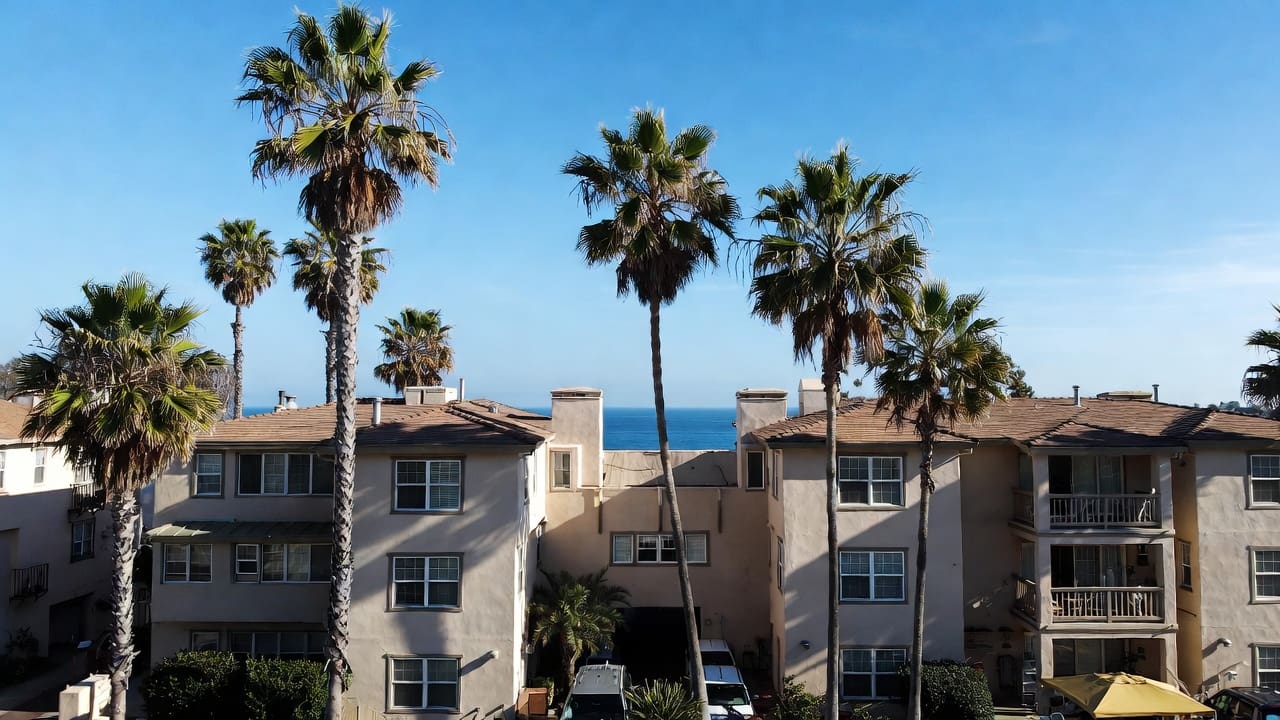
Condo Insurance in California — What Your HOA Policy Doesn’t Cover
If you own a condo in California, your insurance is shaped by the Davis-Stirling Act, a hard market, and wildfire pressure that limits what’s available statewide. The HOA master policy is not a substitute for your own HO-6. Walls-in vs walls-out, special assessments, and loss assessment coverage decide who pays after a pipe burst or a fire in a neighboring unit — and most owners only learn that after the claim.
The Davis-Stirling Act and Insurance Disclosure
California’s Davis-Stirling Common Interest Development Act governs HOAs across the state. Under Civil Code §5300, your association is required to provide an annual insurance disclosure to every owner. That disclosure must include the insurer name, type of coverage, policy limits, and deductible amounts for each policy the association carries.
This is your legal right. If your HOA hasn’t sent this disclosure, request it. The Davis-Stirling Act also gives you the right to inspect and copy the association’s full insurance policies upon written request. Use this access to understand exactly where the master policy stops and your HO-6 needs to start.
Master Policy Types in California
California condo master policies fall into three categories — bare walls, single entity (sometimes called walls-in), and all-inclusive. Your CC&Rs should define which type your association carries. In many California communities, the CC&Rs and the insurance policy work together to define the split between association and owner responsibility. If they conflict, that’s where claims disputes get messy.
Understanding the master policy type tells you how much interior coverage your HO-6 needs. If the master policy is bare walls, you’re insuring everything from the studs in. If it’s single entity, original finishes may be covered but your upgrades are not. Either way, your HO-6 Coverage A limit is what protects you.
California’s Insurance Market Crisis
California’s insurance market is affecting condo associations directly. Multiple major carriers have pulled back from the state. Master policy premiums have risen sharply — some associations have seen 30% to 50% increases at renewal. Higher premiums mean higher HOA dues. And when carriers pull out, some associations end up on the FAIR Plan, which provides limited coverage at a higher cost.
For condo owners, this means master policy deductibles may be climbing as associations try to manage premium costs. A deductible that was $10,000 two years ago may be $25,000 or $50,000 today. That directly increases your loss assessment exposure. Review your HOA’s annual insurance disclosure to see where things stand.
Your HO-6 Policy in California
Your HO-6 has a Coverage A limit for the interior of your unit. California has some of the highest rebuild costs in the country, driven by labor shortages, material costs, and updated building code requirements. If your Coverage A limit hasn’t been updated in a few years, it may be significantly short.
Review your personal property coverage as well. There’s no automatic formula on an HO-6. Make sure the number matches what you actually own. Add a replacement cost endorsement on personal property so you get today’s cost to replace, not a depreciated payout.
Wildfire Risk for California Condos
Condo communities in California’s wildland-urban interface face the same carrier availability problems as single-family homes. If your association’s master policy is with the FAIR Plan, coverage may be limited to dwelling fire only — meaning additional perils like theft, vandalism, and water damage may not be covered at the association level. Your HO-6 becomes even more important in that scenario.
Earthquake Coverage
Standard master policies and HO-6 policies in California do not cover earthquake damage. If your condo is in a seismic zone — and most of California qualifies — earthquake coverage requires a separate policy. Some associations carry earthquake coverage at the master level. Others don’t. Ask your HOA what’s in place and evaluate whether you need individual earthquake coverage for your unit’s interior and personal property.
Water Damage in California Condos
Water damage remains the most common condo claim in California. A sudden pipe burst is typically covered. A slow leak or long-term moisture issue may not be. Sewer backup requires a separate endorsement. In older California condos — particularly pre-1980 buildings in Los Angeles, San Francisco, and San Diego — aging plumbing increases this risk significantly.
Loss Assessment Coverage
With master policy deductibles rising across California, loss assessment coverage is more important than ever. Default limits on most HO-6 policies are $1,000 to $2,000. In a California community where the master policy deductible is $50,000, that’s not nearly enough. Increase your loss assessment coverage and ask your agent how your specific endorsement handles deductible-related assessments.
What to Do
Request your HOA’s annual insurance disclosure under Civil Code §5300. Review the master policy type, deductible, and any changes from the prior year. Check your HO-6 Coverage A limit against today’s rebuild costs. Review your personal property and loss assessment amounts. And read your CC&Rs — in California, those documents define the coverage split.
We Can Help
If you want help reviewing your condo policy, get a quote or give us a call. We serve condo owners across Los Angeles, the Bay Area, San Diego, Sacramento, and throughout California. Learn more about our California insurance services.


