
What Happens After You File a Car Insurance Claim in California?
If you have been in a car accident in California, the claim is not a black box. The state sets deadlines the carrier has to meet, you choose the body shop, and pure comparative negligence can still pay you even when you share fault. Understanding the California car insurance claim process puts you in a better position to get the car repaired and the claim closed fairly. Below we cover filing, the 15/40/30 day clocks, first-party vs the other driver’s carrier, and how to push back on a low total-loss number. We cover the full process in our companion video.
Filing Your Claim in California
Report the accident to your insurance company right away. If you have an independent agent, call them too — they can help you understand your coverage before you engage with the carrier’s claims department. The carrier opens a file and assigns a claim number that follows your case through every step.
California is an at-fault state with a pure comparative negligence system. Even if you’re partially at fault, you can still recover damages — reduced by your percentage of responsibility. That makes documentation at the scene critical.
California’s Claims Timelines
California has some of the most detailed claims handling regulations in the country. Under California Department of Insurance rules, carriers must acknowledge a claim within 15 calendar days, accept or deny within 40 days after receiving proof of claim, and pay within 30 days of reaching a settlement. The total timeline from filing to payment can’t exceed 85 days in most cases.
If your carrier isn’t meeting these timelines, you can file a complaint with the California Department of Insurance. Knowing these deadlines gives you real leverage.
Getting Your Car Repaired
California law gives you the right to choose your own body shop. The insurance company cannot require you to use a specific facility. They can recommend a preferred shop, but you decide where your car goes.
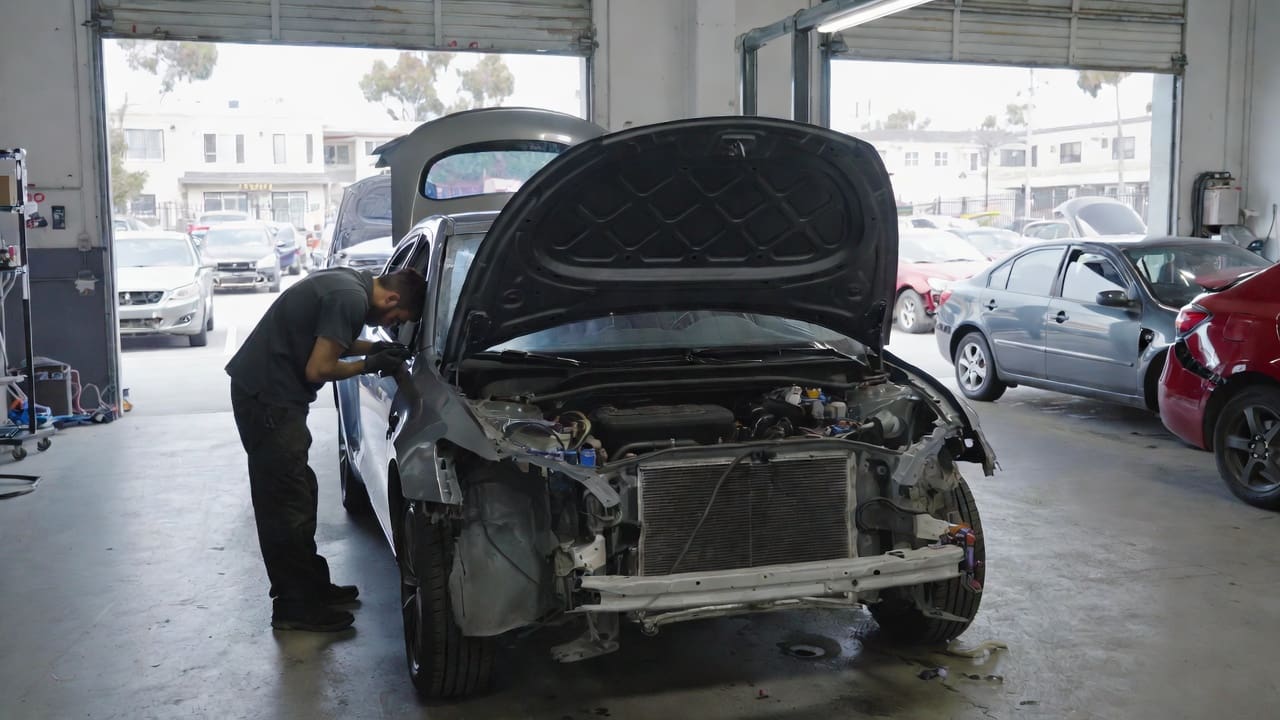
The carrier or their direct repair shop writes an initial estimate on visible damage. After teardown — the disassembly process, sometimes called blueprinting — the shop often finds hidden damage. That leads to a supplement, which the carrier reviews and approves. In California’s high-volume collision market, supplement turnaround times can vary. Stay in contact with your shop.
The carrier owes what they consider a reasonable rate. If there’s a dispute between your shop and the insurer over labor rates or parts pricing, California has an appraisal process to help resolve it.
Total Loss in California
California does not set a single statutory total loss percentage. Carriers use their own thresholds, generally in the 70 to 80 percent range of actual cash value. If repair costs exceed that, the carrier declares a total loss.
California does require carriers to provide a detailed written explanation of how they calculated the ACV. If you disagree with the valuation, you can negotiate using comparable sales in your area. California’s large vehicle market gives you plenty of data points to work with. If you owe more than the car is worth, GAP insurance covers the difference.
California’s Uninsured Driver Problem
California has one of the highest rates of uninsured drivers in the country. If you’re hit by an uninsured driver, your uninsured motorist coverage is what protects you. Without it, you’re left pursuing the other driver personally — which rarely results in recovery. Make sure your UM/UIM limits are adequate before you need them.
Rental Cars
If your policy includes rental reimbursement, your insurer covers a rental while your car is in the shop. Know your daily and total limits. If the other driver was at fault and their carrier has accepted liability, they’ll usually cover your rental too. Get the rental lined up early — especially in metro areas like Los Angeles, San Francisco, and San Diego where body shop wait times can be longer. Many California shops can help arrange a rental when you bring your vehicle in.
At the Scene
Take photos of everything — both vehicles, the damage, plates, the intersection, and debris. Get the other driver’s insurance card and license. If police respond, get the report number. In California, you can request a CHP or local PD report through the responding agency’s records division.
California requires you to report any accident resulting in injury or death to the DMV within 10 days using form SR-1. Even if nobody was hurt, document the scene thoroughly. Don’t argue fault and don’t speculate about what happened.
File on Your Policy or Wait for the Other Driver’s Carrier?
After you report the crash, you still have a second decision: whose claim file moves the repair. If the other driver is clearly at fault and their carrier has accepted liability, their liability coverage is the one that should pay the damage. If fault is disputed, the other driver is uninsured, or you need the car moving now, file collision on your own policy and let us help you recover the deductible later if the other carrier accepts liability.
California is a pure comparative negligence state. You can still recover even if you are partly at fault, reduced by your share. That is why “we will wait and see” is a bad plan when the other carrier is silent. Your own collision coverage is how you keep the shop from sitting idle while two adjusters argue.
Do not give a recorded statement to the other driver’s carrier until you have talked with us and stuck to what you saw. Words about speed, distraction, or “I did not see them” get used to raise your percentage. For what to say and what to leave out, use our guide on how to talk to an insurance adjuster without ruining the claim.
How to Push Back If the First Offer or Supplement Stalls
The first estimate is often only the damage the adjuster can see. After teardown, the shop writes a supplement for hidden damage. Stay in contact with the shop and ask for a copy of every supplement they send. If the carrier sits on it, write them and point to the California clocks: 15 calendar days to acknowledge a claim, 40 calendar days after proof of claim to accept or deny, and 30 calendar days after acceptance to pay (California Code of Regulations, title 10, sections 2695.5 and 2695.7). If they need more time, they have to say so in writing and keep sending updates.
On a total loss, California requires a detailed written explanation of how they calculated actual cash value. Ask for it. Then compare it to recent sales of the same year, make, and trim in your area, with similar mileage and options. If the number is still low, you can use the appraisal process in the policy. If you owe more than the car is worth, that gap is a GAP question, not an ACV argument.
If the other driver had no insurance, your uninsured motorist coverage is what responds for injuries. Property damage from an uninsured driver usually runs through your own collision coverage, and your deductible still applies. Review those limits before you need them in our UM / UIM vs health insurance guide.
| Step | What you do | What California requires of the carrier |
|---|---|---|
| Day you file | Photos, the other driver’s info, the claim number, and a call to us | Acknowledge the claim within 15 calendar days (10 CCR 2695.5) |
| Investigation | Stick to what you saw. Do not guess fault or speed | Accept or deny within 40 calendar days of proof of claim (10 CCR 2695.7) |
| Shop estimate | Choose your own body shop. You are not required to use theirs | They owe a reasonable rate. They can recommend a shop. They cannot require one |
| Teardown / supplement | Ask the shop for every supplement they send, and follow it | Review hidden damage. If they need more time, they must say so in writing |
| Payment | Do not sign a release you do not understand | Pay accepted amounts within 30 calendar days (10 CCR 2695.7) |
| Total loss | Ask for the written ACV breakdown and pull local comparables | California requires a detailed written explanation of how they calculated ACV |
| Missed deadline | Write the carrier, then file with the California Department of Insurance if needed | You can complain to CDI when the clocks are missed |
If you want us to review the auto policy before the next claim, start at our California insurance page or send the declarations page. We will check collision, rental reimbursement, uninsured motorist, and the limits that actually get used on California roads.
Review Your Coverage
If you want us to review your auto policy before you need it, get a quote or give us a call. We can make sure you have collision, rental reimbursement, uninsured motorist, and the right limits for California roads. Learn more about our California insurance services.


