
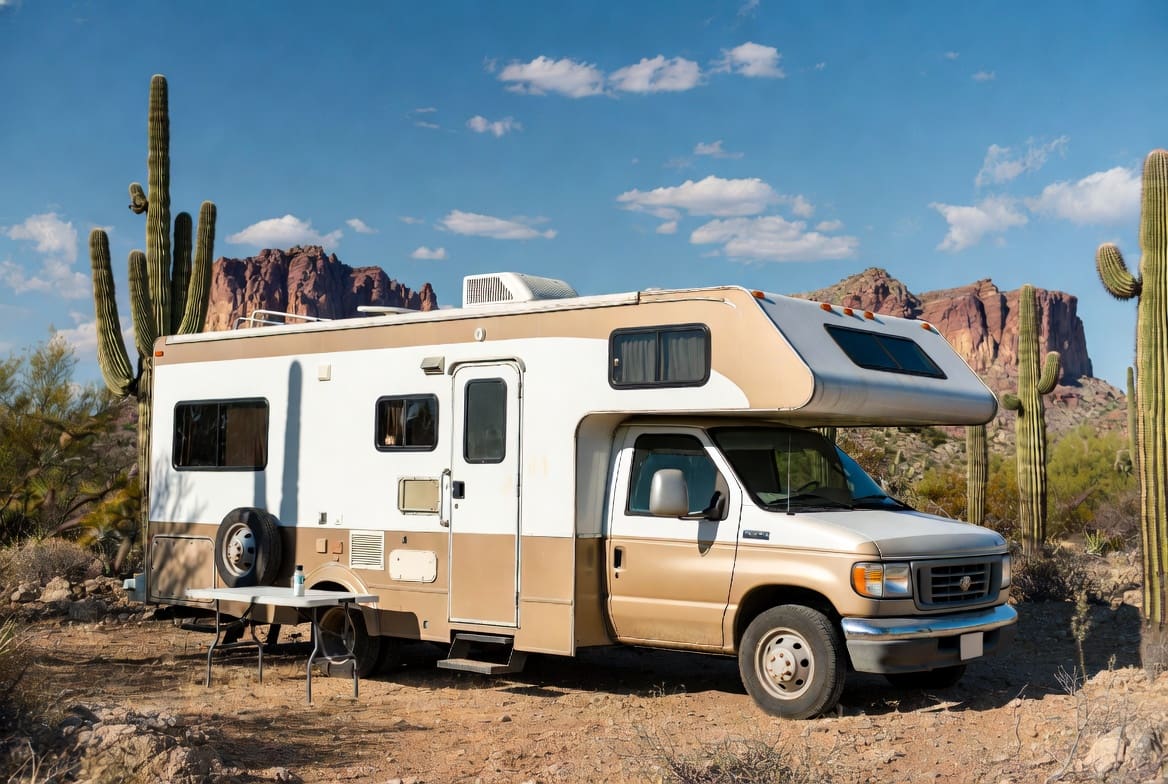
RV Insurance in Arizona – What Desert Owners Need to Know
Arizona is one of the most popular destinations for RV owners in the country. Snowbirds park in Quartzsite and Yuma for months at a time. Families tow trailers to Sedona and the Grand Canyon. Full-timers settle into RV communities across the Phoenix metro area and Tucson. The state sees every type of RV use, and each one creates a different insurance need.
RV insurance in Arizona is not one product. It changes based on how you use the rig. A weekend camper heading to Lake Pleasant needs different coverage than a retired couple spending six months a year in a Class A at an RV resort near Mesa. Getting the product wrong is the most common mistake we see, and Arizona’s year-round camping climate makes it especially easy to slide from occasional use into full-time living without updating the policy.
Motorhomes Need Standalone Policies in Arizona
If your RV has an engine and you drive it on public roads, Arizona requires you to carry liability insurance. The state minimum is 25/50/15, which means twenty-five thousand per person for bodily injury, fifty thousand per accident, and fifteen thousand for property damage. Those minimums keep you legal. They do not keep you protected if a serious accident produces costs that exceed those limits.
Towable trailers do not have motors. Your tow vehicle’s liability extends to the trailer while it is hitched. But physical damage to the trailer itself is not covered by your auto policy. A separate RV policy or trailer endorsement handles that. Progressive explains how RV liability coverage works for both motorhomes and travel trailers, including vacation liability options for campsite incidents.
Snowbirds and the Full-Timer Question
Arizona draws a large population of seasonal RV residents. Many of them arrive in October and leave in April. If you are living in your RV for more than six months out of the year, a standard recreational policy is the wrong product. A full-timer policy is designed to fill some of the same roles your homeowners policy used to fill, including personal liability while parked, medical payments for guests injured in or around your rig, and higher personal property limits for your belongings.
A recreational policy assumes you have a house somewhere else carrying your homeowners coverage. If you sold that house or rented it out and the RV is now your primary residence, those backup coverages are gone. The full-timer policy picks up where they left off.
Vacation Liability Covers What Auto Does Not
When your RV is parked at a campground and someone trips over your hookup cord or your awning collapses into a neighboring site, standard auto liability is not designed to cover that exposure. Vacation liability fills the gap. Some policies include a small default amount. Others do not include it at all. In Arizona, where campground stays can last weeks or months, a ten-thousand-dollar default limit may not be enough. Ask your agent to verify your vacation liability limit.
How the Desert Affects Your Coverage Decisions
Arizona’s climate creates specific risks. Monsoon season from June through September brings flash flooding, high winds, and dust storms. Comprehensive coverage protects against weather damage, but storage during monsoon season matters too. If your RV is parked uncovered, wind and hail exposure increases. Canceling your policy during the off-season creates a gap that can affect your eligibility and pricing when you come back. A seasonal adjustment or storage option keeps comprehensive in place without paying for coverages you do not need.
Valuation Matters on a Total Loss
RVs depreciate quickly. Most policies default to actual cash value, which pays the market value at the time of loss minus your deductible. If you owe more on the loan than the rig is worth, you are responsible for the difference. Agreed value lets you and the carrier set a fixed value when the policy is written. Total loss replacement covers the cost of a comparable new unit, usually within the first four to five model years. Gap coverage closes the loan-to-value difference if you are financing.
What Arizona RV Owners Should Check
Liability limits above the state minimum. Uninsured and underinsured motorist coverage. Vacation liability at a limit that matches how long you camp. A full-timer policy if the RV is your primary residence. Your valuation method confirmed. Personal property coverage that reflects what is inside the rig. Roadside assistance and towing limits that account for the size of your vehicle. Emergency expense coverage for breakdowns far from home. And a storage or seasonal plan that keeps coverage continuous year-round.
If you own an RV in Arizona and want to make sure your policy matches how you actually use it, get a quote from Western Pacific Insurance. We write RV coverage across the state. Learn more about our Arizona coverage.


