
Arizona Insurance Claims: When NOT to File
Arizona insurance claims decisions can make or break your budget — especially in a state where premiums have jumped sharply in recent years. According to the Consumer Federation of America, Arizona homeowners saw an average premium increase of 48% between 2021 and 2024 — one of the steepest jumps in the country. With premiums already elevated, filing a small claim that pushes your rate even higher is a costly mistake.
This guide explains how to decide whether filing a claim is worth it, what Arizona-specific risks affect that decision, and why your claims history may be the most important factor in what you pay for coverage going forward.
Monsoon Season and the Claim Temptation
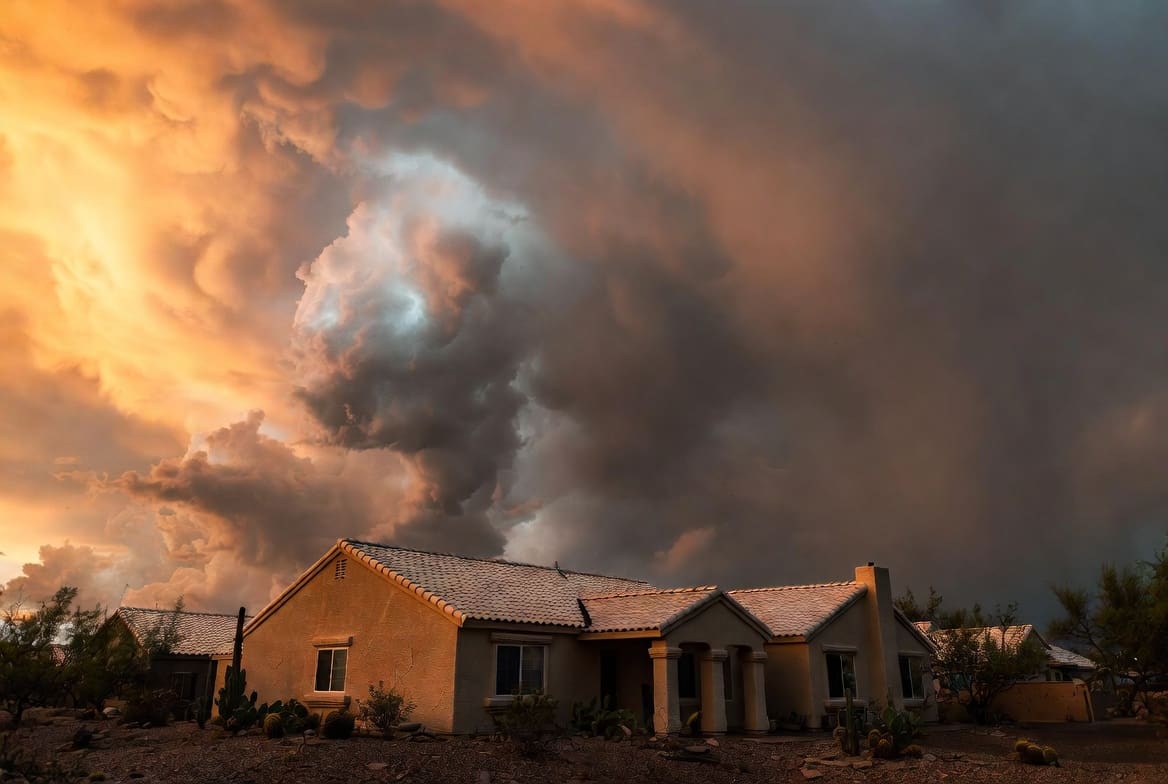
Phoenix, Tucson, Mesa, and Scottsdale homeowners know what June through September brings — intense monsoon storms with high winds, dust, and sudden downpours. These storms cause real damage, from blown-off shingles to water intrusion from flash flooding drainage issues. The Arizona Department of Insurance and Financial Institutions (DIFI) has noted that summer monsoon storms cause significant damage through high winds and hail.
But not every monsoon-related repair warrants a claim. If a storm knocks a few shingles loose and a roofing contractor quotes the repair at $1,500, and your deductible is $1,000 or $2,500, the payout from your insurer would be minimal or nonexistent. Filing anyway just creates a record — and that record influences your premium at renewal.
In Arizona’s current market, where carriers are already raising rates aggressively, adding a claim to your history could compound increases that are already painful. DIFI has acknowledged that increases in both the number and severity of claims are driving premium hikes statewide.
How Arizona Homeowners Should Evaluate a Claim
The framework is the same regardless of where you live, but in Arizona, the stakes are heightened because of the current rate environment. Start with a professional repair estimate from a licensed contractor — not a storm chaser who knocked on your door after last night’s wind event.
Compare the estimate to your deductible. If your home is insured for $400,000 and you carry a 1% wind/hail deductible, your out-of-pocket before insurance pays anything is $4,000. Many Arizona homeowners don’t realize they have a percentage-based wind/hail deductible rather than a flat dollar amount. Check your declarations page before calling your insurer.
Then project the premium increase. If filing would save you $1,000 today but increase your annual premium by $400 to $600 for the next three to five years, you’re losing money on the deal. Insurance is designed for catastrophic losses — the $30,000 roof replacement, the fire, the lawsuit — not for repairs that barely exceed your deductible.
Auto Claims in Arizona: Fault Matters
Arizona is an at-fault state, which means the driver who causes the accident is responsible for damages. If you back into a post in a Chandler parking lot and there’s no other party involved, that’s an at-fault collision claim on your record.
An at-fault accident can raise your auto premium substantially — sometimes by 40% or more depending on the carrier, your record, and the size of the claim. That surcharge typically sticks for three to five years. If the body shop repair is close to your deductible, you may be better off paying out of pocket and keeping your driving record clean from an insurance perspective.
Comprehensive claims — like hail damage from a monsoon storm — are generally treated more favorably than collision claims, since they’re not your fault. But even comprehensive claims still show up on your CLUE report and can influence how carriers evaluate you at renewal.
Your Claims History Travels With You
Arizona homeowners and drivers should understand that claims history is tracked in a national database called CLUE, run by LexisNexis. It stores up to seven years of personal lines claims data. When you get a quote from a new carrier — whether that’s in Flagstaff, Prescott, or the East Valley — they can review your prior claims, including what was paid and whether any claims were opened but resulted in little or no payout.
You’re entitled to a free copy of your CLUE report annually under the Fair Credit Reporting Act. If you’re shopping your insurance, pulling your report beforehand helps you know what carriers are seeing — and gives you a chance to dispute any errors.
Wildfire Risk and the Arizona Insurance Landscape
Arizona’s wildfire exposure is growing, particularly in communities like Flagstaff, Prescott, Payson, and parts of southern Arizona near the wildland-urban interface. DIFI has created a Resiliency and Mitigation Council to address coverage availability and affordability in fire-prone areas.
If you live in a higher-risk zone, your claims history is even more important. Carriers already view your property as elevated risk based on location. Adding claims to that profile — even small ones — can push you closer to non-renewal territory. In Arizona’s current market, keeping a clean claims history is one of the few things within your control when it comes to managing your premium.
When You Should File a Claim in Arizona
None of this means you should never file. Insurance exists for a reason, and there are clear situations when filing is the right call. A monsoon storm that causes $20,000 in structural damage. A fire that destroys part of your home. A major at-fault collision with injuries. A liability claim where someone is hurt on your property.
The key is to make the decision based on math and facts, not panic. Get the estimate, know your deductible, project the premium impact, and talk to your agent before you call your carrier.
If you’re an Arizona homeowner, driver, or business owner looking for honest guidance on your coverage — or if you want to know whether a potential claim is worth filing — request a quote from Western Pacific Insurance or learn more about our Arizona coverage.


