
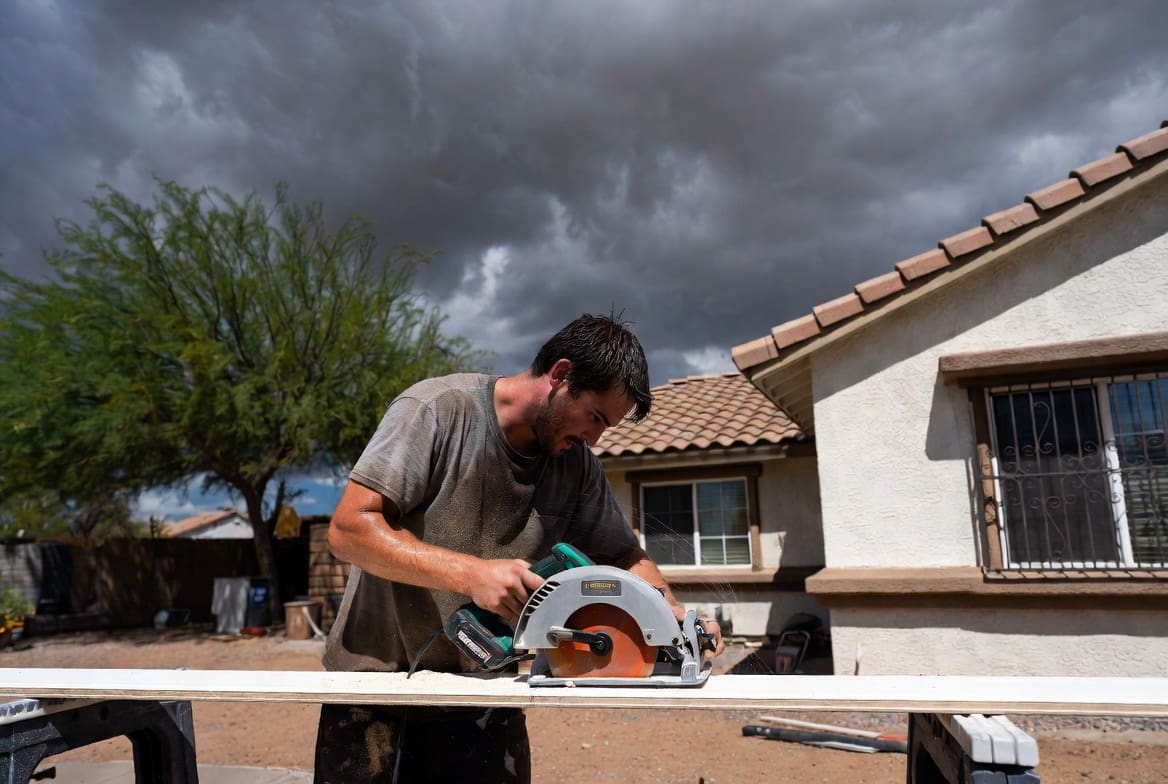
Arizona Carpenter Insurance: Bonds, License Classes, and the $50,000 Trap
Arizona regulates carpentry with more moving parts than any of its neighbors. Three separate carpentry classes. A bond that scales with your revenue. A statute that suspends your license automatically the day the bond lapses. Here is how to keep the insurance side of an Arizona carpentry business clean.
Three carpentry classes, and the cap hiding in one of them
The Registrar of Contractors licenses carpentry three ways. C-7, R-7, and CR-7 cover carpentry itself, in commercial, residential, and dual form. C-60 and its counterparts cover finish carpentry. Then there is C-61, Carpentry, Remodeling and Repairs, and this is where contractors get burned. Under the ROC rules in the Arizona Administrative Code, the C-61 remodeling class caps projects at $50,000 including labor and materials. A remodeler quoting a $70,000 kitchen and addition package on a C-61 is contracting outside the license. That is a licensing violation on its own. It can also poison an insurance claim, because carriers ask whether you were properly licensed for the work. If your jobs are outgrowing $50,000, upgrade the classification before you sign the contract. One more Arizona wrinkle helps mobile carpenters: the state’s C-7 carpentry license has reciprocity with California’s C-5 framing class, which matters for crews working both sides of the river.
The bond is the license, so treat it that way
Arizona does not mandate general liability for carpenters. It mandates a surety bond under A.R.S. 32-1152, sized by classification and estimated annual volume. Specialty residential carpenters post $1,000 to $7,500. Specialty commercial runs $2,500 up to $50,000 as volume grows. Residential and dual licensees also make a second choice. They either pay into the Residential Contractors’ Recovery Fund or post an extra $200,000 consumer protection bond. Here is the part that ends businesses. Under the same statute, your license is suspended by operation of law on the date the bond is canceled. No hearing. No grace period. A missed bond premium can idle your crew by Friday. We calendar bond renewals for our contractor clients for exactly this reason. The bond premium itself is small. Losing a month of licensed work is not.
Building a carpenter program for Arizona work
Phoenix and Tucson carpentry means production framing in triple-digit heat, monsoon repair work, and the patio cover and ramada builds that spike every summer. Monsoon damage creates a rush of repair jobs each July through September. Rushed repair work is where liability claims breed. Heat illness drives workers comp underwriting questions in Arizona more than anywhere else we write. Early start times, shade breaks, and water protocols actually come up in applications. A solid Arizona program pairs general liability at $1 million per occurrence with workers comp, commercial auto rated for real jobsite miles, a tools floater, and the right bond. The pieces need to renew together so nothing lapses mid-season. The full coverage breakdown lives in our carpenter insurance guide.
Frequently asked questions
How much is the Arizona contractor bond for a carpenter?
It scales with volume under A.R.S. 32-1152. Specialty residential carpentry bonds run $1,000 to $7,500. Specialty commercial runs $2,500 to $50,000. The premium you actually pay is a small percentage of those amounts.
Do I need a license for small carpentry jobs in Arizona?
Arizona’s handyman exemption under A.R.S. 32-1121 covers projects of $1,000 or less. Above that you need an ROC license, the bond that comes with it, and the insurance your clients will demand regardless.
If you hold an ROC carpentry class, or you are about to outgrow the one you have, let’s line up the bond and the coverage together. Start your Arizona quote here, or visit our Arizona insurance page.


