
Arizona Boat Insurance: What Lake Havasu Owners Need to Know Before the Season
Arizona boat insurance is not the same conversation as your homeowners policy. If you keep a boat on Lake Havasu, the Colorado River, or Lake Pleasant, the coverage you actually need sits outside of your home policy. Most first-time owners assume their homeowners or auto coverage extends to the boat. It does not. At least not in any meaningful way once the boat has real horsepower.
Why Arizona boating is a different exposure
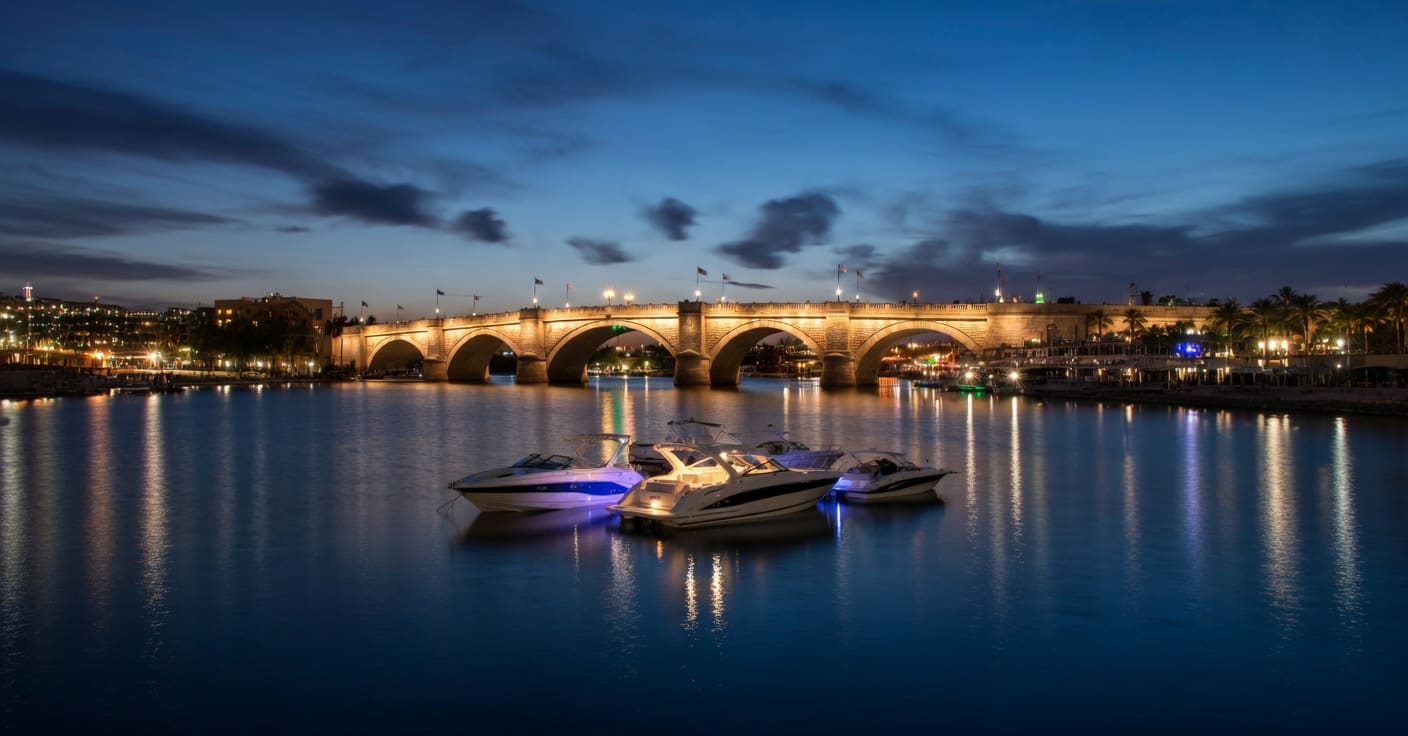
Lake Havasu draws heavy traffic. The Bridgewater Channel sees dense bow-riding and wake activity. Arizona Game and Fish statistics consistently show operator inattention and inexperience as leading causes of accidents on state waters. Eight different agencies may patrol Lake Havasu on any given day.
The federal and state rules that govern boating on the Colorado River system bring their own equipment and operating requirements. The U.S. Coast Guard summarizes these in its federal regulations page for recreational boats.
That operating environment makes liability exposure higher than a quiet lake day suggests. One collision, one tubing injury, or one guest slipping on the swim platform puts the boat operator on the hook.
What Arizona homeowners policies actually do
Most HO-3 Arizona homeowners policies include some watercraft coverage. The coverage is thin. Physical damage is usually capped around $1,000 to $1,500.
Liability coverage typically applies only to smaller, lower-powered boats. That means outboards under 25 horsepower, inboards or inboard-outboards under 50 horsepower, or sailboats under a certain length. A 21-foot bowrider with a 250-horsepower inboard-outboard falls outside every threshold. Your auto policy covers the trailer for liability while you tow. It does not cover the boat itself.
A real Arizona recreational boat needs a standalone watercraft policy.
What a real Arizona boat policy covers
A standalone boat policy typically bundles hull coverage, liability, medical payments, uninsured boater coverage as an option, on-the-water towing, and personal effects. For Arizona boaters, two pieces matter most.
Liability limits. A boating injury can generate tens of thousands of dollars in medical bills in a matter of hours. A helicopter to a Phoenix trauma center, surgery, and rehab stack up fast. If you bought a boat policy at minimum liability, you pay the rest. Moving up to $300,000 or $500,000 in liability usually costs less per year than people expect. Stacking a personal umbrella policy over the top costs less than people expect too.
Fuel spill liability. If your boat sinks at a Lake Havasu slip, the cleanup is your problem. Same if your fuel line fails and gasoline ends up in the water. A meaningful spill can run into the tens of thousands of dollars in containment and response. Ask whether your policy includes fuel spill or pollution coverage. Ask what the limit is.
Trailering, storage, and the Arizona off-season
Hull coverage on a boat policy typically follows the boat in transit. Most policies do. Confirm with your agent anyway. Storage is where a lot of Arizona claims happen. Theft, fire, and vandalism account for a real share of losses on boats that are parked.
Some carriers offer a lay-up discount during the months the boat is not in use. Arizona has a shorter lay-up window than most of the country. The discount is still worth asking about.
How Western Pacific Insurance approaches Arizona boat coverage
We write boat coverage for Arizona boaters on Lake Havasu, the Colorado River, Lake Pleasant, and Saguaro Lake. We also write the home, auto, and umbrella policies that sit around the boat. That coordination matters when an injury claim pushes past a single policy limit.
Start a quote at wpinsure.com/insurance-quote/?state=Arizona or visit our Arizona insurance page.


